He was an ordinary soldier with an extraordinary sense of duty. Master Sergeant Roddie Edmonds stood five-foot-eight with a steely resolve that towered over men twice his size.
Facing the Icy Abyss
January 1945, in the bitter landscape of a German POW camp, life was suspended in time and perpetual fear. The specter of death hung heavy, a smothering weight felt in every shiver from the cold and in every bite of stale bread. Allied soldiers, captured and weary, huddled together in desperation. Master Sergeant Roddie Edmonds, a man whose name might have never surfaced in the chronicles of history, stood among them, appearing no different from his comrades—until a single night demanded something extraordinary.
The morning of January 27 at Stalag IX-A, the frigid dawn descended with a chill that could seep into bones. An announcement pierced the biting air, one that would change the course of their lives. The camp commandant ordered that all Jewish POWs be separated from their fellow soldiers. That moment was not just another grim chapter in the Holocaust; it was a pivotal decision for the 200 Jewish men hidden among them. For Edmonds, it was a call to action steeped in courage.
Edmonds, aware that compliance meant certain death for the Jewish soldiers, gathered the men he had commanded in war but perhaps knew only fractionally. He spoke with a quiet authority, instilling resolve with calm words on that icy night. He urged them all to step forward at roll call, united as one regardless of faith or fear of reprisal. There was no fiery speech recorded in the annals of history, no eloquent rallying cry, but in those few whispered words lay the thread of human bravery and solidarity.
A Defiant Dawn
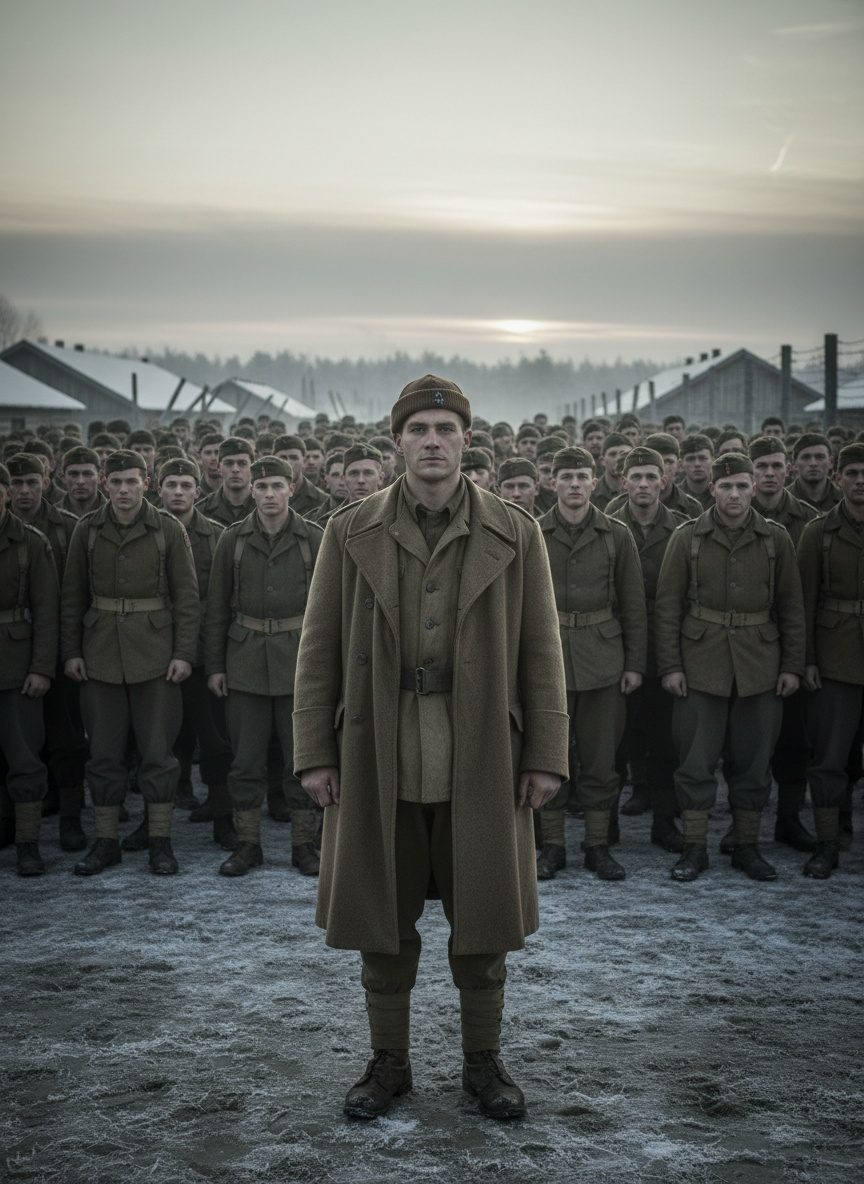
The promise of the new day brought with it a test, as serious as any they had faced on the battlefield. At roll call, 1,292 American soldiers stood as a single, breathless line. The men, engines of trembling thoughts, all stood together, knowing that this symbolic act could spell death for them all. The Nazi commandant, a figure of power and suppression, approached like a gale gathering strength. A standoff ensued that would write itself indelibly into the pages of human courage.
The air was thin with the frost of anticipation and fear mingling. Edmonds did not flinch as the commandant, a gun at his side and a scowl borne of arrogance and authority, demanded once more that the Jewish soldiers step forward. Edmonds, with a voice steady and unwavering, replied tersely: "We are all Jews here." Those words, less than a sentence long, held the weight of a thousand lives, a defiance wrapped in the most profound simplicity.
The commandant drew his pistol, aiming it with an intent clear as the starless sky. Yet, Edmonds remained a sentinel of strength, undeterred by threat and unmoved by fear. It was a thirty-second encounter where silence screamed louder than gunfire. The commandant, after reading the steadfast resolve in Edmonds' eyes, the eyes of a man clothed not only in a soldier's uniform but in an armor of human spirit, eventually holstered his weapon and walked away, defeated by the silent rebellion led by one unyielding man.
The Ripple Effect of Bravery
In a world plunged into the depths of war's darkness, the victory that day was not just survival but a testament to the unyielding spirit of Roddie Edmonds and the men he inspired. This defiance was not documented in the tumultuous textbooks of war strategy or wartime victim counts, but its reverberations echoed through the lives it saved and the generations that followed, reminding each that courage can spring from the most unpretentious origins. Edmonds never sought glory; his singular selflessness was rooted in something purer—a belief that every life held a worth that could not be surrendered to tyranny.
Though the stories from battles and wordy treaties may overshadow this moment, what transpired in that camp was the kind of legacy that teaches resilience through mere memory. Edmonds’ act of defiance was a quiet seed of hope planted in the frostbitten soil of that German camp, one that would continue to grow, immortal in the hearts and minds of those who would never know fear in a world of liberation borne from actions unknown to many.
As time unfolds, inching ever forward, it becomes deeply significant to remember Edmonds as more than just a soldier. He represents the eternal struggle and triumph of moral courage over human cruelty. In remembering him, we honor an essential truth—that humanity's collective strength prevails not in grandiose triumphs but in the small, steadfast stands against darkness that keep the light of hope burning for all.