The chill of the northern breeze swept through the Roman governor's hall, rustling the flame-lit torches casting flickering shadows against the stone walls. Outside, the grey skies of Roman Britain loomed ominously, their clouds pregnant with the promise of rain. It was in this atmospheric tension that one of the most daring and unexpected political acts would play out, setting the stage for the fortunes of a queen and her people. Within those cold stone confines, Cartimandua, Queen of the Brigantes, took a solitary walk into the annals of history, a journey that would challenge not only the might of Rome’s adversaries but also question the loyalties of its subjects.
Cartimandua emerged as a pivotal figure in the complex political landscape of 1st-century Britain. The Brigantes, under her careful and astute leadership, covered vast swathes of northern Britain, their lands marked by rolling hills and lush forests. As the symbolic bridge between Rome and resistance, Cartimandua held an uneasy peace that was both a shield and a sword. Her alliance with Rome gave her respect and power, but it was a fragile balance threatened by the ambitions and animosities of tribal affiliations.
In AD 60, the echoes of rebellion resounded from the south, where Caratacus, a rebel king of extraordinary grit, had been leading the fight against Roman dominion. After his eventual defeat, he fled not to other rebellious tribes or far-flung allies, but north—to Cartimandua. In the safety of her dominion, he sought sanctuary. Such a request placed Cartimandua in a position of rare influence, a choice that would either cement her reign or unravel it.
The tale of Caratacus is one steeped in valor, reminiscent of those warriors of legend whose resistance defined them—heroic yet inevitably tragic. He was the embodiment of defiance against Roman rule, a symbol of hope for free Britons, and his capture marked a turning point in the struggle against Roman expansion. When he stood before Cartimandua, he was a king without a kingdom, stripped of power but rich in the allure of legend. The appeal for sanctuary was not merely a plea for survival, but potentially an invocation to further rebellion.
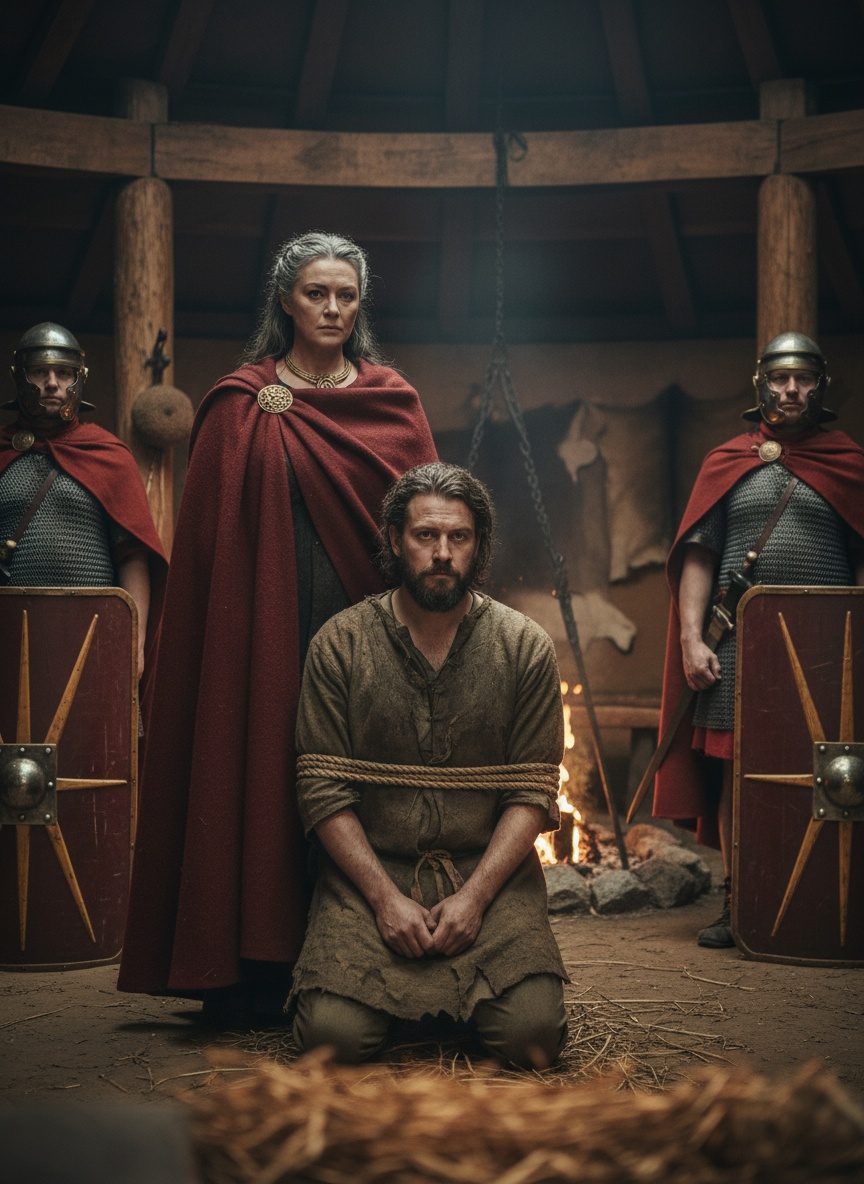
Cartimandua, known for her strategic prowess, made the decision that would etch her name in history: she handed Caratacus over to the Romans. This act, while stunning, was calculated; to the Romans, it was a sign of loyalty and strength that fortified her rule under their auspices. Yet to those who still fought for British independence, it was an act of betrayal that fanned the flames of discord and dissent.
In the aftermath, the halls that hosted this formidable meeting fell silent, but the air was charged with tension that spread across Britain. For Cartimandua, the act was both pragmatic and protective. It ensured the stability of her reign and the security of her people under Roman protection. Yet, it also painted her as a figure of controversy—admirable for her political acumen, yet vilified for choosing submission over rebellion.
As the years unfolded, Cartimandua's reign would face challenges, underscored by shifting alliances and the ever-present threat of insurrection. Her decision to ally with Rome was not just a political maneuver but a survival tactic in a land divided by loyalty and heritage. The delicate balance she maintained became emblematic of the larger struggle embedded in the fabric of Roman Britain—a land caught between its ancient identities and the pull of an empire that relentlessly sought to remold it.
Cartimandua’s legacy is one of precarious power, underpinned by choices that reflected both the necessity and tragedy of leadership in volatile times. Her decision regarding Caratacus is a testament to her resolve and a poignant reminder of the complexities faced by those who stood at the crossroads of history. As the years passed, the memory of that solitary walk—and the fateful decision it encapsulated—continued to echo through time, a story of ambition, strategy, and the complicated nature of power.