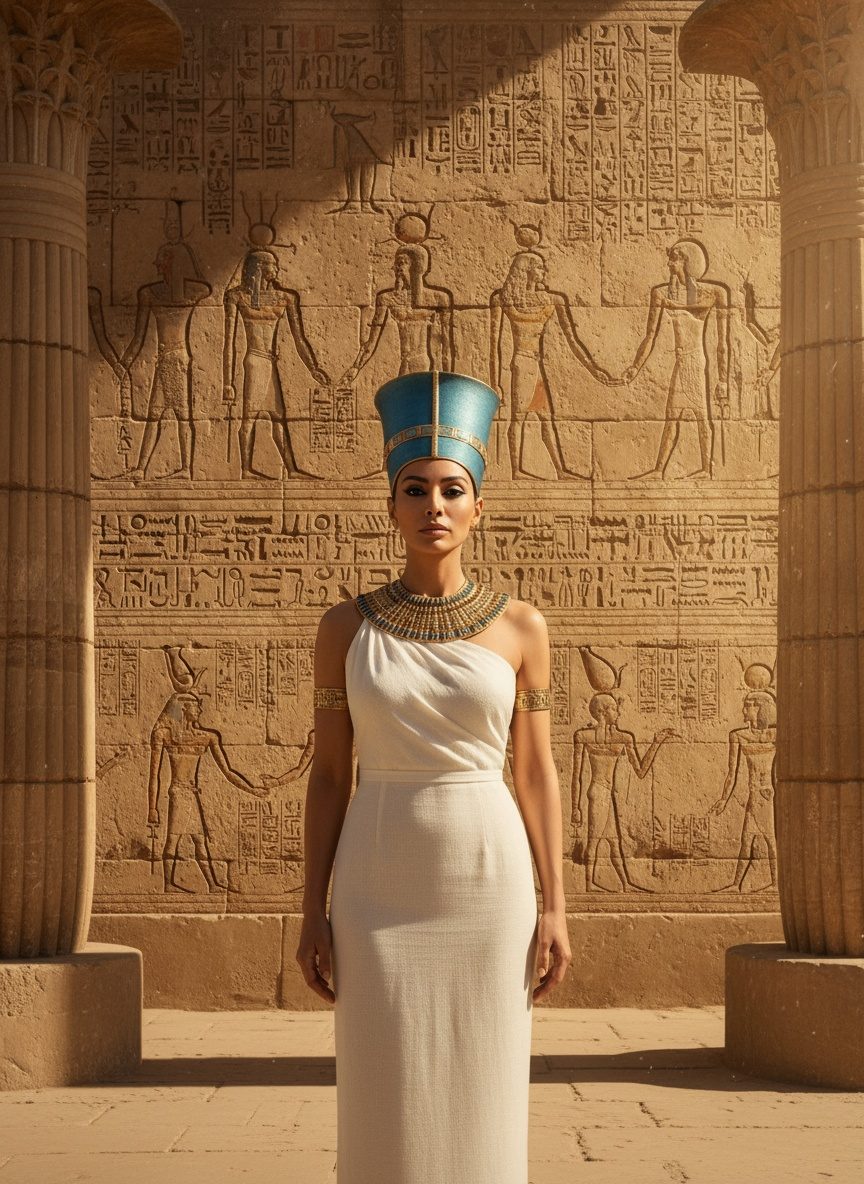
The desert air was thick with shimmering heat, rising from the dunes like illusions in the distance. The sun bore down unrelentingly, casting shadows as sharp as the ancients’ chisels on worn rock. In these searing plains, the most audacious journey of the New Kingdom was conceived—a journey born of divine decree and royal ambition. Here, in the heart of Egypt, Pharaoh Hatshepsut sought both proof and provender of her reign, marked by an expedition that would bridge the sands of time to the storied, mysterious land of Punt. It was a venture into the unknown, a command from the god Amun himself to fetch treasures that no Egyptian eye had seen in a generation.
The Call of Amun: Destiny by Divine Design
The great temple of Karnak was alive with the presence of the divine. Incensed breezes curled around towering columns as priests chanted ancient hymns, their voices harmonizing with the cosmic hum of the sacred space. Within this sanctum, Hatshepsut stood, not just as a ruler but as Amun’s earthly proxy, basking in the golden approval of her deified father. She embodied majesty under divine mandate, tasked with a monumental enterprise—sending a fleet to Punt.
Punt, the ‘Land of the Gods’, was shrouded in legend and mystique. Its precise location was unknown, with scholars to this day debating over its coordinates. For Hatshepsut, however, its treasure was no myth: gold, ebony, exotic animals, and most crucially, myrrh—the sacred incense of gods. No Egyptian fleet had dared these waters for decades, a chasm of time long enough to draw the journey into the realms of legend and uncertainty. Yet, for Hatshepsut, the endeavor was as much about reasserting Egypt’s ancient dominion and showcasing divine favor as it was about commerce. To succeed was to prove that her rule extended beyond mortal realms—touched by gods and boundless.
Voyage of Rediscovery: Navigating the Unknown
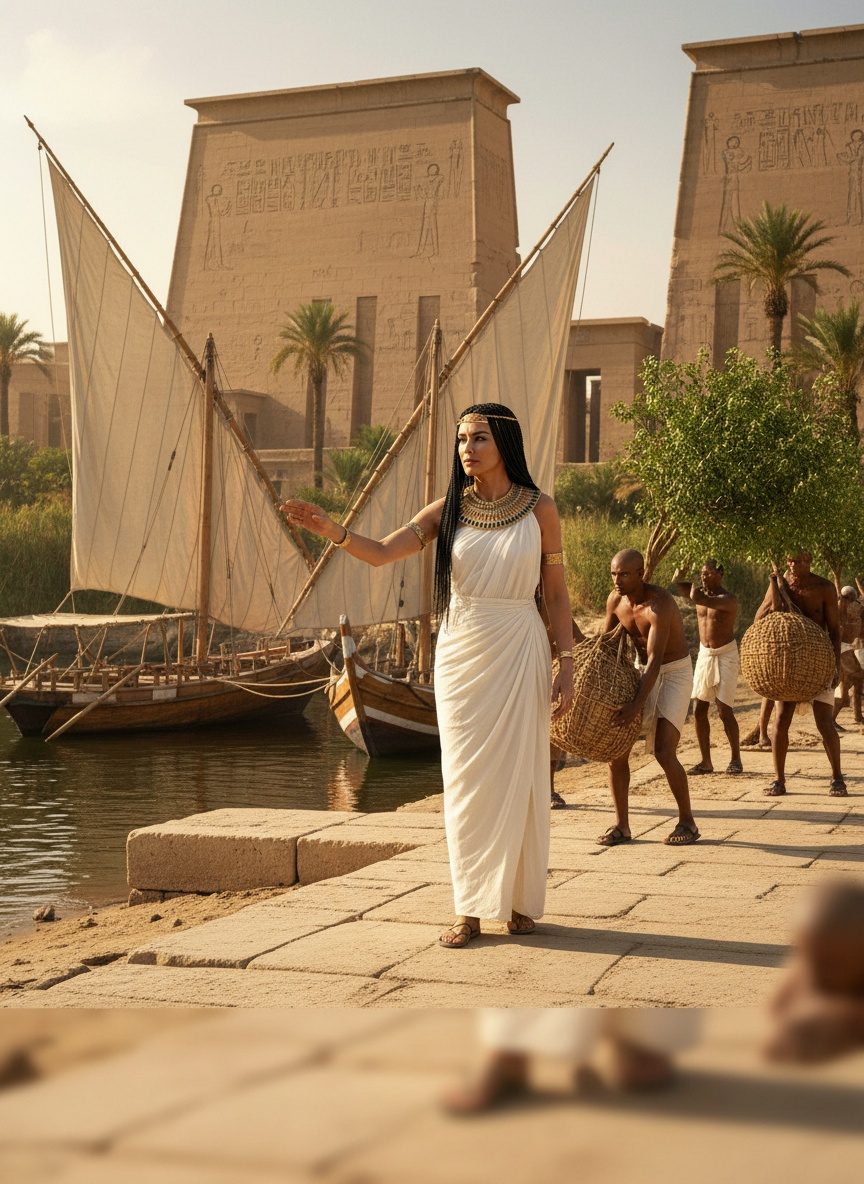
Watchful eyes of the palace and temples alike saw five ships set sail from Thebes, grand vessels that cut through the Nile, heading for the daunting vastness of the Red Sea. Laden with gifts, provisions, and diplomatic scripts authored under divine guidance, these ships were pharaoh’s emissaries, vessels of faith and ambition.
Breezes layered with salt and mystery filled their sails as the fleet journeyed through open waters, carving a path into lore. The sea’s expanse tested their mettle, with unseen threats lurking beneath and the unwritten horrors that stalked the periphery. Yet, for the sailors, each dip of the oar into the cerulean depths was an echo of destiny, a pull toward a land where silence met their queries with the rustle of palm fronds and the songs of unknown birds.
Months blurred into the horizon, with only stars as guides, their luminescent promise of civilization emerging from the cloak of night. Finally, Punt materialized like a mirage-made-real at the interface of coast and continent—rich and resplendent. Here, the ships’ arrival was not just a spectacle; it was a reunion of worlds, where the gifts of Egypt flooded the shores and the treasures of Punt promised to return with the fleet.
Gifts of the Divine: Bringing Back More Than Myrrh
The return to Thebes was a triumph of epic proportions. Laden with the riches of Punt, the ships glided back along the Nile to the alacrity of bustling docks and cheering crowds. Among the treasures, myrrh trees stood, roots embedded in baskets of fertile earth—a living testament to Hatshepsut’s command and vision. These were not mere spoils of exploration but living connections to the divine, soon to be planted before the ever-watchful eyes of Deir el-Bahari, her monumental temple.
In this sacred garden, myrrh trees took root—an earthly reflection of heavenly favor, echoing one woman’s steadfast ambition and the will of the gods made manifest. They flourished there under Hatshepsut’s watch, her temple moving from shadow to sunlit testament of a reign knit closely with the gods. This wasn’t merely an expedition for wealth or novelties; it was Hatshepsut’s declaration of divine affinity, a leafy proclamation of the sacred nature of her authority.
Hatshepsut’s success wasn’t simply in leading a fleet to and from an unknown shore. It was in daring to chart a god's kingdom, to map the intangible and mold narratives held dearly by stone and soil. This extraordinary tale from 1470 BC does not just speak of ancient routes rediscovered but reminds us of human tenacity and the relentless pursuit of the divine. In an era where risk itself was a primal fear, Hatshepsut’s Punt expedition beckons us to remember that the stories buried beneath millennia of sand still whisper truths of courage and legacy—rich myrrh for the pondering mind.