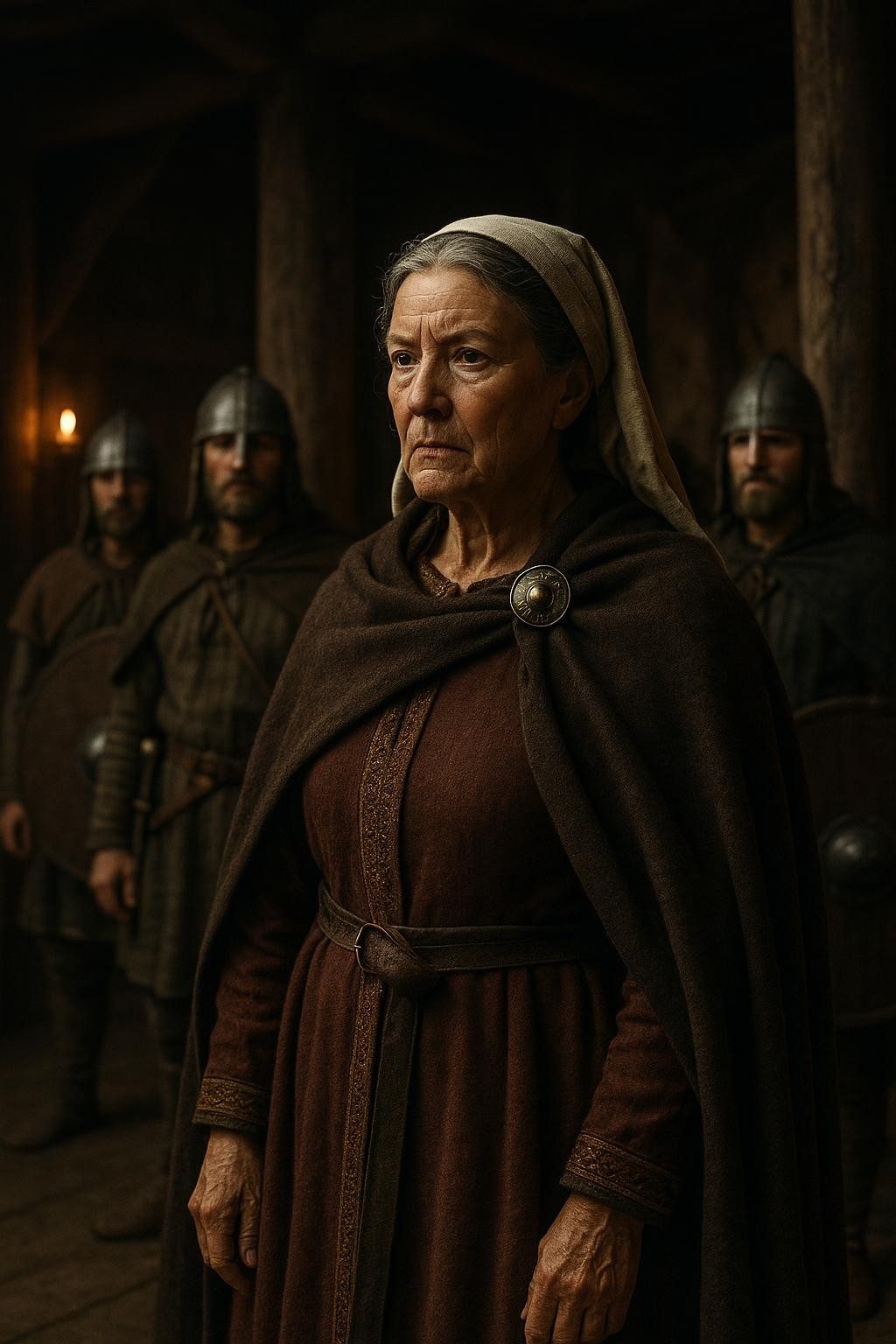
September 613. The autumn air carried a sharp chill across the open fields of eastern Frankish Gaul.
The Princess and the Power
Before she was branded a monster, Brunhilda was a princess, born into the influential Visigothic royal family of Hispania. Her early life was woven with the vibrant tapestry of royal education and culture. She was betrothed into the Frankish Merovingian dynasty, brought northward as a bride in a political union designed to cement bonds between the rival kingdoms. Frankish Gaul of the 6th century was a fragmented landscape, a land of warriors and shifting allegiances, ruled by kings who inherited little but ambitions and enemies.
Brunhilda entered this world silently but purposefully. Unlike most women of her stature and era, she defied expectations from the outset. Her marriage was meant to be her endpoint, the delicate dynastic enlace intended to foster peace and stability. Yet, she possessed an indomitable spirit, steely enough to alter the expected narrative of her life.
Her husband’s assassination catapulted her into the vortex of Frankish politics. Instead of stepping meekly into the shadows as a silent widow, she found her footing within the treacherous courts of Austrasia. Brunhilda wielded power with the tactical precision of a master chess player, each move calculated, each alliance carefully measured. Her rule, though often contested, was unyielding; through regency for her young son and later her grandsons, she sustained her grasp on the regions she controlled.
War and Annihilation
Brunhilda's political skill was mirrored by her decisiveness in warfare. In a world where battles shaped destinies, Brunhilda didn't shy away from conflict. She marshaled forces, aligning with noble houses that tipped scales in her favor, occasionally resorting to violence and betrayal when diplomacy faltered. It was not merely the thundering of cavalry that secured her reign, but the whispers of court intrigue that redefined her legacy.
Despite her undeniable capability, rumors and accusations circled like vultures. Becoming a figure shrouded in legend and infamy, her enemies painted her as a venomous schemer, accused her of witchcraft, and deemed her responsible for the deaths of rival nobles and kin. They whispered of her implacable quest for power, emphasizing every misstep and magnifying her ruthless retaliations. Over the decades, they conspired against her, rallying under the banners of men who feared her influence on their fragile titles.
Her ultimate downfall began as rival factions congealed against her. Separated by ambition and the very birthright of her Frankish kin, she was betrayed, captured by the forces of Chlothar II, a descendant of her husband's rival. The court of Chlothar was eager to unravel the fabric of her reign, to publicize their triumph over the woman who dared extend her shadows over the thrones of men.
The End of an Era
Autumn’s embrace turned to winter’s harsh breath as Brunhilda faced her demise. At seventy years old, a time when most sought refuge in retirement and reflection, she faced the crudest of punishments. Her public execution was as brutal as her rivals wished to craft it—a spectacle designed to obliterate her legacy. She was bound, dragged to death behind a wild horse in a grim procession staged for the masses. Such was the ferocity of her end that it imprinted her memory in the annals of history with a grotesque permanence.
Yet, her contemporaries failed to erase her entirely. The mythos of Brunhilda endured through the centuries, not only for the terror she inspired but for the unyielding fortitude she exhibited in a patriarchal order intent on silencing powerful women. Her life was one of dramatic impact—an early echo of the perennial struggle waged by women to hold parity in a man’s world.
Brunhilda’s story, illuminated by her rise and her brutal end, remains an emblematic narrative of power's complexities and the relentless human spirit. Despite efforts to negate her from historical coherence, her tale bears testament to the resilience of those who refuse to be confined by their roles. In a world that wrote her as a monster, Brunhilda emerged as a compelling character whose legacy could not be erased—a poignant reminder of the intricate dance of history and memory.