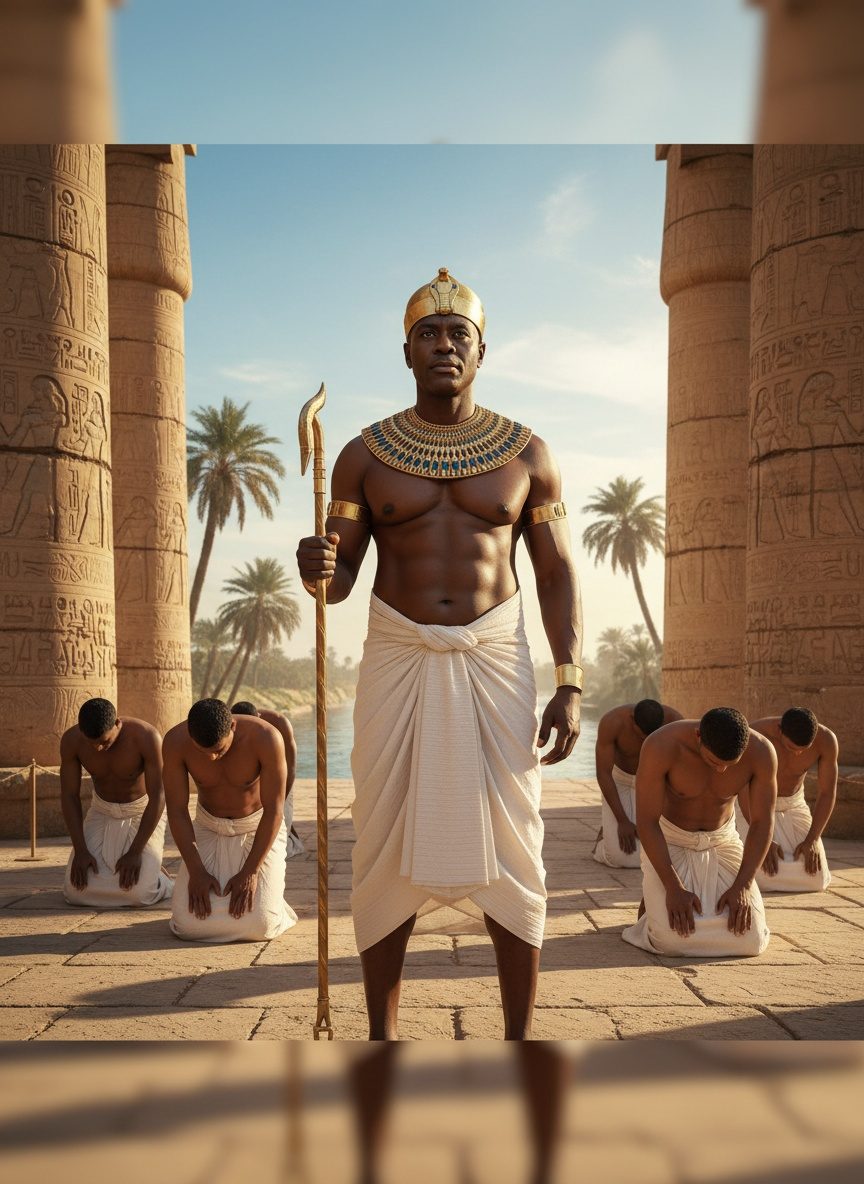
Most believe the Pharaohs were unchallenged masters of the Nile. Few remember the day they knelt before a king from the south.
The Road Northward: Piye's Unlikely Path
In 747 BCE, the kingdom of Kush, under the leadership of King Piye, embarked on a monumental campaign that would challenge the very heart of ancient Egypt. Piye hailed from Nubia, a land rich in resources but often overshadowed by its northern neighbor. The Egyptians had long considered Nubia a land to be conquered. Yet here was Piye, reversing the tide of history. With determination and insight, he understood that Egypt, divided among four rival pharaohs, presented a unique opportunity.
Piye wasn't driven by the lust for conquest typical of many warlords of his time. His mission was not destruction but restoration. As he proclaimed his journey northward, his aspirations were wrapped in a cloak of cultural reverence and historical continuity. He envisioned a unified Nile Valley under his leadership, a realm where tradition and reverence for the gods could once again flourish.
Egypt in Disarray: A Kingdom Fractured
Egypt at the time was a nation's splintered. Once unified, it had fractured into a collection of territories, each boasting its own ruler claiming the divine right to rule. The once almighty pharaonic power was diluted, and the country faced both internal strife and external threats. Piye sensed the vulnerability. The disunity among the four pharaohs — Iuput II at Leontopolis, Nimlot at Hermopolis, Osorkon IV at Tanis, and Tefnakht at Sais — made it ripe for intervention.
These rulers were wrapped in an endless sequence of alliances and betrayals, constantly vying for supremacy. In stark contrast, Piye and his kingdom offered stability. The Kingdom of Kush, on the rise, had emerged as a powerhouse of both wealth and military strength. Their relationship with the gods and the preservation of traditions were paramount, making Piye not only a conqueror but also a savior to those yearning for restoration.
A King Unlike Any Other: Piye's Compassionate Conquest
Piye's progress through Egypt was swift and decisive, yet what set him apart was not just his military acumen but his benevolent approach to conquest. When cities fell, they did not meet the usual fate of plunder and destruction. Instead, Piye pursued a path of reconciliation and reverence. His troops treated captured territories and their peoples with dignity, respecting the sacred traditions that bound Egypt together.
Upon reaching the great cities, Piye's actions surprised even the staunchest of his adversaries. Instead of desecrating temples, he restored them. Faced with the magnificence of Egypt's equestrian wealth, his profound reverence emerged; he wept at the sight of starved and poorly treated horses belonging to his rival pharaohs. Such gestures spoke volumes of his character. To Piye, the grandeur of Egypt was intertwined with its cultural and spiritual essence. Where others might have seen enemies, he saw potential allies who could help restore a once-unified land.
The Moment of Submission: Pharaohs Kneel
Conquerors thrive on the spectacle of their victories, but Piye's defining moment was not a battle, but a series of submissions. As his formidable presence moved through the Nile Valley, one by one, the rival pharaohs recognized the futility of their resistance. Their strongest defenses crumbled, not merely from superior force but from the persuasive vision Piye offered.
The act of kneeling was not just physical submission but a symbolic acceptance of Piye’s vision for a unified Egypt. The sight of Egyptian royalty humbling themselves before a Nubian king was unprecedented—a reversal of roles set in motion long ago when Egypt had subjugated Nubia. Each pharaoh, acknowledging both military defeat and the promise of a restored order, chose to align with rather than resist the king who had surprised them all with his compassion and wisdom.
A Unifying Legacy: The Kingdom Sows Seeds of Change
Piye's conquest would mark the beginning of the 25th dynasty, a period known as the Kushite Dynasty, an era when a king from the south wielded his influence over the lands both Nubian and Egyptian. This chapter in history is often overshadowed by the grandeur and mystique of prior Egyptian empires, yet it holds vital lessons in leadership and cultural coexistence.
Piye’s journey from Nubia to the throne of a unified Egypt challenged the established norms of power and conquest. His ability not just to conquer lands but to prioritize cultural reverence and restoration offers a sharp contrast to many historical narratives filled with pillage and eradication. In remembering Piye, we're reminded of a time when a kingdom rose not through obliteration but through healing a fractured land, leaving behind a legacy where foes were transformed into allies, and traditions of old regained their rightful place on the grand stage of history.