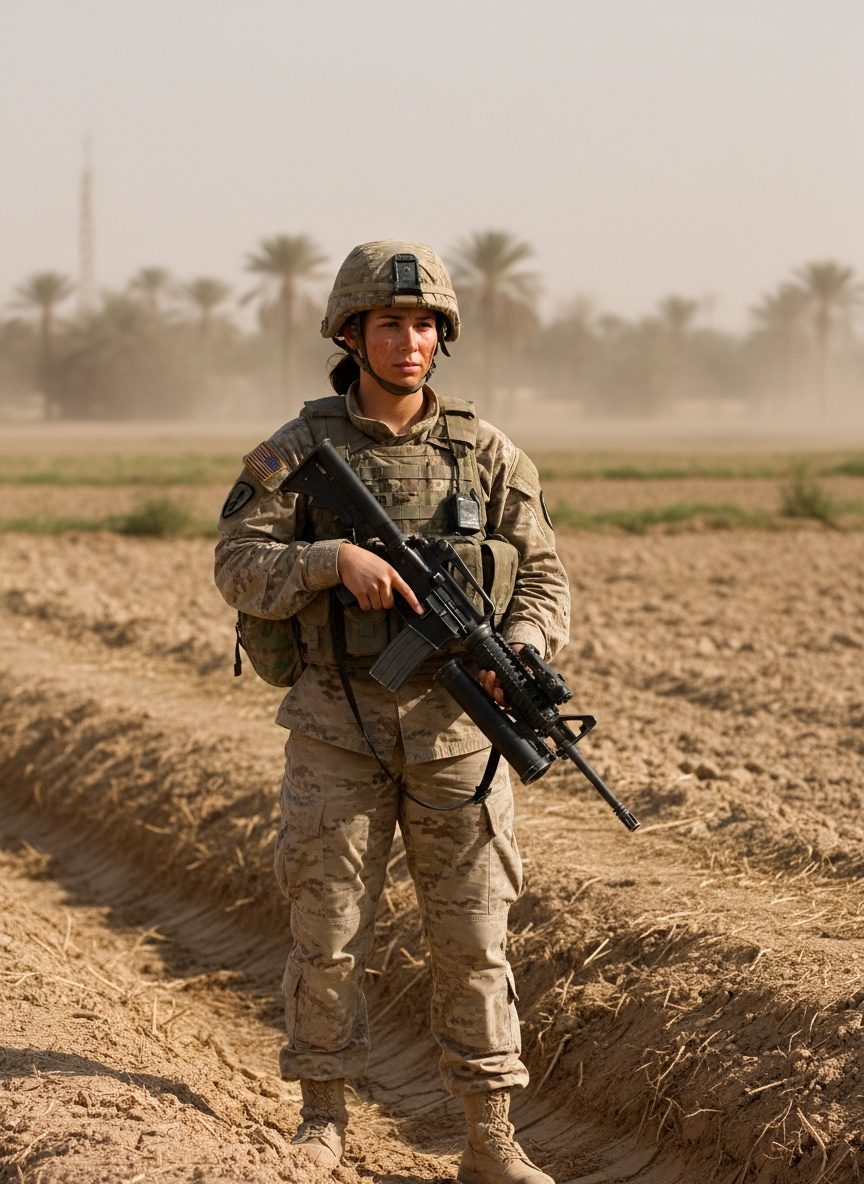
2005, south of Baghdad. The early morning light had just begun to cut through the thick desert haze, lending a muted glow to the convoy of Humvees moving with purpose across the Iraqi landscape.
The Ambush
As the sun rose higher, sending shadows scuttling across the sparsely vegetated flats, a grimmer reality unfurled. The convoy, a contingent of three Humvees from the Kentucky National Guard's 617th Military Police Company, found itself the target of a well-coordinated ambush. Fifty insurgents lay in wait, heavily armed and strategically positioned to maximize chaos and damage. The morning calm was shattered by the crescendo of gunfire, a relentless barrage from AK-47s and rocket-propelled grenades that aimed to halt the convoy dead in its tracks.
It was a calculated attack, exploiting the vulnerabilities of an open terrain and the pressing urgency of a routine convoy shadow mission. For Leigh Ann Hester, the 23-year-old team leader, this sudden explosion of violence transformed the well-known contours of her world into an unpredictable scene from which there seemed no clear escape. Under normal circumstances, pulling back might have been the prudent call—seeking shelter from the oppressive firestorm. But this moment called for an extraordinary pivot, one that would play out amid the stinging acrid smoke and blaring cacophony.
Sergeant Hester didn't flinch. Instead, she and her team maneuvered their Humvees toward the heart of the assault. The insurgents were not prepared for this audacious counter-move. This was not a flight from danger but a calculated drive into its maw, a bold maneuver that would sow confusion in their ranks and allow Hester and her squad to regain control of the battle's tempo. Her decision turned the aggression on its head, transforming the ambush into an opportunity for unexpected offensive strategy.
Through the Trenches
With the Humvees positioned for best cover and response, the intensity of the close-quarters fight demanded a more personal engagement. Hester dismounted with her squad, the sand and grit sifting underfoot as they moved tactically to flank the insurgents. The whisking sound of bullets sliced unsettling symphonies through the air, a stark reminder of the stakes. The plan was simple in theory, daunting in execution: clear the trench, press the advantage, secure the area.
Hester led by example, her M4 carbine her steadfast companion as she navigated the narrow, perilous trench system that the insurgents had carved into the landscape. Covering fire ensured her team could move with strategic aggression. Moving through the trenches required nerve and instinct, each step more perilous than the last. Close combat revealed itself in stark, immediate terms—distant targets suddenly took visceral form in this bleak theater of war.
Amidst precise bursts of gunfire, Hester's leadership came to the forefront. Her unwavering composure inspired her team as they adeptly neutralized the threat, their efficient, concerted action reducing the enemy's capability and morale. When the dust eventually settled, 27 insurgents lay dead. The insurgency’s hope of inflicting dire harm on the convoy had been shattered by Hester’s fierce determination and tactical acuity.
A New Chapter
The ambush, which began as an apparent death sentence for the patrol, evolved into a definitive victory—a testament to bold leadership and tactical precision. In the aftermath, Leigh Ann Hester's actions garnered recognition that transcended the immediacy of the battlefield. For her valor in the face of overwhelming odds, she was awarded the Silver Star, becoming the first woman to be decorated for close-quarters combat since the Second World War. Her actions punctuated a crucial chapter in military history, one that redefined the contours of valor and courage in the modern era.
This moment mattered—not just in its immediate tactical success, but in its broader implications. Hester’s story challenges preconceived notions about gender roles in combat, highlighting the essential and often underappreciated contributions of women in the military. Her example resonates with the universal values of bravery and leadership, providing inspiration beyond the confines of the trench where she made history. As we reflect on her story, it compels us to reconsider the evolving nature of courage and the diverse forms it may take in facing the most dire of circumstances. In 2005, amid the dust and fire of Iraq, Leigh Ann Hester's actions carved a distinct narrative of valor that transcends time and place, reminding us of the indomitable spirit that can arise even from the depths of adversity.