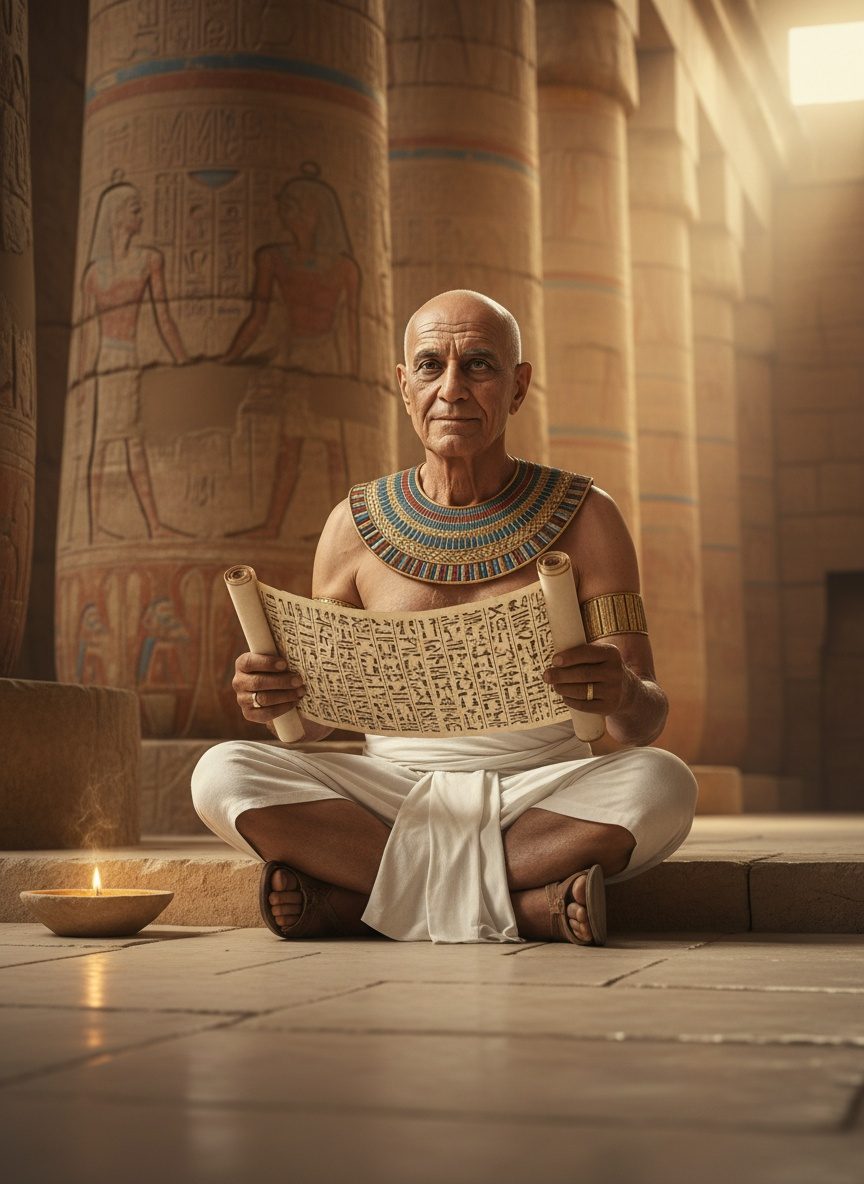
The sun hangs low in the Egyptian sky, casting long shadows of papyrus leaves dancing over the shimmering waters of the Delta. The heat of the day has softened into a warm embrace, and the air hums with cicadas' songs, as soft winds carry the scent of the Nile along its ancient course. It's here, in the flickering lamplight of a grand hall in Thebes, that the fate of Amenhotep, Son of Hapu, was irreversibly intertwined with the divine tapestry of Ancient Egypt. At a time when the world was dictated by the will of the pharaohs, Amenhotep achieved the extraordinary: a commoner elevated to the realm of gods.
The Humble Beginnings of an Unlikely Deity
Long before his name was etched into the annals of divine history, Amenhotep was just another child in the sleepy village of Athribis. Born in the tumultuous mid-14th century BC, his surroundings offered him little more than the uneven sounds of crickets and the rustle of reeds along the riverbanks. But beneath the mundane lay potential, like the glistering gold hidden beneath the sands of Egypt.
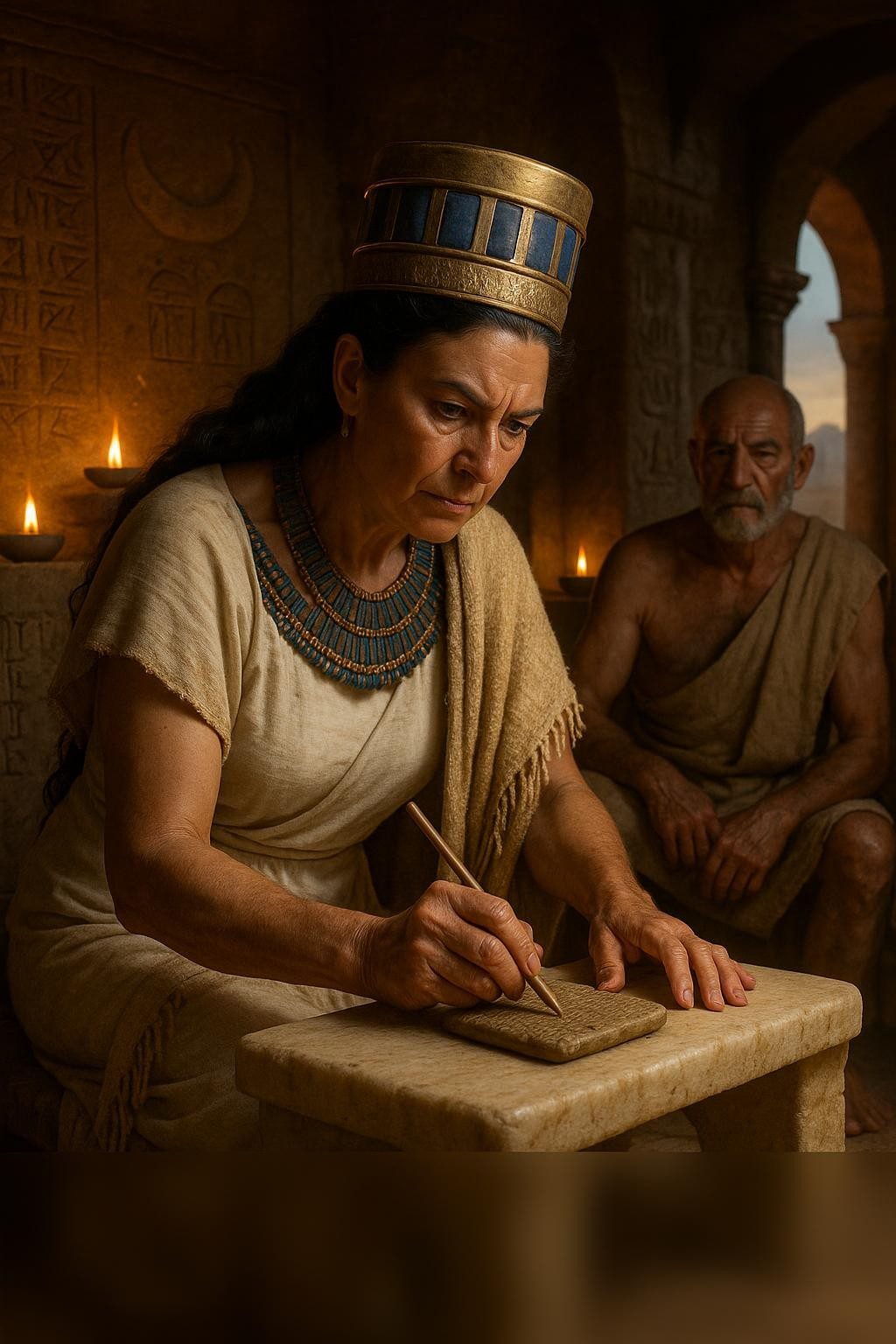
As he matured, Amenhotep's aptitude for learning and his prodigious talents in everything he touched did not go unnoticed. Adept in the sacred arts of healing and architecture, his skills paved his path straight to the grand city of Thebes, the beating heart of a flourishing empire. Here, Pharaoh Amenhotep III recognized something extraordinary in the young scribe. The ruler saw in him not merely a scholar but an avatar of cosmic wisdom—a man uniquely poised to bridge the worlds of men and gods.
Architect of the Divine and Healer of the Masses
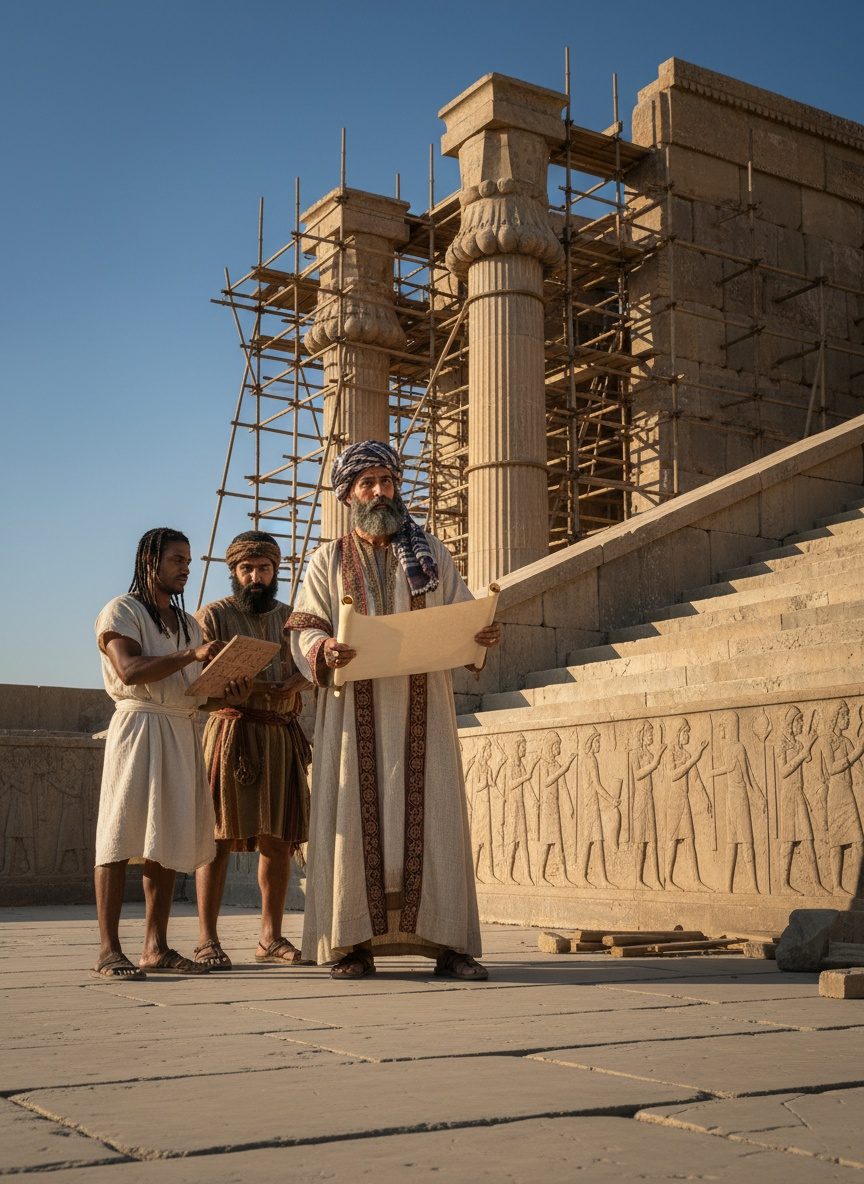
Amenhotep's ascent in the royal court wasn't merely a testament to his intellect. It was an incarnation of the abundant creativity and spiritual profundity he harnessed. Entrusted with the most sacred and monumental tasks, Amenhotep designed and oversaw constructions that would echo through eternity. His magnum opus, the famed mortuary temple in western Thebes, stood as a testament to his mastery—an exquisite blend of limestone and dreams, designed to house the deified spirit of Pharaoh Amenhotep III.
His accomplishments extended beyond stones and chisels. A revered healer, Amenhotep wielded herbs and incantations to mend the ailments of royal courtiers and commoners alike. Tales of his miraculous cures spread across the land, and people began to whisper about his divine touch. Old texts attribute to him the power of healing simply through his words—a feat that further solidified his standing as a quasi-divine figure in the eyes of his countrymen.
The Eternal Reward: A Mortuary Temple for a Commoner
By the time Amenhotep breathed his last, at the venerable age of 110, he wasn’t just a man of science and art but a spiritual beacon leading Egypt into prosperity. His death was no ordinary event; it was the passing of an era, leaving a void in the court and the hearts of the people. Recognizing this, Pharaoh Amenhotep III bestowed upon him an unprecedented honor: a mortuary temple fit for a god.
This veneration was a rare phenomenon in the strict social hierarchy of Ancient Egypt, where divinity was often reserved for those of royal blood. Yet, Amenhotep's life blurred these boundaries. His temple, built beside the ancient temples of Thebes, was not just a resting place but a sanctum where the living could pay homage and seek guidance from the sage long after his mortal shell had returned to the earth.
Remembered by Time, Worshipped by Generations
Centuries trickled past like sands through an hourglass, but Amenhotep’s influence lingered on. He transcended the mortal plane, becoming known as a god of healing. His legacy lived on through the reverent incantations of priests and the whispered prayers of the sick who sought solace in his divine ability to mend and cure. As temples crumbled and empires fell, the cult of Amenhotep Son of Hapu endured—a beacon of hope and possibility amid the ruins.
Why does this story of a village boy turned god resonate within us so deeply? It is a reminder that the barriers of class and birthright are but fabrications woven by history. Amenhotep's journey teaches us that genius and goodwill, when nurtured by opportunity, can defy the rigidity of societal structures and ascend to the divine. His life was a testament to the power of spirit and intellect—qualities that transcend time, ushering forth the belief that immortality is not in the tombstone but in living memory.