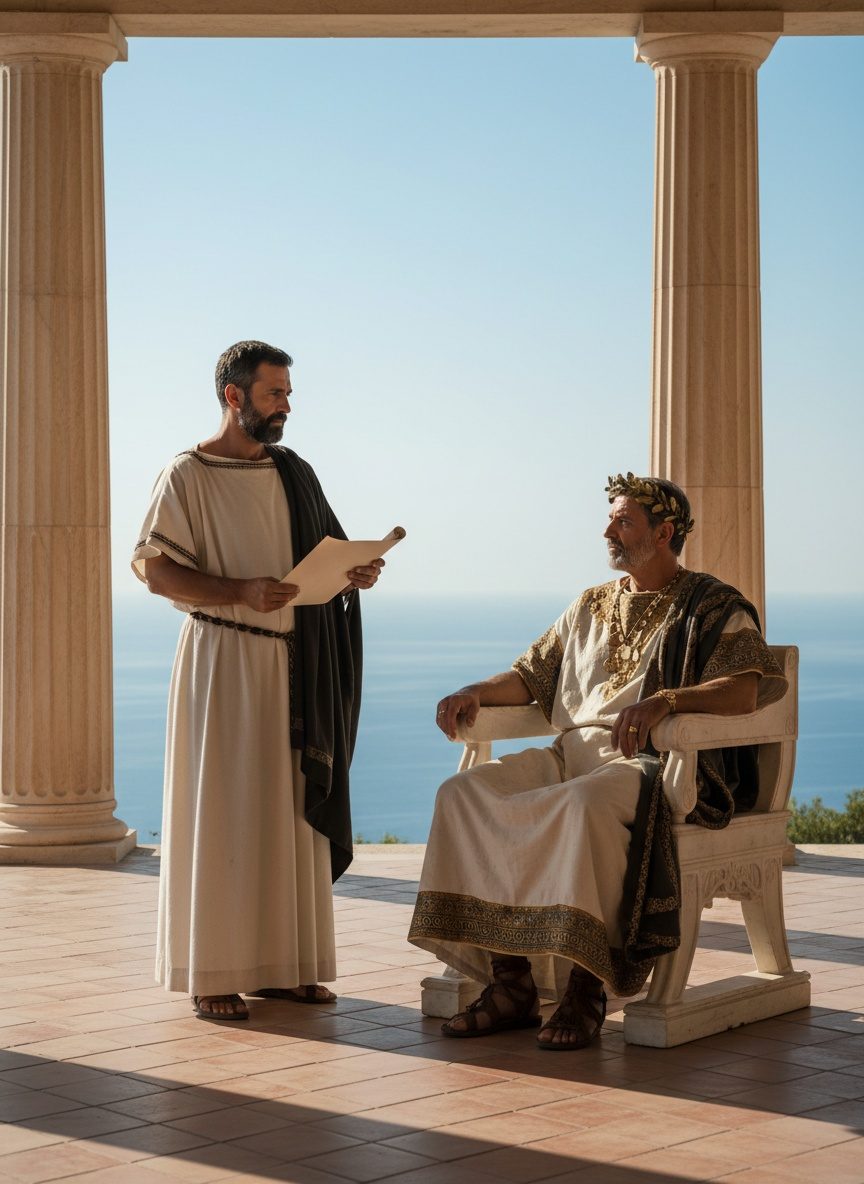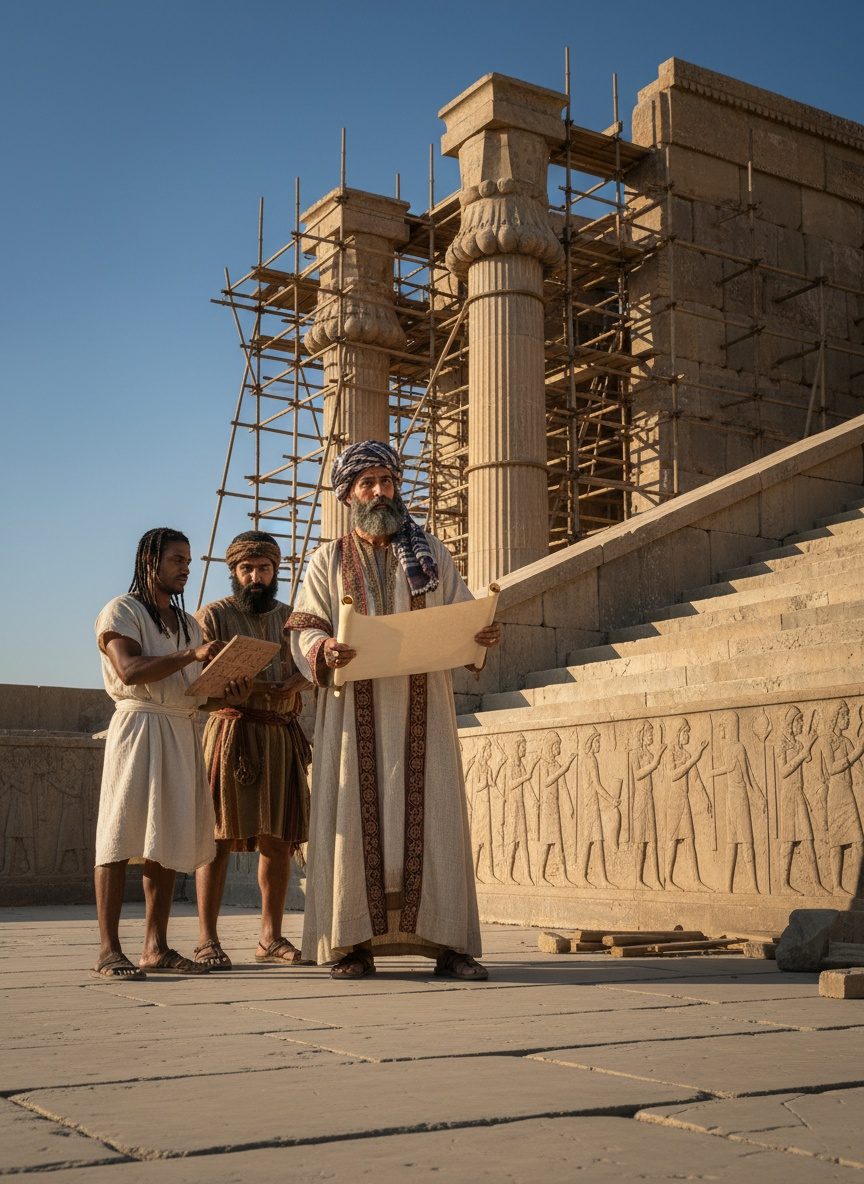
515 BC. The unrelenting sun cast long shadows over the rocky outcrop of the Persian plateau.
A Vision Beyond the Palatial
Amidst the vast expanse of his empire, Darius I, also known as Darius the Great, stood with a vision far beyond the walls of a mere palace. He imagined a place that embodied the power and unity of his empire, an edifice not just for dwelling but for declaration. The concept of Persepolis was daring in its simplicity: it would be a city built not as a residence for kings but as a monumental symbol of the empire’s richness and diversity. The barren plains of Persia would soon give rise to a city unlike any other, defying conventional notions of royal architecture.
This groundbreaking idea would challenge the traditions of power as Persepolis was to serve as more than a seat of authority. It would be where the empire's subjects, regardless of their homeland's distance from Persia, could see pieces of their heritage towering across the plains, reminding them they were vital threads in Persia’s grand tapestry. Darius’s foresight anticipated a dialog among nations within the stone columns and palatial constructions that followed, despite no king ever intending to reside there.
The Symphony of Artisans
To bring Persepolis into existence, Darius orchestrated a human symphony, assembling skilled artisans and craftsmen from the far corners of his empire. Stonemasons from Egypt, sculptors from Greece, and metalworkers from Babylon all convened – a convergence of diverse cultures, languages, and skills. This international assembly was unprecedented, and the synergy they created was nothing short of an artistic marvel. Each craftsman etched into stone and carved into wood their own traditions, grounding Persepolis in the spirit of every nation under Persian rule.
Remarkably, these laborers were not slaves. Unlike the forced labor seen in the construction of other illustrious edifices, such as the pyramids or ziggurats, these men were paid for their expertise, a fact meticulously recorded on clay tablets. These tablets serve today as silent witnesses to a society that valued skilled labor in a manner rarely glimpsed in antiquity. Darius’s approach was radical: it acknowledged and rewarded the talents of many, fostering loyalty and respect rather than fear and resentment.
The City of Columns
The skyline of Persepolis became a testament to Darius’s ambition, adorned with towering columns like fingers reaching towards the heavens. Each stone pillar was a monolith of collaboration, their designs often depicting scenes of unity and prosperity. Reliefs carved meticulously told stories of tribute-bearing delegations from tributary nations, forever immortalizing the theme of cooperation. These artworks were not mere decorations; they were visual sermons reinforcing the king’s message of inclusion and respect for all peoples under his rule.
Walking through Persepolis, one would encounter a plethora of styles and motifs, from the lotus flowers of Egypt to the intricate griffins of Mesopotamia, showcasing the cultural intermingling Darius cherished. The city's Grand Apadana, a venue for the royal audience, greeted visitors with columns topped by dual-headed bulls and eagles, symbols of strength and vigilance that echoed through the empire’s heart.
The Temple of Communication
Beyond the grandeur and spectacle, Persepolis served another unique purpose: it was a hub of communication. As a nodal point of intersection within the vast empire, it facilitated not only the political and economic management but also allowed for a cultural exchange of unparalleled proportions. Diplomats, merchants, and emissaries gathered here, sharing their unique perspectives and innovations with one another, fostering a vibrant exchange of ideas that traveled back to their homelands.
Innovations transferred from one frontier to another were not merely artefacts of commerce but ideas and philosophies that influenced societal evolution across the known world. In this way, Persepolis played a critical role in the dissemination of knowledge and culture, acting as the cradle of diplomatic exchanges among civilizations, truly a city designed as a crossroad of ideas.
The Legacy of Intent
Though Persepolis would eventually fall into ruin, plundered by Alexander the Great, its echo remains in the echoes of history. Darius I’s creation was not simply a sleeping city of stones but a dynamic testament to a ruler’s aspiration for a harmonious empire of diverse nations. Its palaces and halls, despite their ultimate fate, succeeded in conveying the interconnectedness and shared identity that Darius cherished, an aspect that underscores its enduring allure.
In a world that often sought unity through conquest, Darius’s bold vision of Persepolis reminds us of the power of inclusion and respect for cultural plurality. At a time when many leaders smothered the flame of diversity in pursuit of monolithic control, Darius chose to ignite it, ensuring Persepolis’s lessons resonate throughout history. As we look back at this ancient hallowed ground, we rediscover not just the majesty of architecture but a broader perspective on leadership that values harmony over dominance, a narrative that continues to find relevance and reflection in our present world.