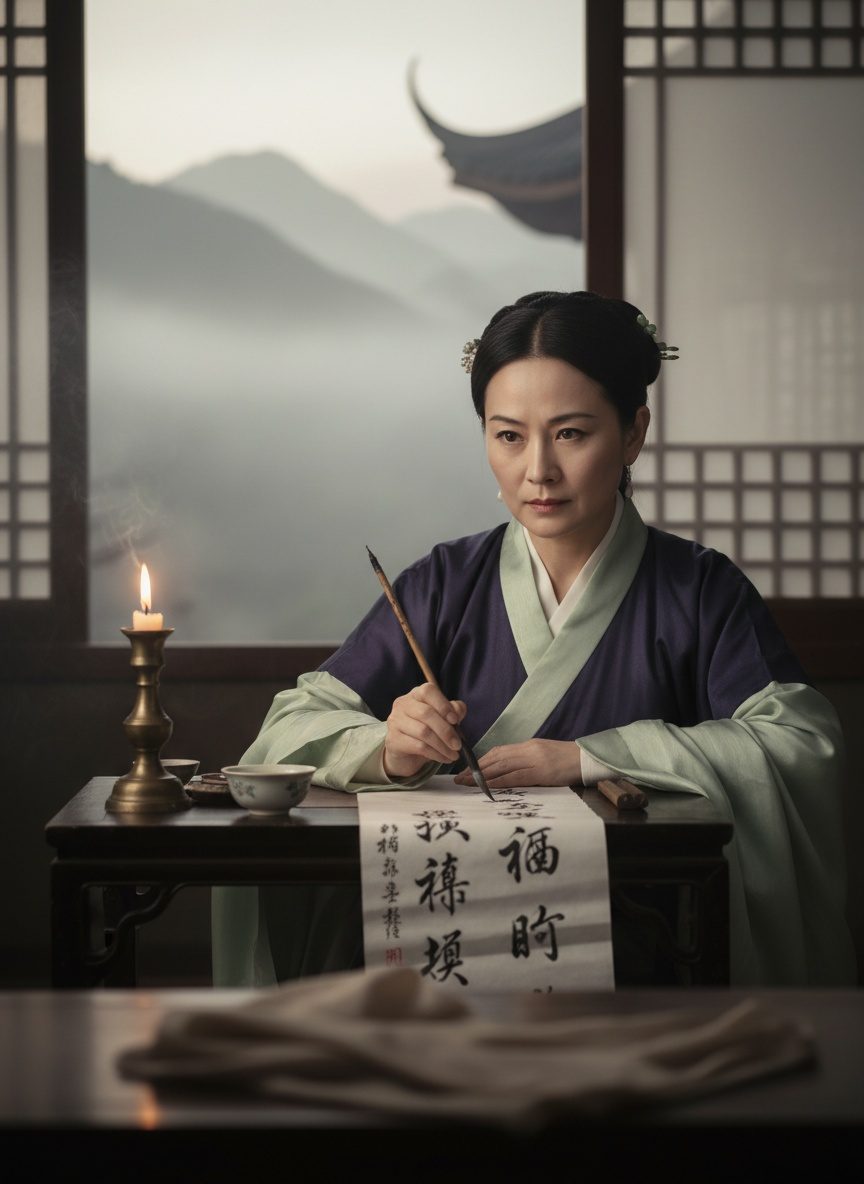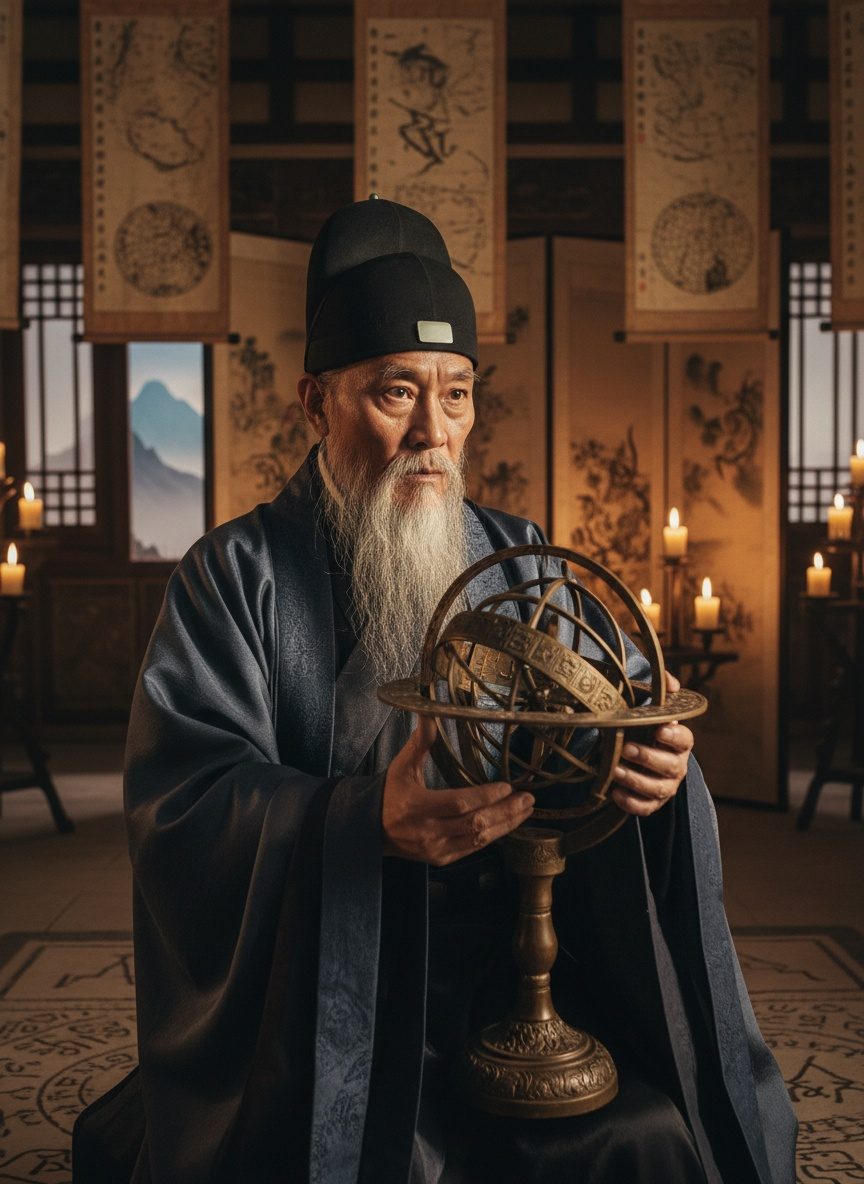
The air in the imperial capital of Chang’an carried the weight of destiny, thick with the scent of sandalwood incense and the low hum of whispered prayers. Outside the towering palace walls, cobbled streets bustled with merchants and officials, but inside, the sounds were muted, the vast marble corridors a testament to the Tang Dynasty's order and majesty. Behind the delicate silk screens separating the chambers of Empress Wu Zetian, silence hung as heavy as the overcast sky. Empress Wu, known for her ambition and astute intellect, had a singular demand that day: she required the heavens to speak.
The Celestial Architect
In 665 AD, Li Chunfeng, a man whose gaze reached beyond the stars, stood at the heart of China's astronomical golden age. Tall, with a beard flecked with silver, his eyes sparkled with the knowledge of celestial mysteries unearthed. For years, his meticulous observations had charted the capricious dance of the heavens. Li Chunfeng was a scholar not merely content with understanding the celestial sphere; he bent it to his will, creating a calendar that forewarned of eclipses and aligned the empire's agrarian schedules with cosmic precision.
Li’s genius had long attracted the attention of the imperial court, but it was his formidable prediction of three solar eclipses to the exact day that set him apart. This level of precision had not been seen before, and it was as if Li had captured the very essence of the sky's patterns on parchment. His gift was more than mathematics—it was a dialogue with the stars themselves. The emperor's court was awash with his praises, but as Empress Wu ascended to power, she sought more than just a court astrologer. She needed a voice for the heavens—a voice that would legitimatize her unprecedented rule.
Heavens and Power
Wu Zetian was a figure cloaked in both reverence and fear. The only woman to ever ascend the Chinese throne in her own right, she was a shrewd ruler who understood the symbolic power of cosmic favor. Such phenomena as comets and eclipses were seen as divine communications, portents that could embolden or undermine her rule. Thus, she summoned Li Chunfeng, seeking to harness his unparalleled knowledge to lend celestial credence to her imperial reign.
As Li entered the secluded imperial chamber, the empress sat poised, her dark eyes piercing yet inscrutable. She requested his guidance, seeking to interpret the heavens’ omens that might influence her empire's fate. Li presented her with his masterpiece—an exquisite calendar that not only marked time but intertwined it with the cosmic ballet above. Silent, yet profound, this calendar was unlike any ever created—a testament to human ingenuity and a roadmap of celestial harmony.
The Calendar Conundrum
Wu Zetian kept Li's calendar by her side. It became her compass in the political storms that swirled around the throne. As rumors of rebellion brewed and whispers of discontent simmered, the empress used the calendar's celestial predictions to bolster her decisions, wielding them like an emperor's sword. Here was a woman who knew that control over such knowledge was nothing short of power. To her subjects, it signified the divine will that an empress should rule; to her enemies, it was a reminder that her mandate was written in the stars.
The calendar’s creation marked the advent of a new era where scientific inquiry began to challenge traditional superstitions, yet its implications were far more profound. This was a time when knowledge itself was power—an epochal shift that Wu Zetian deftly understood. She spoke with the voice of the heavens behind her, a narrative that underscored her sovereignty and enhanced the legitimacy of her reign.
Celestial Legacies
Wu Zetian’s reign and Li Chunfeng’s astronomical achievements were intertwined in a beautiful dance of science and politics, their legacies lingering long after the chimes signaling the end of their era faded away. While the empress navigated the turbulent waters of governance, often viewed through the lens of complexity and contradiction, Li's work laid the foundational stones of Chinese astronomy that future scholars would build upon.
Their story reflects the broader cultural and intellectual currents of the time—an era where the pursuit of knowledge began carving a pathway through mysticism toward rational inquiry. Empress Wu's unique recognition of such scholarly pursuits exemplifies an understanding that the celestial bodies, if decoded, could serve as powerful allies in the dance of imperial politics.
Their intertwined fates challenge us to reconsider the age-old dialogue between humanity and the cosmos. In an era dominated by male emperors, the stars, for a brief moment, answered to a woman, changing the trajectory of an entire nation and leaving us to ponder the enduring dance between power and knowledge that shapes our world even today.