He had no crown, no gold-laden chariot to carry him into battle. Milo of Croton never held a sword in combat. His weapon was a strength forged in silent discipline, each day marked by the gentle growth of a young calf.
The Weight of Determination
Milo of Croton, a name that still drifts through the tales of ancient Greece, was born not into the grandeur of Athens or the strategic might of Sparta, but in the humble settlement of Croton. This town, nestled in what is now southern Italy, became the unlikely birthplace of one of the most fascinating legends of physical prowess the world would ever know. Milo’s journey from a typical Greek youth to a symbol of strength starts with a deceptively simple act — lifting a newborn calf.
On the cusp of adolescence, Milo embarked on a daily ritual that required no lavish equipment or mystical guidance. He lifted a calf, carrying it across his shoulders with an ease that spoke of both youthful vitality and an uncommon resolve. As the calf grew, so did his strength, honed by the relentless progression of his living weights. This tale of simple yet profound commitment is not merely about an exercise regimen; it is about an enduring mentality that propelled Milo to heights unimaginable for his time.
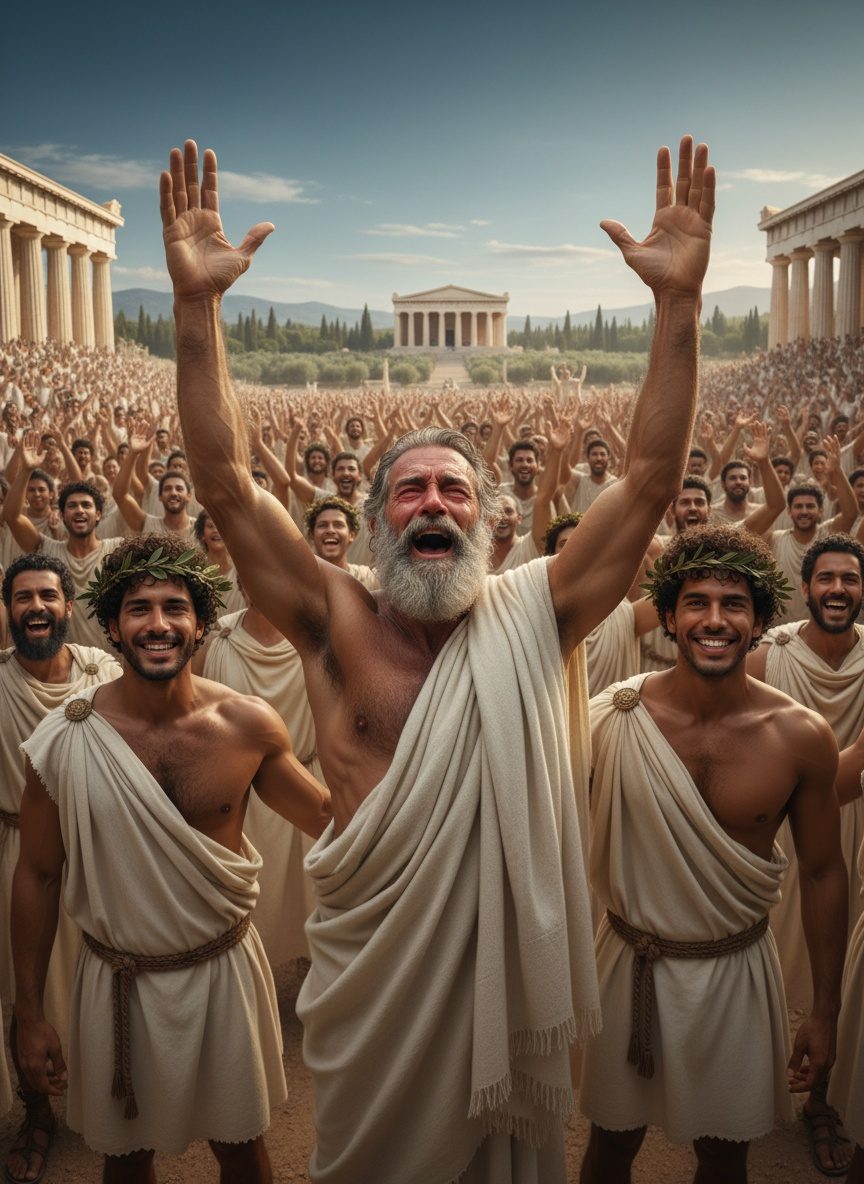
Renowned as a wrestler, Milo entered the Olympic Games in 532 BC, but he wasn’t drawn to the event in search of personal glory. For Milo, the games were an arena where his years of dedicated toil could manifest into a tangible moment of triumph. The Olympic stadium, already a crucible of human achievement, was electrified by his presence. Milling about the arena, whispers of his peculiar form of training spread, leaving spectators to ponder whether his legend could withstand the proving grounds of the day.
The Colossal Feat
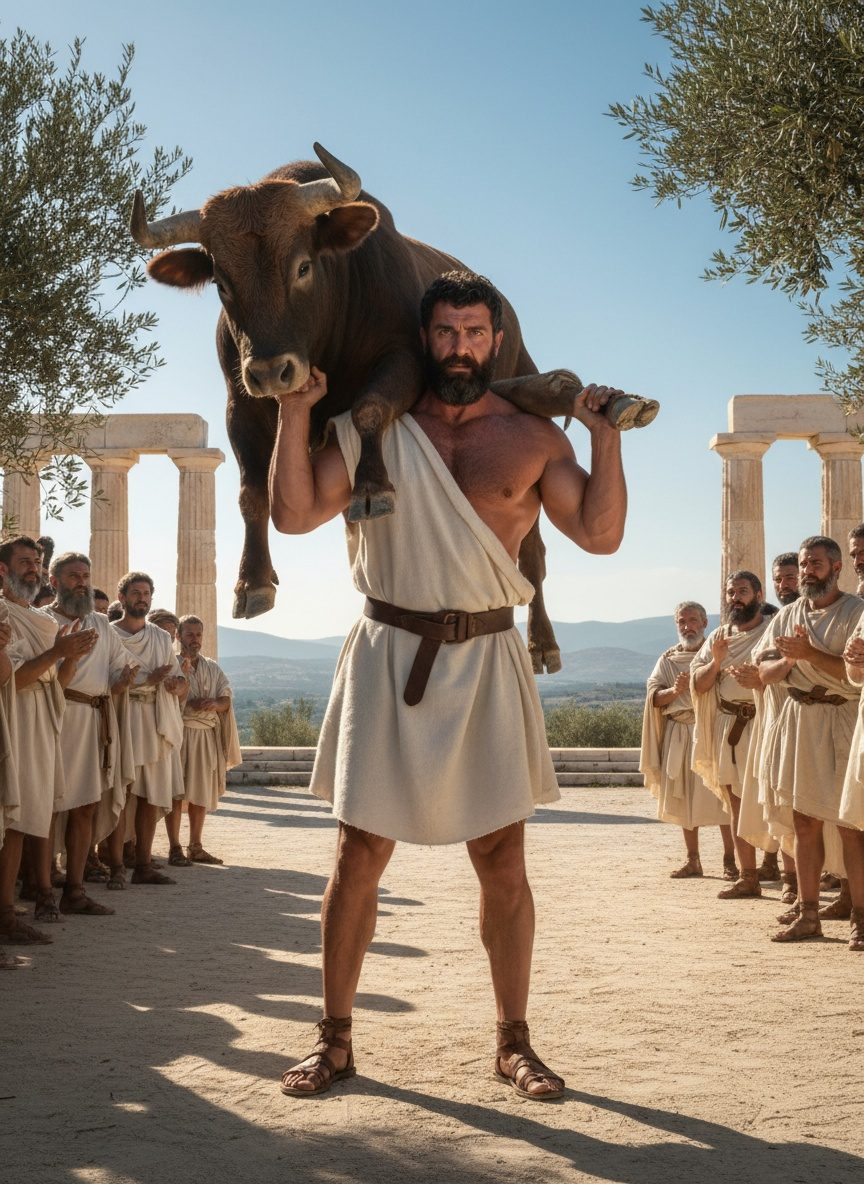
As he stepped into the Olympic stadium, the crowd fell into a reverent silence. The anticipation was almost tangible, an electric charge hanging in the warm Grecian air. Milo, no longer just the boy of Croton, approached the field with the grace of a lion and the steadfastness of a Spartan warrior. What the onlookers might not have expected was the once small calf, now a full-grown bull, draped across his shoulders. The animal, weighing in at nearly a thousand pounds, was not just a testament to Milo’s strength, but also a living narrative of his dedication.
This act, more dramatic than any verbal boast, signified a physical and symbolic triumph. Here was a man who had calibrated his entire existence to revolve around the ordinary growth of an animal, transformed into a monumental act of strength that astonished the world. Lifting the bull was the culmination of four years of unwavering dedication, each day a step towards this unparalleled display of might.
The Olympics crowned him not just as a victor, but as a legend. Over the ensuing years, Milo of Croton would secure five more victories at the revered Games, solidifying his place in history as a symbol of human strength and perseverance. His reputation echoed across Greece, a fable told alongside those of gods and monsters. Yet, it wasn’t just his physical capabilities that earned him admiration; Milo embodied a unique blend of humanity and heroism, emphasizing resilience as much as raw strength.
Beyond Physical Strength
To those steeped in the mythos of ancient athletics, Milo's story suggests not only the triumph of the individual but the very essence of Greek thoughts on strength and virtue. In a culture that revered both physical prowess and philosophical wisdom, Milo stood as a touchstone of aspiration. He encapsulated the Greek ideal of arete, a pursuit of excellence bound not by the materials we use or the heavens we pray to, but by the relentless discipline we practice every day. To carry a bull was to bring alive the ancient tradition of training mind and body in harmonious unity.
Even though he lived over two millennia ago, Milo’s legacy persists. He has been immortalized not in the epic tales reserved for gods, nor in the political treatises concerning war and peace, but in the inspirational paradigms of personal development. Athletes, philosophers, and common folk alike found their own daily struggles mirrored in the saga of the boy from Croton who simply picked up a calf.
Thus, Milo's story transcends time, a reminder that greatness is often cultivated in the mundane. It suggests that transformation requires no supernatural interventions; just a daily commitment to growth and perseverance. Milo of Croton, the man who grew stronger with his bull, metaphorically carried Greece with him — not through physical conquest, but through inspiring discipline and the compelling allure of human potential realized.