The scorching Moroccan sun hangs low over the city of Fez, casting long shadows on the narrow streets. The muezzins' distant calls echo through the air, inviting the faithful to evening prayers, but the usual tranquility within the court of Sultan Abu Inan is disturbed by whispers and curious glances. For today, on this day in 1354, a famed traveler has returned to weave tales of lands unknown. His name is Ibn Battuta, and his stories are about to stir the very realm of believability.
Into the Vast Unknown
Twenty-four years earlier, a young Berber scholar named Ibn Battuta set forth from his native Tangier on what was originally intended as a spiritual journey — a hajj to Mecca. Clad in a simple robe and armed only with his faith and a curious heart, Battuta embarked on a pilgrimage that would span across the known world and beyond, evolving into an odyssey of epic proportions. From the deserts of Sinai to the bustling bazaars of Cairo, he traversed the realms of the Islamic world, reaching its farthest corners and pushing into regions unknown to even the most seasoned of travelers.
Driven by an insatiable desire to learn and experience, Ibn Battuta crossed forty countries, immersing himself in numerous cultures, languages, and traditions. His adventures took him to the court of the Sultan of Delhi, where opulent banquets were hosted in his honor, and across the Indian Ocean where he faced harrowing shipwrecks that threatened to end his journey prematurely. He navigated the perilous Amazonian rivers of Malabar and journeyed to the magnificent lands of China, a world so different yet magnetically fascinating in its splendor and antiquity.
The Reluctance of Belief
Yet, upon returning to his homeland, Ibn Battuta was met not with accolades, but skepticism. The scholars and officials of Fez, guardians of Moroccan knowledge, found his tales hard to swallow. Could a single man have genuinely experienced such an array of cultures, survived such numerous perils, and dined with rulers in places that seemed mythically distant? It was a question that resonated with deeply rooted disbelief. The notion that a north African traveler could have ventured so far beyond the boundaries of the known Islamic world seemed implausible.
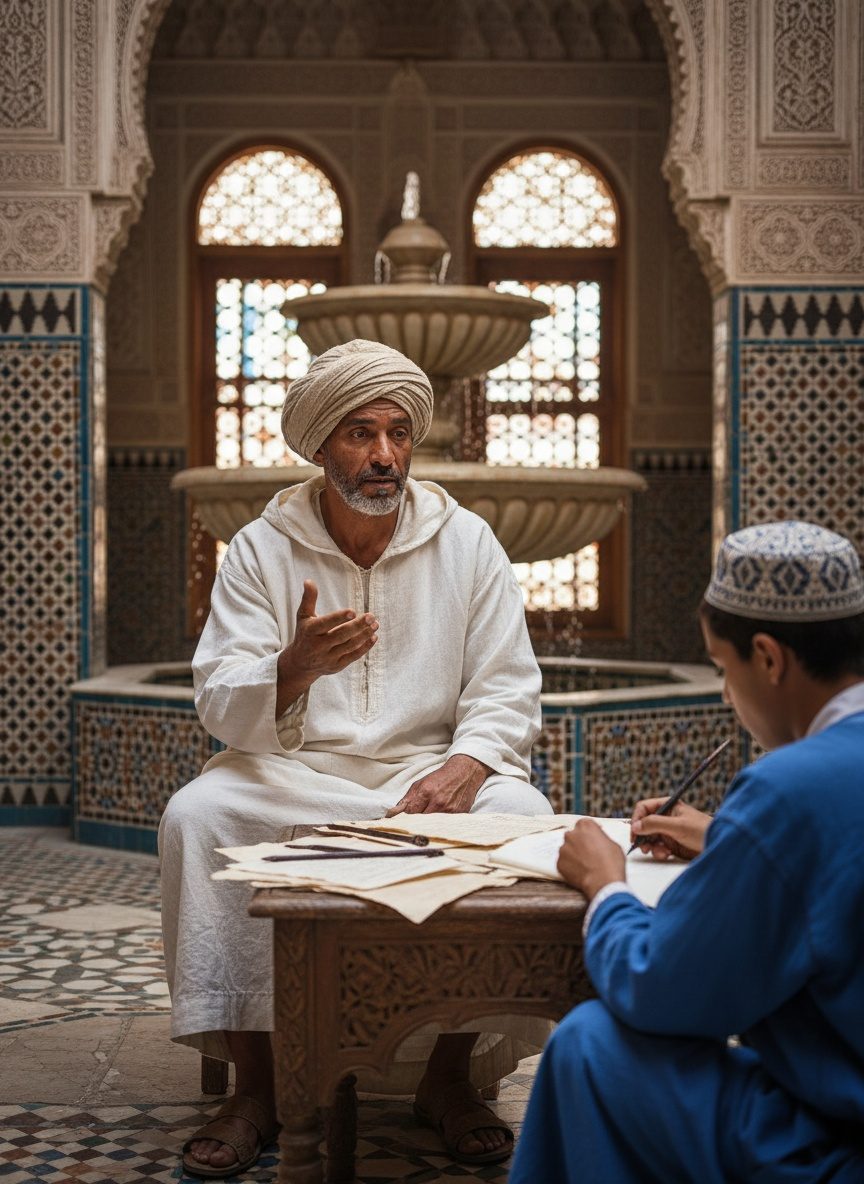
Despite the formidable doubts, Ibn Battuta chose to document his travels, dictating his experiences to the young scholar Ibn Juzayy. The result, *Rihla*—a travel narrative, was symbolic in its scope and plan, encompassing his journey across the disparate worlds he had meticulously traversed. Yet, how does one capture the boundless unpredictability of a life truly dedicated to travel and discovery? A narrative that defied the constraints of prevailing geographical understanding and dared to bridge worlds so diverse and distant?
An Exceptional Encounter with the Exotic
The details contained within Ibn Battuta’s accounts paint a vivid picture of his era. He speaks of the grandeur of the Mali Empire in Africa, where kings dazzled him with their vast armies and gold. He reminisces about the bustling trade at the port of Calicut, a cosmopolitan hub on the Malabar Coast where cultures meld and merge. Even the formidable Mongol Khans are more than mere mentions; they are glimpses into the administration of vast lands ridden with as much conquest as cultural exchange.
It is in these details that the core brilliance of his travels emerges. Readers, both then and now, are astonished by his audacity and wit. He navigated with the aid of stars, slept under foreign skies, and spoke with tongues not his own. He carried home not just stories, but an enlightenment—a fresh perspective on an interconnected world that few from his time would know.
The Wave of the Narrative
Today, Ibn Battuta remains a figure of wonder, his narrative evoking both the appeal and skepticism it incited centuries ago. While his stories span the globe with a dazzling array of encounters, the underlying themes resonate with core human truths: the hunger for exploration and the quest for understanding. In sharing his incredible experiences, he offered his contemporaries a glimpse of a world far wider and more interconnected than anyone had imagined.
As the whispers of doubt subsided over time, the spirit of Ibn Battuta’s journeys continued to resonate. Amidst skepticism, he forged a connection between vastly different cultures, quietly laying the groundwork for a greater global dialogue. His odyssey challenges us to see the world not just through the maps we hold, but through the maps we will create—where borders are lines we cross and every story we hear widens our horizon.