May 20, 1999. The snow glistened under the first rays of dawn.
A Deadly Mountain Adventure
The landscape of Norway, with its rugged mountains and crystal-clear streams, beckons adventurers from around the world. Among them was a Norwegian doctor who often sought solace and challenge in these harsh terrains. That morning, she embarked on yet another hiking expedition, unaware of the life-altering journey to come.
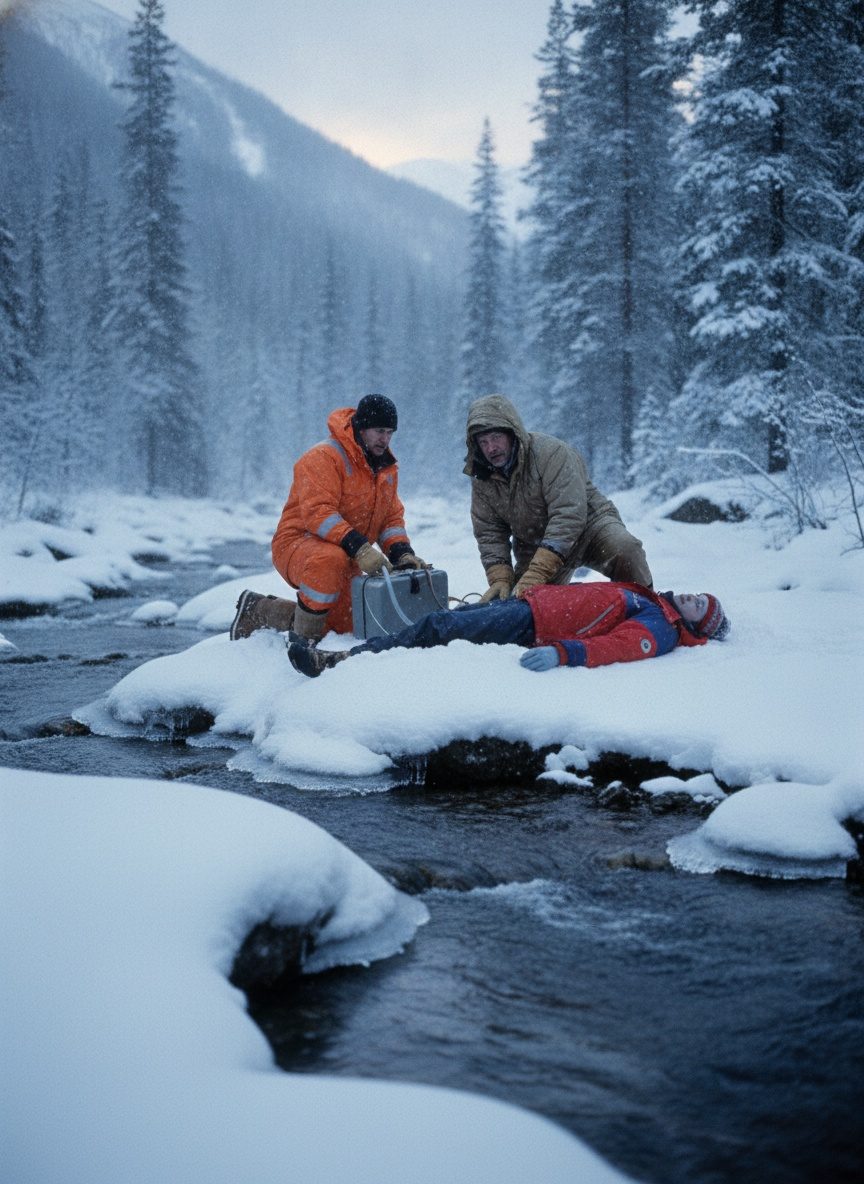
The spring thaw had filled the streams with frigid, rushing water, a treacherous deceiver beneath the thinning ice. As she traversed the snowy path, disaster struck. Her footing faltered, and she plummeted into the sub-zero torrent. It wasn't just the force of the water that posed a threat; it was its freezing embrace. The bitter cold engulfed her, slowing her bodily functions until, eventually, her heart stopped. Her body temperature plummeted to a shocking 13.7°C (56.7°F), a point beyond which human survival seemed impossible.
This was no routine rescue. By the time help arrived, the doctor had been entombed in ice for over an hour, a time span that sealed her fate in the eyes of many. Yet, there was a tangible aura of determination surrounding the rescue team: a steadfast refusal to concede to what appeared inevitable.
Beyond the Edge of Life
When the doctor was finally pulled from the icy grip of the stream, she was, to all appearances, a lifeless form. Her skin was icy blue, her heart motionless. The limits of medical knowledge seemed to dictate that death was certain, her story ending here. However, the determined rescue team, driven by both faith and perhaps a touch of madness, were not prepared to leave her fate sealed by the mountain's icy grip.
Transported to the nearest hospital, she became the subject of an unprecedented medical challenge. The doctors who took over her care were venturing into the unknown, confronting the boundaries of human endurance and survival. Working tirelessly, their first monumental task was to restore some semblance of warmth to her body, to reignite the embers of life that had been snuffed out by the cold.
Hours stretched unbearably as the medical team refused to relent in their attempts to thaw her icy limbs and core. Machines hummed persistently, battling against the chill that had become her silent conqueror. It was an intricate dance between patience and urgency, a test of medical ingenuity and relentless human will.
The Miracle of Awakening
And then, against all odds, the impossible happened. Slowly, almost imperceptibly at first, warmth began to seep back into her veins. Her heart, which had been silent for hours, dared to tremor with a faint pulse. The steady hand of a physician felt the first stirrings of life, burgeoning in what had been a seemingly barren form.
Her awakening was not a sudden jolt but a gentle ascension from the shadows of death. Eyelids flickered as neurons tentatively reconnected, seeking the pathways of thought and awareness. As news of her revival spread through the hospital corridors, disbelief turned into celebration. She opened her eyes, not just to the surrounding faces, but to the new horizons of medical science she had involuntarily revealed.
Her survival, unfathomable as it was, did not merely challenge preconceived limitations; it shattered them. Here was a living testament to the extraordinary resilience of the human body, underpinned by the unyielding spirit of those who refused to surrender to despair.
Rewriting the Boundaries of Human Survival
The implications of her experience ripple far beyond the personal tale of her survival. Her case became an instrumental turning point in medical studies on hypothermia and its treatment. The very laws that seemed etched in stone—as immutable as the ice that nearly claimed her—were now being revised, driven by her unintentional but monumental contribution.
This remarkable event has since inspired reevaluations in rescue operations and treatment protocols worldwide. The extraordinary resiliency she displayed prompted a deeper understanding of how colder temperatures, previously thought fatal, could paradoxically serve as a preservative, allowing the human body to withstand what was once deemed unsurvivable.
Her story is a reminder that certain boundaries of life and death are not as defined as they once seemed. As much as it tells of a singular triumph over nature's extremes, it also sparks deeper questions about our own potentials and resilience. Sometimes, the greatest advances come not from planned pursuits but from responding to the unexpected with unwavering determination. The lessons unearthed in the snowy streams of Norway continue to ripple through the medical world, proof that even in the icy grasp of death, life can quietly, stubbornly, and brilliantly reignite.