Ernest Shackleton was unprepared for disaster. Yet he turned calamity into one of history's greatest survival stories.
Stranded by Ice, Redeemed by Leadership
In the early months of 1915, what should have been a pioneering expedition swiftly devolved into a nightmare. The ship Endurance, under the command of Ernest Shackleton, was trapped by the unyielding grip of the Antarctic pack ice, marooned long before reaching the continent he intended to traverse. Stranded on this frozen sea, Shackleton's mission to cross Antarctica evaporated, supplanted by a single, daunting goal: survival.
The world in the early 20th century was no stranger to polar exploration, yet few had encountered nature's lethality quite like Shackleton's men. With their ship immobilized, the crew of 27 were left at the mercy of the shifting ice. Shackleton's leadership, however, would emerge as the crew's most invaluable asset. He was an unlikely figure for the role, perhaps, with more ambition than practical success to show – Antarctica had thwarted him before. But he possessed something else, a tenacity and an unwavering resolve that was infectious among his men.
Throughout the ten grueling months stuck in the ice, Shackleton maintained morale through routine and purpose. Tasks were assigned, hunts were organized, and spirits were bolstered by the unwavering smile of their leader. His genius lay not in trying to conquer the odds but in managing them - by shifting their collective focus from the failed expedition to the immediate priority of mutual survival. The Endurance ultimately succumbed to the encroaching ice on a fateful autumn day, the sound of splintering wood leaving no doubt that their path home would be far from ordinary.
A Voyage Across the World's Most Perilous Waters
As the Antarctic winter loomed, retreat onto the ice floes seemed inevitable. Yet, Shackleton was unwilling to resign to the bleak comfort of drifting ice. Instead, he crafted a daring plan to seek rescue by launching a lifeboat across treacherous seas, a voyage that required the utmost precision and fortitude. With no radio or rescue on the horizon, the responsibility rested firmly on his shoulders.
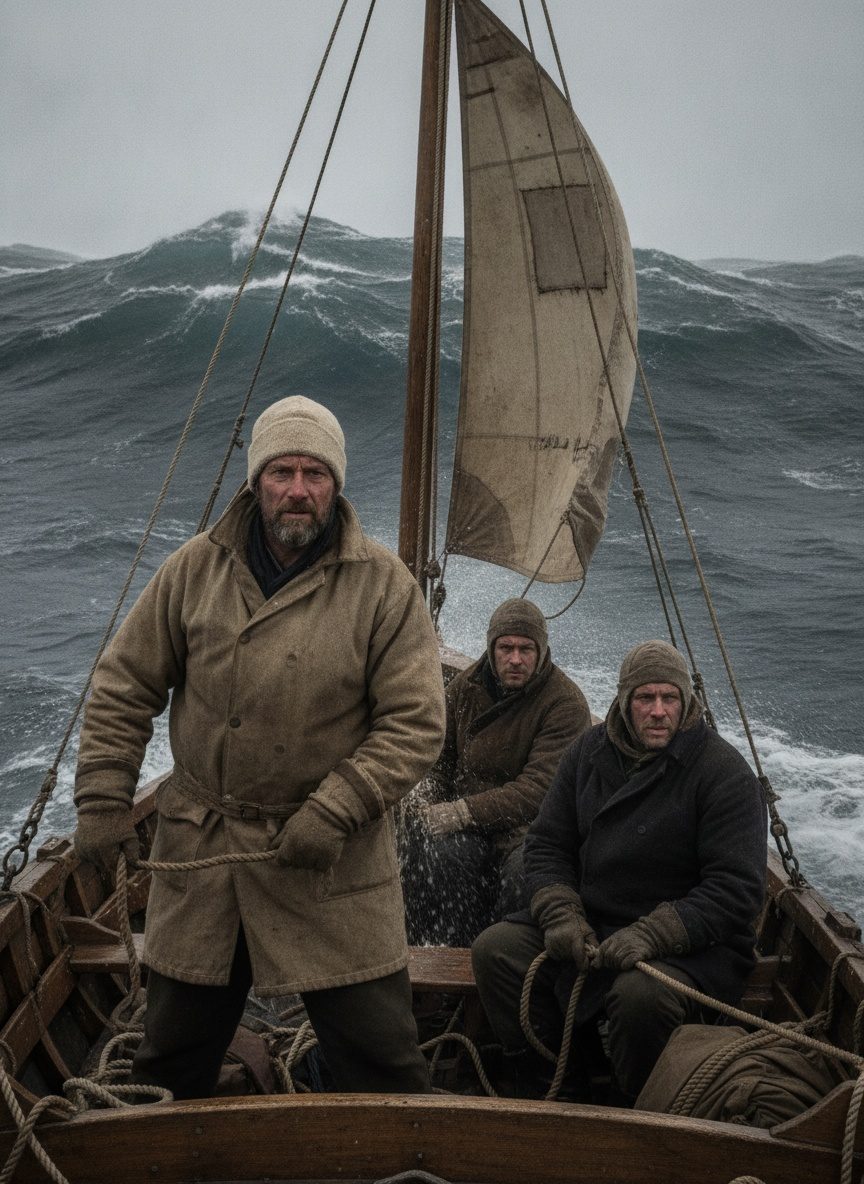
In April 1916, Shackleton selected a small team, six in all, himself included, to brave the 800-mile voyage to South Georgia Island in a 22-foot open boat named the James Caird. The journey before them was one of navigation by instinct as much as calculation, confronted by the constraints of primitive equipment and the unabating wrath of the Southern Ocean. The men faced monstrous waves that threatened to engulf them, biting winds, and the frigid cold that stole the very breath from their lungs.
Days turned into a hellish odyssey, putting Shackleton's resolve to the ultimate test. He pushed through sleepless nights, guided by the stars when visible, relying on intuition honed only by experience. Shackleton's ability to instill hope in moments of utmost despair often left his men in awe, making it clear that even the strongest of storms could not weather the endurance of the human spirit itself. Nearly two arduous weeks later, battered yet unbroken, they sighted land—a profound relief morphed by the treacherous task of mountain crossing still ahead.
Reunion on the Brink of Abandonment
On reaching South Georgia Island, an immediate reunion with civilization remained tantalizingly out of reach. Shackleton and his exhausted companions discovered they were stranded on the island's uninhabitable side, isolated by a spine of impassable mountains. Undaunted, Shackleton devised yet another daring plan, an overland trek that had never been accomplished before.
Scaling glaciers and jagged heights demanded they confront exhaustion with sheer will, led by Shackleton's unswerving commitment. Three men set off while the others stayed behind, each step a battle against the limits of human endurance. After 36 unforgiving hours, frostbitten and weary, they descended to safety—a whaling station that marked the return of hope for the entire crew.
It took Shackleton several months to secure a vessel willing to navigate back to the icebound crew. On August 1916, a ship finally cut through the ice-laden sea to Elephant Island where the remaining men awaited, resilient in the stark white embrace of the Antarctic. Not one soul was lost to the brutal elements or despair, a testament to Shackleton's ironclad promise that every man would return home.
The story of Shackleton's perilous voyage, his stalwart leadership, and the unyielding courage of his crew, has rippled through history as a paragon of grit and determination. It reminds us that the truest measure of leadership emerges not in times of glory, but in moments of profound adversity. In an era defined by its own challenges, Shackleton's story of defying the inconceivable serves as a beacon—the enduring power of unbreakable resolve.