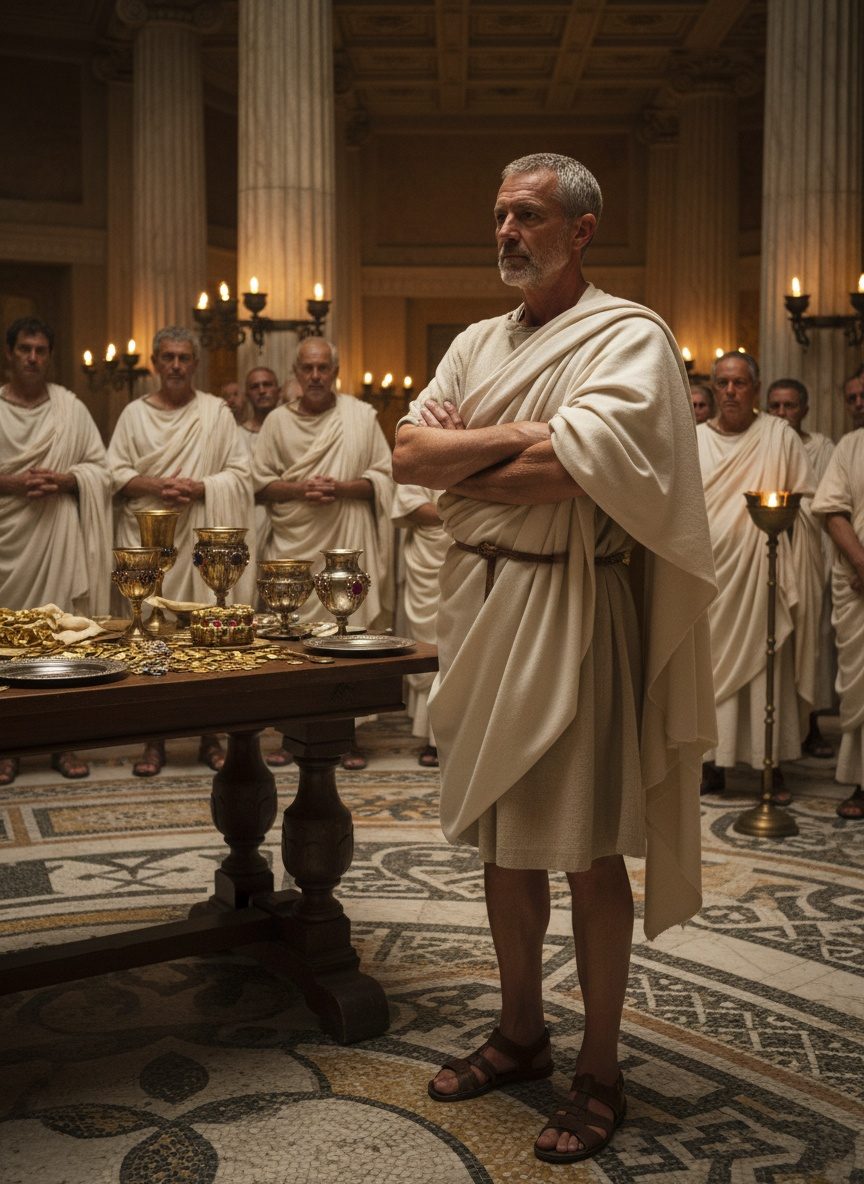
The early morning sun cast its light over the bustling streets of Rome, illuminating a city alive with determination and unease. Mists clung to the banks of the Tiber River, soon banished by a gentle breeze carrying with it the cacophony of a waking metropolis. By midmorning, the heart of the city thrummed with urgency. Somewhere within the majestic Senate building, men gathered under the shadows of its towering columns, each aware of the monumental decision that hung in the air like a foreboding cloud.
A Treasure Worth a Kingdom
It was 275 BC, and Rome found itself entangled in a web of warfare and political intrigue. The great general Gaius Fabricius Luscinus, a man of stalwart integrity and legendary poverty, stood amongst his peers. He was often seen as an anomaly in the capital. While others succumbed to the temptations brought by power, Fabricius was steadied by an unyielding moral compass. That day, the stakes were unlike any Rome had faced before.
A foreign emissary, bearing gifts of lavish gold, glittering jewels, and promises of lasting peace, sought to sway the stoic general's heart. The treasure was a fortune that could rival royalty, assembled to test the loyalty of those who treasured honor above riches. Rome was weary of war—its citizens longed for respite, and its leaders faced a pivotal choice. Betrayal, if embraced, might bring momentary solace or doom the Republic to crumbling foundations built on deceit.
The General's Silent Mockery
In the dim light of the Senate chamber, the treasure was unveiled, illuminating faces etched with greed and indecision. But Fabricius's expression remained unchanged, his eyes unaffected by the allure that had so easily cast others into indulgence. Observing the display, he allowed himself a simple amusement—a bemused chuckle that hung in the air like an echo defying time itself.
"Is this all you have?" he inquired, his voice carrying an edge of mockery rather than curiosity. For Fabricius, a man possessing almost nothing, it was the juxtaposition of his values against the temptations of luxury that fortified his very being. As the riches lay before him, untouched and unwanted, his laughter resonated as an indomitable force. The Senate chamber fell silent, the echoes of Fabricius’s disdain unveiling the shallow foundations of wealth that could not sway the spirit of Rome's poorest yet most unwavering guardian.
Impoverished but Unconquered
The story of Fabricius refusing such grandeur spread through the city like wildfire, setting the hearts of Romans alight with reverence and pride. In the annals of the Roman Republic, Fabricius emerged as the epitome of virtue—“the poorest man alive,” yet the greatest, embodying the soul of an empire that owed its endurance to sacrifices such as his. What Fabricius lacked in material wealth, he compensated with an abundance of principles, leaving an indelible mark on Rome's collective memory.
Fabricius's tale became a beacon, a measure by which all who dared tread the paths of Roman governance were judged. His refusal to accept gifts, even those offered by enemies and royalty themselves, built a legacy that transcended the corporeal and imprinted upon the ethereal spirit of Rome. As Rome expanded, the general’s laughter became a poignant reminder of integrity's role in the republic’s ascendancy.
Courage That Shamed and Inspired
Fabricius's actions did more than evoke shame in the hearts of those who faltered—they inspired. At this historical juncture, Rome required role models to guide its path, figures unyielding in virtue and steadfast in adversity. In the face of temptation, Fabricius simply walked away, leaving behind not only the gold and jewels but a powerful example of courage that reverberated throughout the ages.
In ancient times and today, the legacy of Fabricius calls to us—a testament to the enduring power of integrity. It teaches that the true measure of wealth is not the currency that lines one's pockets but the strength of character that glows from within. The story of Fabricius, standing resolutely against the tides of opulence, serves as a timeless reminder of the virtues that build and sustain great societies. A legacy, not of gilt and glitter, but of unwavering principles and a spirit that held Rome—and humanity—aloft in its most trying times.