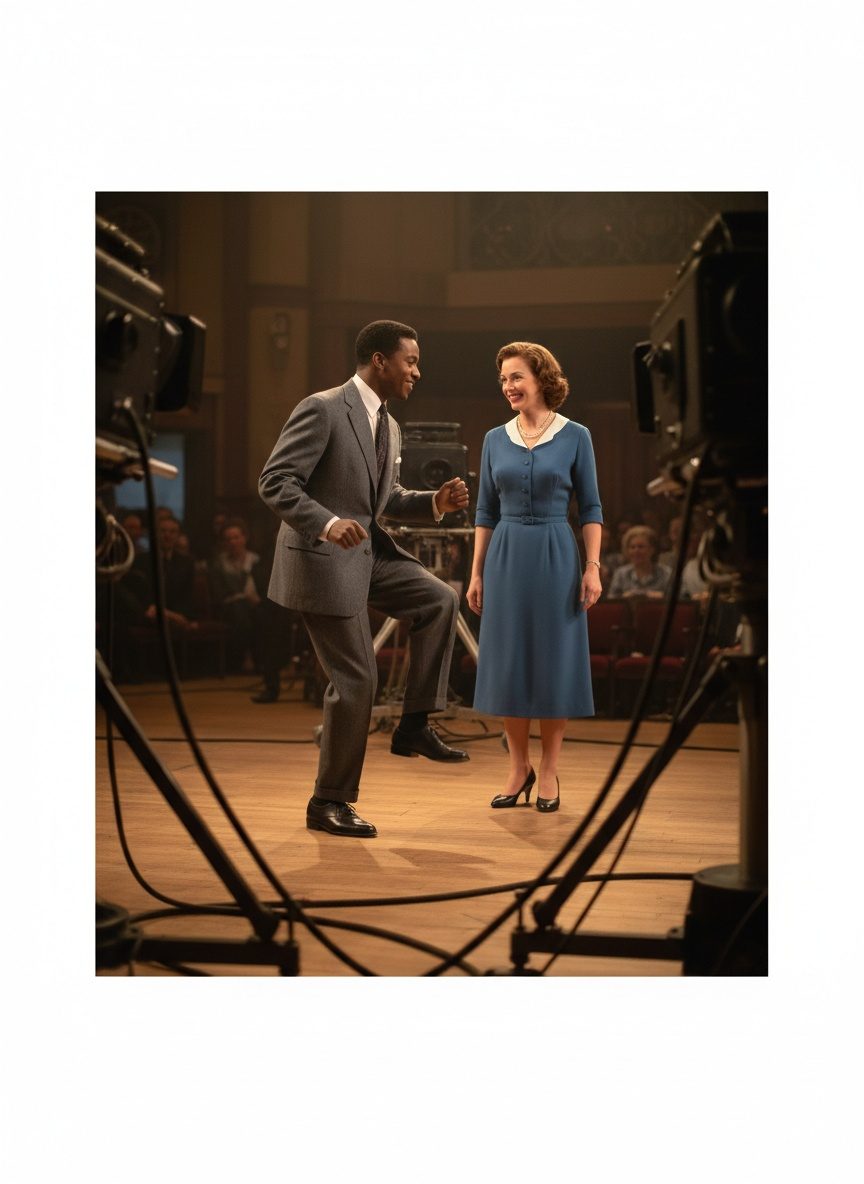
1955. The studio lights burned brightly against black and white.
Defying the Norms of Television's Golden Age
In mid-1950s America, the burgeoning world of television was a frontier teeming with possibility and fraught with the invisible barriers of racial prejudice. As TV screens across the nation gradually became a central piece of living room furniture, they often projected a carefully curated monochrome reality—one that glaringly omitted any trace of diversity. The world was changing, but not everyone was ready to embrace it. Yet in this era of conformity, a Hollywood actress and emerging television icon took a stand that would ripple through the entertainment world.
Betty White, already a beloved figure due to her effervescent charm and comedic brilliance, helmed her own show, *The Betty White Show*. The lighthearted variety series showcased her knack for humor and dance, but it was her bold decision in the face of bigotry that etched her into the annals of history. Television stations in the South, adhering to the segregated norms of the period, demanded that White remove a particular co-star from her show: Arthur Duncan, a prodigious Black tap dancer who had already dazzled audiences with his extraordinary talent.
Duncan wasn’t just a performer; he was a trailblazer in his own right. Born to dance, he had carved out a name for himself on international stages, wowing crowds with his nimble footwork and commanding stage presence. Yet, despite his talents, the tide of American racism threatened to overshadow him. Southern television stations, looking to align with the discriminatory sensibilities of their viewership, presented a stark ultimatum to White. She could either continue featuring Duncan or risk her show’s syndication prospects in significant markets.
A Dancer and His Defiant Champion
Rather than acquiescing to these demands, Betty White doubled down on her decision to include Arthur Duncan. In a time when many Hollywood figures would yield to pressure, White stood firm, proclaiming with a resolute grace, "I'm sorry. Live with it." These words were not just a gesture of defiance; they were a declaration that the talent of a man was not determined by the color of his skin.
In bold defiance of network pressures, she not only retained Duncan but upped his airtime. The redemptive rhythm of Duncan’s tap energy became a regular feature for those captivated by the show, inviting a reluctant nation to witness the vivacity and joy of a performer who deserved his spotlight. Each appearance of Duncan on the show was more than just an act of entertainment; it was a silent call to action in America’s ever-evolving dialogue on race and representation.
It's tantalizing to envision Arthur Duncan's feelings during these moments—gratitude certainly, but perhaps also a weightiness borne from understanding the gravity of being a symbol. The implicit partnership he shared with White was a silent canvas on which White painted her commitment to inclusion and equality. Her refusal to yield was a risk, one that many wouldn't have taken during those times, yet her decision became a defining force in Duncan's career and in the shifting tides of entertainment equity.
Recognition and Legacy in Shadowed Limelight
As the popularity of *The Betty White Show* grew, it became increasingly difficult for network executives to ignore Duncan. By standing behind him, Betty White escorted a remarkable dancer into the American consciousness. With each tap, shuffle, and ball change, Duncan not only entertained but also reshaped cultural preconceptions. Inspired by his persistence and White’s courage, Duncan embraced his role not just as an entertainer, but as a harbinger of change.
The show eventually ended, but for Duncan, his television stardom had only just begun. He went on to tour with musical legends, performed on iconic stages around the world, and became a regular on *The Lawrence Welk Show*—one of the longest-running variety shows in television history. His journey from obscurity to widespread acclaim was truly remarkable and was buoyed in large part due to the solidarity shown by White.
Duncan's talents carried him forward, but it was White's indomitable spirit that helped set him on a path where he could shine without constraint. The duo's unyielding partnership transcended what was expected, crafting a narrative where merit triumphed over bigotry.
Why This Story Endures
This episode in television history is a testament to the impact that courage and compassion can have in transforming cultural landscapes. Arthur Duncan's career, punctuated by moments of adversity and illumination, offers a narrative that continues to inspire—standing as a mirror to the past and a beacon for the future.
Betty White's staunch support wasn't just about a TV show or even about helping an individual; it was about advocating for a future where talent knows no barriers, and merit climbs even the highest of divides. Her actions resonate as a reminder that the smallest acts of defiance or kindness can echo far beyond their intended scope. The courage to stand unwavering in support of what is right is a lesson that remains timeless. In a world where television still continues to shape public perception, their story calls on us to reflect on the images we project and the voices we amplify. Perhaps most importantly, it invites us to remember that history isn't just written by those who lead but also by those who take a stand, no matter how small their stage may be.