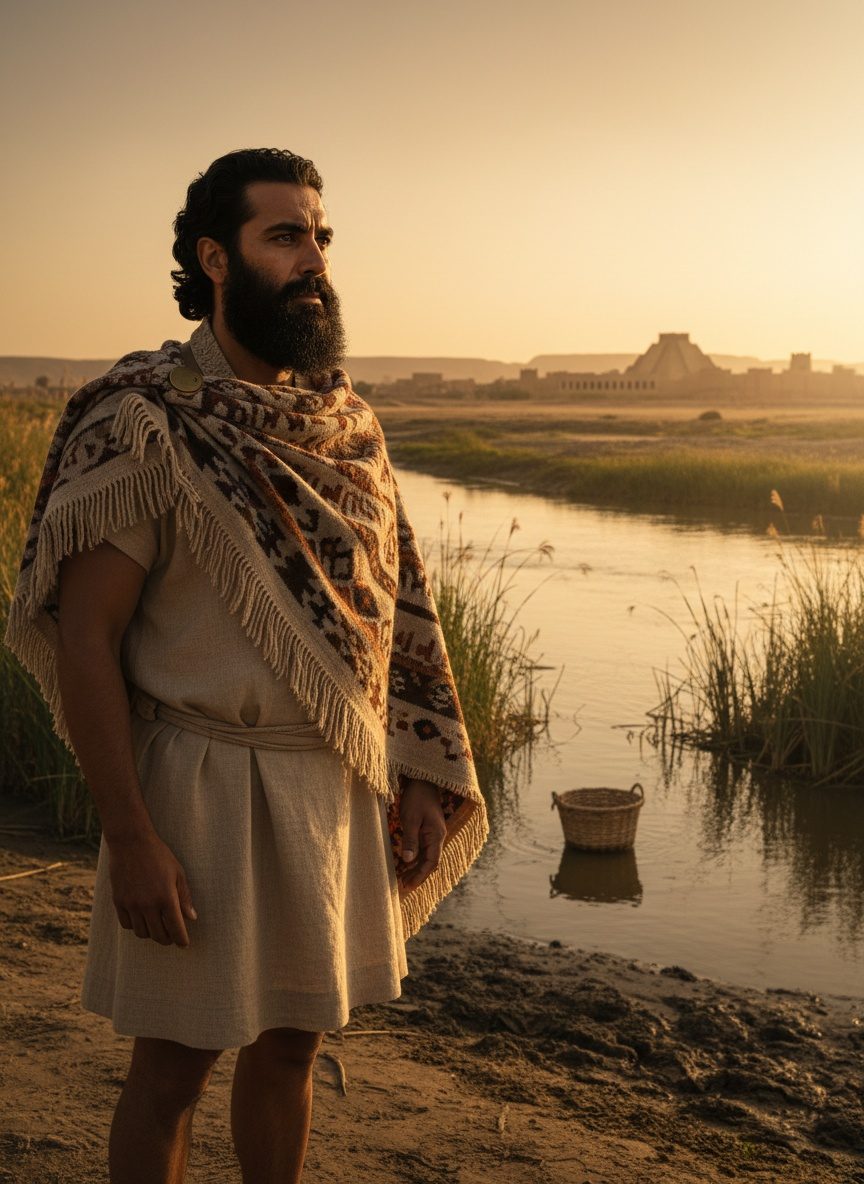
He was called a king, but he started life without a name. The world would soon know him as Sargon of Akkad, the man who carved the first empire from the cradle of civilization.
A Child of the Euphrates
Picture the banks of the mighty Euphrates River over four thousand years ago. A gentle current carrying hope and desperation in equal measure. It was here that a newborn, nestled in a reed basket, was sent adrift by a mother possibly too desperate or destitute to keep him. This ancient practice may have been the first act in what was to become an epic tale of transformation.
History tells us that the child was discovered by a humble gardener named Akki. Plucking the basket from the river, Akki took the baby in, raising him with the care and nurture worthy of royalty, even if the child’s origins were anything but. No one at that time could foresee the impact this young boy would have on history. Sargon—whose name in Akkadian means "the rightful king"—would not just grow up to rule a city-state; he would lay the foundations for an empire.
The Rise of Sargon
It was in the city of Kish where Sargon began his ascent. Serving initially as a cupbearer, he learned the intricacies of palace politics and came to understand leadership not from the throne but from observing it closely. Sargon was no ordinary servant; he had ambition, charisma, and an insatiable drive to conquer horizons beyond what his predecessors even dared to imagine.
Propelled by opportunity and spurred on by perhaps more than just ambition, Sargon seized power in Akkad. His rise was not merely due to his tactical prowess but also his understanding of his people, which helped him consolidate power effectively. The Akkadians, resilient and innovative, responded to Sargon's rule with fervor, and under his leadership, the once fragmented city-states of Mesopotamia were unified into the world’s first recorded empire.
The Empire Unfolds
Sargon's empire stretched from the Persian Gulf to the Mediterranean. This vast dominion wasn't just mere territory marked on a map—it was a cultural and economic tapestry woven together through force, diplomacy, and innovation. Sargon's reign brought about centralized bureaucracy and administrative practices that have echoed through history, laying the groundwork for civilizations to come.
The Akkadian Empire saw new architectural projects, advances in art, and improvements in agriculture. The empire established trade networks that extended far beyond its borders, ensuring a steady flow of resources and influence. This significance held sway not just due to the sheer size and power of his conquests but also because of the cultural renaissance it fostered. With its heart in Akkad, this empire became the birthplace of something new—the idea that a single leader could govern expansive and diverse regions.
A Legacy Forged in Stone
Despite its eventual collapse due to internal strife and external pressures, the legacy of Sargon and his empire resonated long after his reign. Unlike other rulers whose achievements faded with time, Sargon's story managed to pierce through the annals of myth and legend. His life’s journey from an anonymous basket-borne infant to the architect of history's first empire inspired future generations of rulers and continues to stir imaginations today.
What makes Sargon’s legacy truly extraordinary is not just the conquests recorded on ancient cuneiform tablets but the very notion of what he defined: the power of single vision to shape destiny. The story of Sargon reminds us of the potential that lies in unexpected places—a reminder that the most unassuming origins can spark the most monumental revolutions. It’s a timeless testament to human potential and the power of ambition, paving a path that influenced the march of empires thereafter.