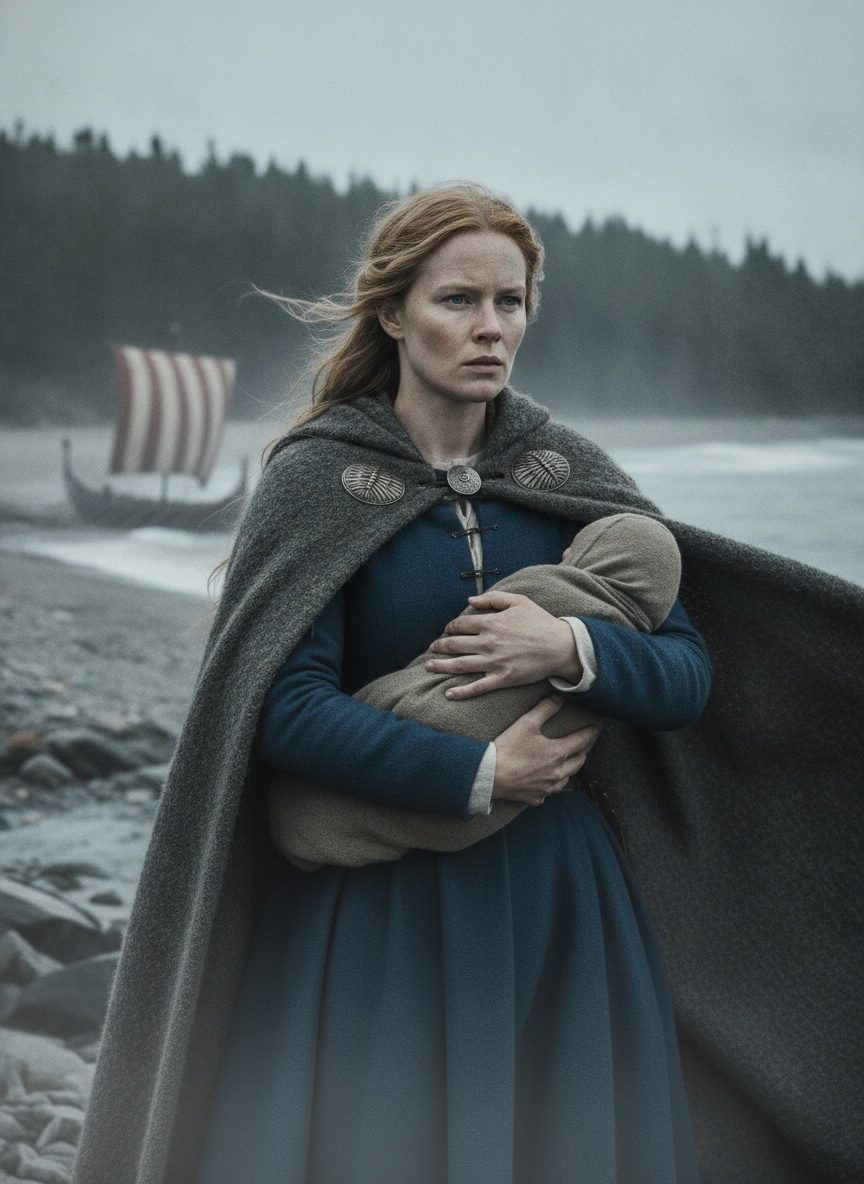
The sound of the surf crashing against the rugged shores of Vinland mingled with Gudrid Thorbjarnardóttir’s labored breathing. As each wave ebbed, pulling pebbles and shells into the churning sea, she felt the life within her urging to join the world. When the cry of her newborn son pierced the frigid air, it marked not just a new life but a historic moment—the first European born in the Americas, at the dizzying frontier of the known world.
Gudrid’s journey to this singular moment was the stuff of legend, one composed of audacious ventures, harrowing escapes, and feats of unimaginable endurance. It is said that she had been destined for something extraordinary from the beginning. Born in Iceland, Gudrid came from a lineage steeped in stories of exploration and survival. Her life unfolded in sync with the era of Viking expansion, when the Norse ventured across oceans that many of their contemporaries dared not sail.
Before she ever set foot on North American soil, Gudrid had navigated seas that had claimed many lives. The journey into the unknown began on the fateful voyage led by Thorfinn Karlsefni, who sought the bountiful lands beyond Greenland's icy grasp described by explorers like Leif Erikson. It wasn’t just the allure of fertile territories that motivated them; it was the magnetic pull of the unknown, a landscape rich with potential and peril in equal measure. The settlement they established in Vinland was merely a footnote in their plans, as the wilderness whispered both promise and threat.
The timeless rhythm of the ocean was a constant companion throughout Gudrid's life. It had been there when she survived a shipwreck, testing her resolve against the unyielding sea. She had seen first-hand the harrowing face of plague, which swept through settlements like a shadow, indifferent and indiscriminate. These trials tempered her spirit, preparing her for the bold venture to the very edge of the medieval world. Even seasoned Viking sailors, with their sun-hardened skin and ice-blue eyes, had faltered where Gudrid pressed on.
Vinland’s untamed landscape was unlike anything Gudrid had ever encountered. Dense forests stretched endlessly, and the scent of pine mingled with the briny ocean air. The land was lush and bountiful, a stark contrast to Greenland's inhospitable terrain. Yet, it was a harsh new reality; the settlers had to be vigilant as they lived among indigenous peoples, whose existence interwove with the land in intricate patterns unfamiliar to the Norse.
It was amidst these challenges that Gudrid gave life to her son, Snorri, on the unforgiving coast—a testament to resilience. His birth was more than an event in a far-off land; it was a bridge between continents and cultures, centuries before Columbus ever set sail. Snorri, cradled in the warmth of his mother’s embrace, was the first of those to stitch together the fabric of two worlds, though few could envision the extent of what his existence presaged.
Despite the initial promise of Vinland, forces conspired against them. Tensions with Indigenous groups, likely exacerbated by cultural misunderstandings and clashes over resources, underscored the peril of their American outpost. The settlers realized the limits of their ambitions when survival dictated a retreat. The dream folds into the exploratory tales handed down through generations, serving as a haunting reminder of the fragility of human endeavor against nature's vast, indifferent canvas.
The return to Greenland did not mark an end but rather an intermission in Gudrid's remarkable story. Against the silence of the sea, another journey was already brewing. Driven by a profound, indefatigable spirit, she set her eyes upon Rome. The paths that she tread were woven through a devout pilgrimage, the echoes of which would ripple far beyond those she encountered. Her feet carried her across expansive lands, an echo of the earlier maritime odyssey, revealing her insatiable quest for faith and understanding in a world as diverse as it was boundless.
Gudrid's serene poise, seen in surviving sagas and oral histories, hid an unwavering resolve. Here was a woman who had not only traversed the breadth of the known world but had written herself into its expanses through her tireless voyaging. She crossed boundaries of geography and gender, undertaking a trek that resonated with the timeless call of discovery, long before women of her era would step so defiantly from the shadows of their roles.
As we look back on the life of Gudrid Thorbjarnardóttir, her tale serves as an entrancing narrative of perseverance. She existed at the confluence of myth and history, straddling worlds that seemed irreversibly distant and yet bridged by her disposition for action. Her son, Snorri, stood at that confluence, a living icon of impending worlds converging. Gudrid’s exploits remind us of the quiet force of individuals whose life stories are etched into the world’s larger, evolving narrative. Her footsteps may be long obscured, but the reverberations of her journey continue to inspire, telling us of the audacity and resilience borne within those who seek to expand the edges of the world they inhabit. The migrations of the past, like her monumental journey, reflect an eternal human saga that guides us towards new horizons defined not by what is ventured but by how the journey shapes us.