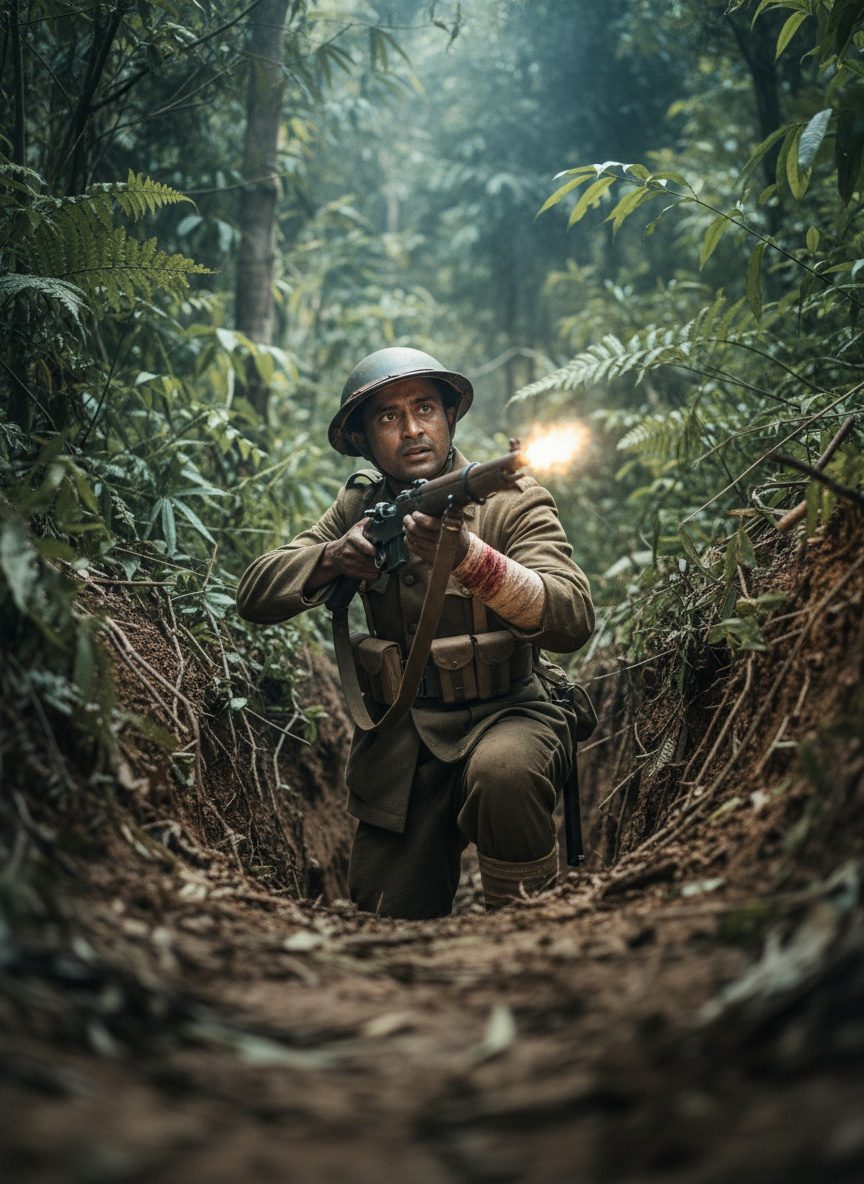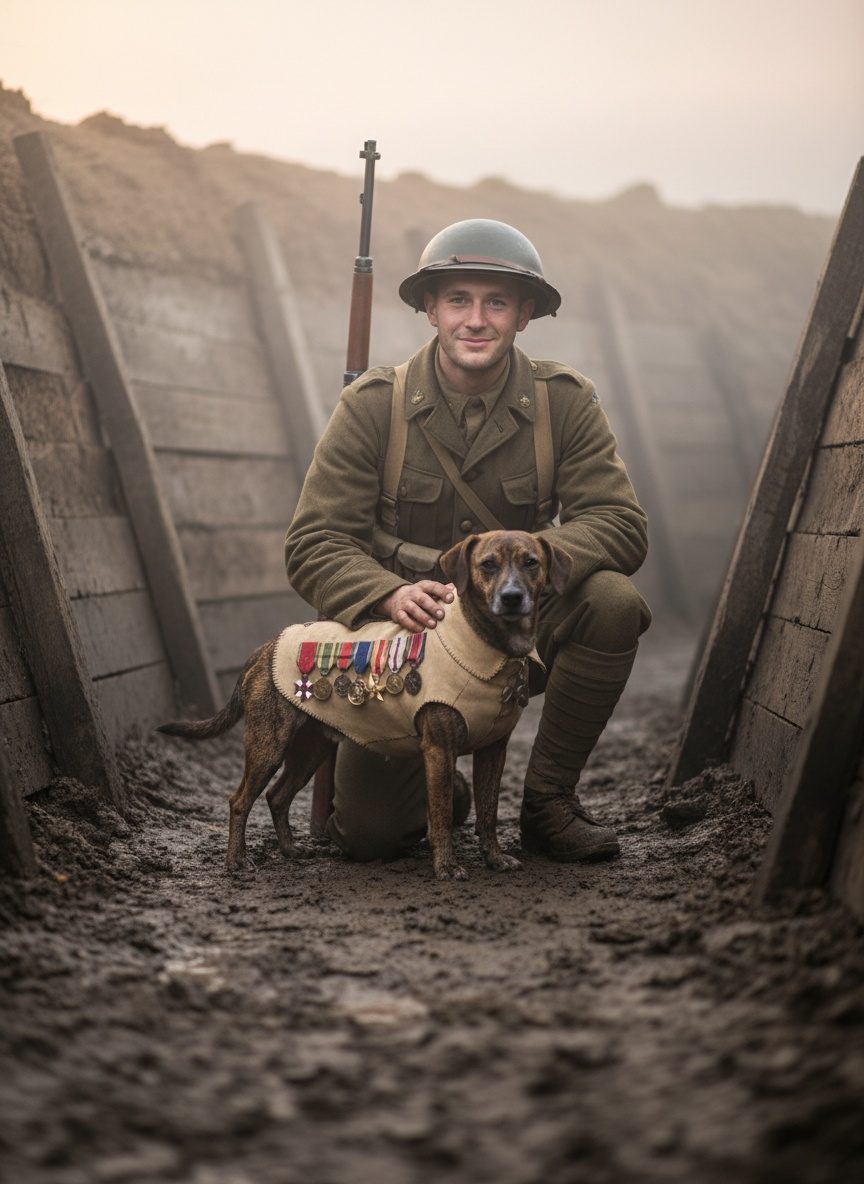
The air was thick and heavy with the scent of damp earth and acrid gunpowder, enveloping the beleaguered soldiers like a shroud. Among the tangled barbed wire and mud-soaked trenches of France, the sky boiled in an ever-looming threat of downpour. Rain, so often a harbinger of misery in this place, was the least of their worries. It was 1917, and the Great War continued to grind relentlessly onward, a cacophony of artillery fire a constant reminder of the stakes. Yet, amid the chaos and grime, a small figure padded softly through the morass—an unlikely hero on four legs whose courage would kindle hope amidst despair.
The Brindle Pup Who Wandered into History
The story begins in Connecticut, where a stray brindle puppy might have lived an unremarkable life, dodging horse hooves and scavenging scraps. But fate had other plans. When he found himself on the campus of Yale University, his curiosity led him to a U.S. Army camp set up for training purposes. Brindle-coated and bright-eyed, the pup quickly endeared himself to the troops. Without orders, without a leash, and certainly without a call to arms, he was brought into the fold by Private J. Robert Conroy.
The soldiers named him Stubby for his diminutive tail and, soon after, secreted him aboard the troop ship heading to Europe. Aboard the USS Minnesota, where strict regulations might have ended his military career before it began, Stubby managed to evade notice through charm and quick wits—traits that would serve him well on foreign soil. As the war raged on the European continent, so too began Stubby’s storied journey, unveiling chapters in military history few schoolbooks could ever contain.
Across the Sea to the Trenches of France
Once across the Atlantic, the American Expeditionary Forces set foot in a land soaked with tragedy and blood. Verdant French fields had been transformed into landscapes of scarred earth and shattered dreams. Stubby, however, adapted to these new surroundings with remarkable alacrity. He soon became a fixture in the trenches, his acute senses attuned to the dangers that lurked unseen.
The famed stalemate of trench warfare held many threats—poison gas among the most terrifying. Stubby, with ears keen and nose sensitive, quickly distinguished himself. A gas attack nonpareil to others of his breed, he responded by running through the trenches, barking an alert that saved countless men. Later, under fire, he cleared away rats, sparing rations needed for survival.
In the midst of artillery barrages and the ceaseless clatter of war, Stubby offered more than just comfort—he provided tactical advantage. In a theater of war where any edge could mean the difference between life and death, his presence shifted the dynamic. He endured the perils of over 17 battles, his bravery often shedding light in the darkest moments of the conflict.
The Hero Who Caught a Spy
Amidst the horrors of war, legend tells of Stubby's unparalleled heroism when he apprehended a spy. The German infiltrators prowled the fringes of Allied camps, gathering intelligence and sowing mischief. On one such occasion, Stubby’s instincts took charge. Sniffing the unfamiliar, he broke from the ranks, cornering an enemy operative attempting to map Allied positions. His barking alerted the troops, leading to the enemy's capture. It was a coup that turned tides and lifted morale among the battle-weary.
This act of valor did not go unnoticed. Dubbed a genuine hero, Stubby became one of the few Americans to receive a promotion from the rank-and-file. Elevated to the honorary rank of Sergeant, he surpassed his own caretaker, Private Conroy, carving his tale deeper into the annals of the inexplicable yet indomitable spirit of wartime camaraderie.
The Homecoming and the Years that Followed
The Armistice of 1918 brought with it a poignant return to a nation craving forgetfulness and healing. Stubby, like returning soldiers, arrived home to banners and cheers, feted as a decorated veteran. His stories of survival and bravery during arduous campaigns swiftly infiltrated the home front, inspiring a postwar America longing for symbols of hope and resilience.
Honorary memberships and medals adorned Stubby’s modest frame, from parades down Pennsylvania Avenue to meetings with presidents—his service recognized by many as emblematic of the steadfast ally in the trenches. For the remaining years of his life, Stubby remained ensconced in the heart of the nation, taken along to veterans' parades and becoming the official mascot of the American Legion. His presence a reminder, ever-present, of those who served and the trials they faced.
Why This Story Leaves Paw Prints on History
Historically, Stubby's tale remains more than the legacy of man's best friend found in the unlikeliest of places. It is a portrait of loyalty in its most humble form, illuminating the human spirit's resilience mirrored in the unyielding loyalty of a stray who answered a silent call. As we look back on the tapestry of history, the image of a small pup standing amid the artillery-ravaged theater of the Great War evokes our deepest-held values—courage, hope, and the bond formed amid shared adversity.
In essence, Stubby was more than a mascot or a mascot with a life-saving knack. He symbolized the humanity that persists even in the throes of despair, earning a place in the hearts of those who served alongside him and a story that beckons us to a time our textbooks dare not tread.