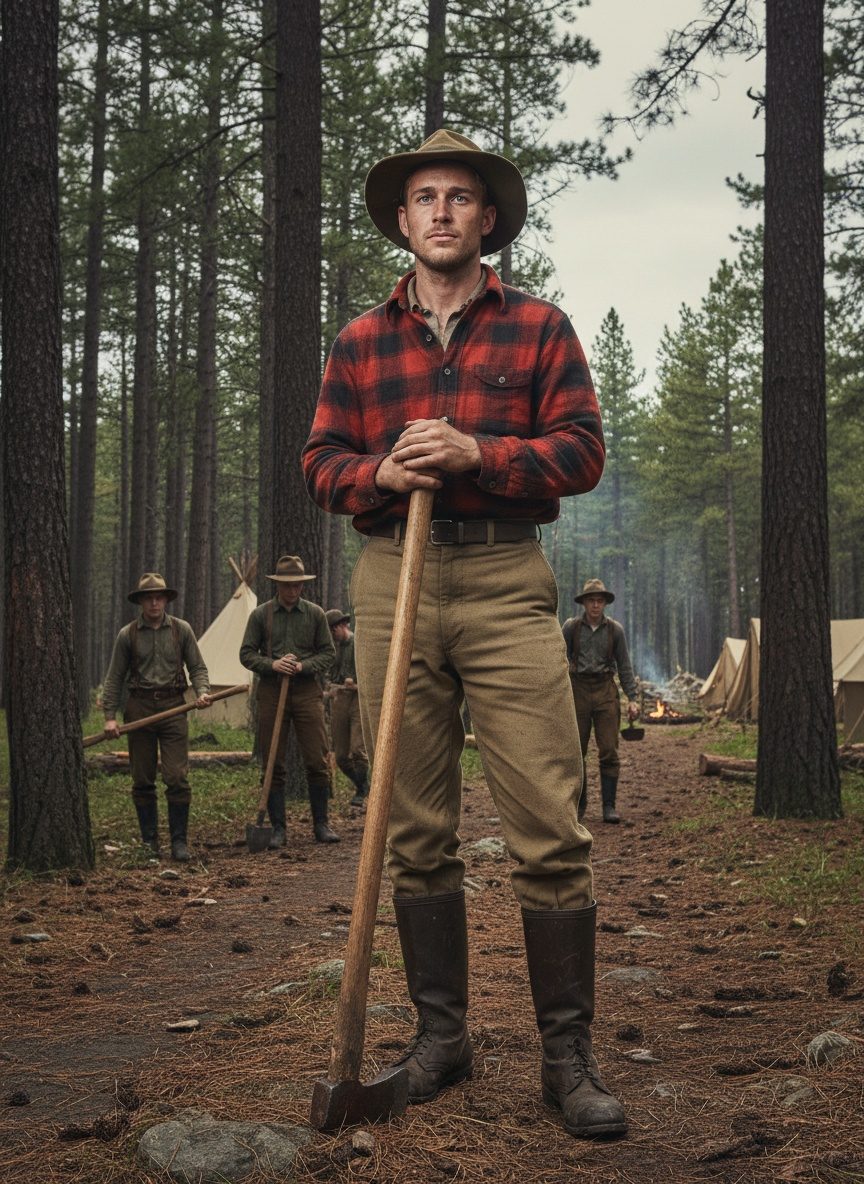
The morning sun filtered through a dense canopy of green in a forgotten corner of the Appalachian wilderness. The air was crisp, tinged with the scent of earth and pine, as the rhythmic sound of axes striking wood punctuated the birdsong. Young men, some barely out of their teens, labored with purpose, sweat glistening on their skin under the advancing heat of the day. For many, this was not just work—it was salvation. In 1933, with the world still staggering from the Great Depression, these men found themselves on the frontlines of America’s recovery—armed not with rifles, but with shovels and saws. The stakes could not have been higher: to resurrect not just the land, but the very spirit of a nation teetering on the brink.
The Corps of Hope
When Franklin D. Roosevelt assumed the presidency in 1933, the United States was trapped in a quagmire of economic despair. With a quarter of its population unemployed, a swell of frustration and hopelessness threatened to consume the nation. But Roosevelt’s vision, galvanized by unyielding optimism, sought solutions that extended beyond mere economic relief. He offered purpose and dignity through the Civilian Conservation Corps (CCC)—a bold initiative designed to combat both unemployment and environmental neglect.
The CCC would ultimately enlist three million men between the ages of 18 and 25, lured by the promise of work, training, and the prospect of contributing to something greater. Paid thirty dollars a month, they funneled nearly all of it to their struggling families, where every dollar seemed to stretch a mile. The conditions were rugged, resembling army life: uniforms pressed, campgrounds tidy, a daily regimen of discipline and toil.
The work undertaken was monumental. Boys from bustling cities and sleepy towns alike found themselves deployed to every corner of America—replanting forests devastated by timber companies, carving trails through the Snake River, and building shelters at the seams of Yosemite’s cliffs. They erected fire towers, improved streams, constructed roads, and fought forest fires, often living under canvas tents beneath a dome of stars that many had never seen.
Lesser-known, however, were the educational opportunities within the camps. Evening classes taught literacy and woodworking, animal husbandry and botany—a curriculum as diverse as the landscapes they were transforming. Roosevelt understood that to uplift generations mired in poverty, education was as crucial as employment. Through the CCC, these young men gained skills that would carry them long after they left the camps.
The Landscape of Ambition
Underneath the oppressive heat of the southern sun or amidst the relentless snows of the northern states, the CCC’s efforts left a mark that transcended economic recovery. Among the towering pines of California’s national parks or along the rugged coastlines of Maine, the rotation of men working in shifts quietly reshaped America’s outdoors. Observers of the time remarked that the nation’s forests were awakening from decades-long dormancy, tended by the hands of a new generation.
Yet, the sheer scale of their achievements was often invisible. Among the stories rarely told are those of infrastructure improvements that still silently serve, like the network of hiking trails stretching over thousands of miles, woven into the fabric of national parks and state lands. Bridges descended upon remote ravines, providing links where none had existed before. The contour of the country’s broad shoulders was traced by the skills acquired in those camps — the formation of shelter-belts, windbreaks intended to protect agriculture from the unrelenting and disastrous Dust Bowl winds.
Even more intangible, but equally vital, was the ethos the CCC instilled in its recruits. Tasked with nurturing the land, these men cultivated a burgeoning environmental consciousness, one that recognized the intrinsic value of their surroundings. They helped sow the seeds of what would become America’s conservation movement, reminding citizens that stewardship of the earth was both a responsibility and a privilege.
Whispers Through the Leaves
Today, nearly a century later, the whisper of those efforts echoes through the forests and trails that the CCC shaped. These men, while seemingly lost to time, have left an indelible legacy in the form of natural sanctuaries and recreational havens that calm and inspire. But more than trails or towers, they laid a framework for generations of environmental policy and public works projects, demonstrating how government and people can unite for a common good.
The labor of the CCC not only helped resurrect a nation sagging under economic catastrophe, but also illustrated a vital lesson in resilience and vision. FDR and the CCC taught that tackling systemic problems required systemic solutions—an insight not unlike the challenges faced today. In moments of darkness, it was collective will and ingenuity that blazed new trails and planted fields of hope.
As the light dapples through the trees and the wind hums nature's serenade, the forests remember. They hold the stories of those who wielded axes and dreams against despair. Their tales, nestled within the rustle of leaves and the cracking of twigs, remind us of the perennial strength found in unity and purpose—the enduring power of people to shape their destinies and the landscapes they love.