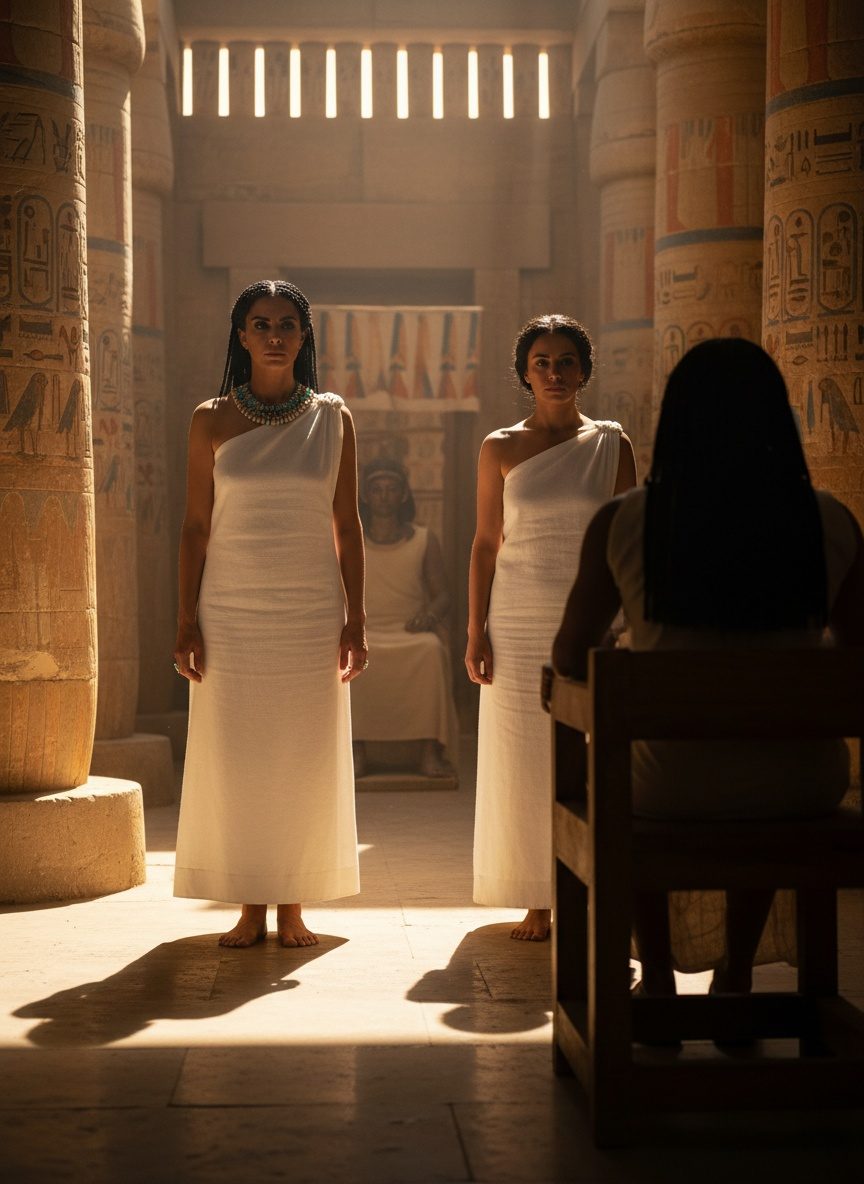
The throne room was daunting. The colossal stone pillars seemed to stretch endlessly upwards, casting long shadows on the sand-hued floors. Shiphrah, a humble midwife, stood amid this grandeur, her heart pounding like a drum echoing through the empty expanse. The chill in the air belied the scorching Egyptian sun outside, but the cold she felt came from fear—and resolve. Before her sat the Pharaoh, ruler of the known world, eyes as sharp as any blade, demanding an explanation that could cost her life.
The Edict of Fear
The saga began in the bustling chaos of Ancient Egypt, around 1300 BCE, under the imposing rule of a Pharaoh increasingly worried about the growing Hebrew population. With each birth, the Hebrews' numbers swelled, and with them, the Pharaoh's paranoia. He ordered a decree: every newborn Hebrew boy was to be killed at birth. This brutal edict was intended to crush the Hebrews' spirit, to stem the tide of what he saw as a rising threat to his empire's stability.
Yet, amidst the fear, two brave women, Shiphrah and Puah, emerged as unlikely heroines. They were tasked with enforcing this horrific command but instead chose the path of defiance. Their courage was not rooted in military might or a grand rebellion, but in a quiet refusal to be complicit in a king’s decree aimed at annihilating their community.
The Midwives' Secret
The secretive world of birthing rooms became their battlefield. In the confines of dimly lit chambers, the cries of newborns mixed with the whispered prayers of mothers. Shiphrah and Puah approached each birth with both reverence and subversion, aware that each successful delivery was an act of defiance. They would announce the 'unexpected' birth of another healthy Hebrew boy, with no Pharaoh's guard at hand to intervene in these hasty labors.
A lesser-known detail lies in how they expertly leveraged the local women’s knowledge of timing and delivery to make their story plausible. They spun tales of vigorous Hebrew mothers, endowed with a natural ability to birth quickly—too swiftly for any midwife’s interference. This cleverness did not just save lives; it turned what should have been their weakest point—their lack of power and position—into their greatest strength against an otherwise insurmountable authority.
Confronting the God-King
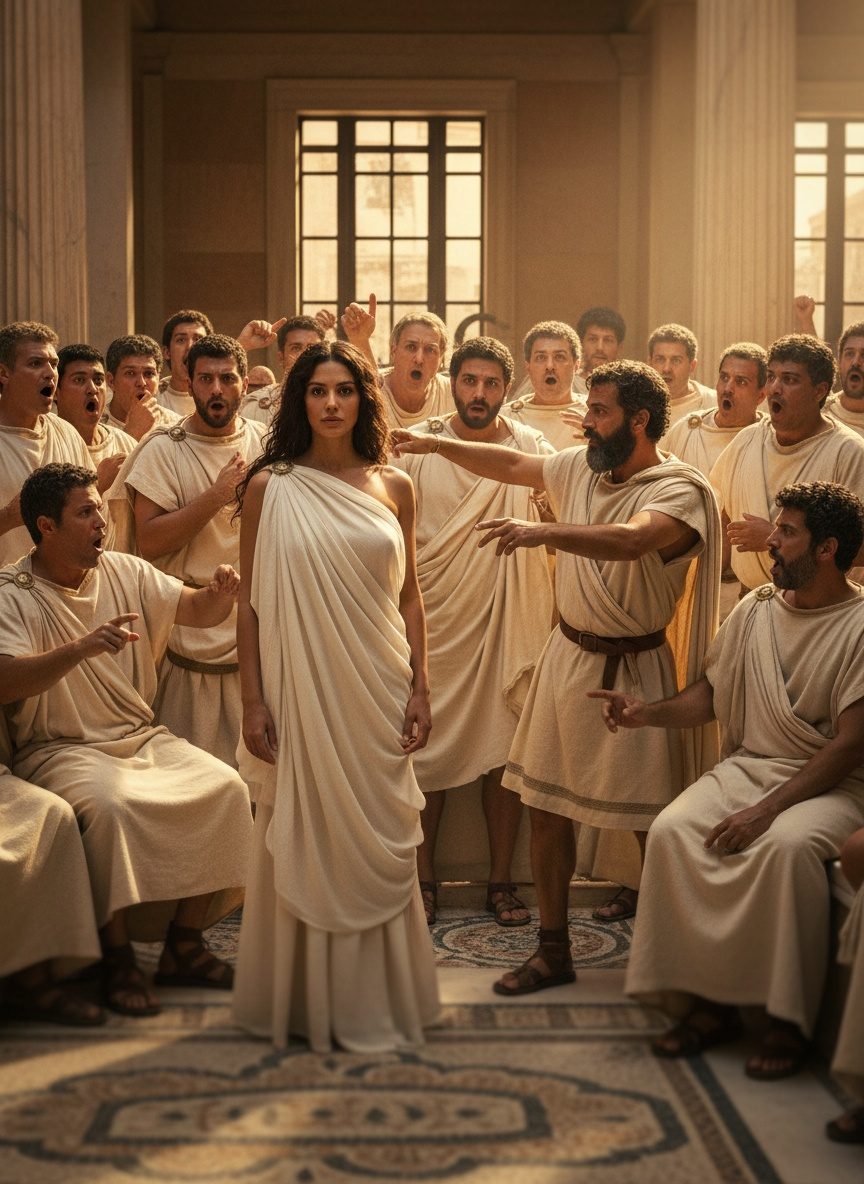
When Pharaoh’s spies reported that Hebrew sons were still being born, Shiphrah and Puah were summoned before the god-king himself. The mighty ruler, with all the force of Egypt's military might at his disposal, demanded answers. The juxtaposition was stark—a pharaoh on his throne of lapis lazuli, flanked by fans of carved ostrich feathers and two simple women, dressed as commoners, with the weight of an impossible choice resting on their shoulders. But these women, who presumably knew they were risking not only their lives but the safety of their kinfolk, did not waver.
In a moment that must have felt like eternity, Shiphrah crafted a story that defused the Pharaoh's direct command with astonishing calm. She reiterated the tale of their swiftness, their vigor, all while maintaining eye contact with a king to whom she owed nothing but her life. Whether it was divine intervention, a glimmer of humor in the Pharaoh's reception of such a tale, or the sheer boldness of their claim, we cannot know. What is certain, however, is that the bravado worked, and many Hebrew children continued to live because of their courage.
An Act Beyond Courage
The story of Shiphrah and Puah is not just one of defiance; it's a narrative about morality, bravery, and the power of the individual against the machinery of state oppression. These women, standing unswervingly before what was considered the ultimate earthly authority, chose to uphold the sanctity of life over the dictates of power.
What makes their deeds even more remarkable is their anonymity and unassuming nature. In the annals of history, often filled with tales of kings and generals, these two women performed their acts not for remembrance or glory but for the sake of their community's survival. It was through their seemingly simple daily roles—overseeing life’s beginnings—that they orchestrated an extraordinary stand.
The Echoes of Courage
The tale of Shiphrah and Puah resonates beyond the walls of ancient Egypt. It is a story that bridges millennia, teaching us about the indomitable spirit that can reside in the most ordinary of people. They remind us that standing up to injustice does not always require grand gestures, but rather, small, deliberate actions and the steadfast will to defy what is wrong.
In the vast tapestry of human history, their story is woven in not with the threads of might and conquest but with the quieter, enduring hues of resistance and resilience. It reminds us that even the smallest acts of defiance can incense a powerful regime into reconsideration and that the courage to tell a simple lie might just be the truth that saves a generation.