He was a renowned scholar, celebrated for his literary prowess and wisdom. Yet Fang Xiaoru, ever unassuming in the stature of power games, would rather choose death than yield his pen to injustice.
The Scholar and the Conqueror
In the imperial court of his time, Fang Xiaoru was among the most erudite and respected scholars in the vast Ming Empire. His reputation was not merely the product of his eloquence, but of his unshakeable moral integrity. When the ambitious warlord Zhu Di seized power in 1402, Fang, known for his wisdom and integrity, found himself at the crux of a colossal political upheaval.
Zhu Di's ascent to the throne was steeped in intrigue and violence. As the fourth son of the founding emperor of the Ming Dynasty, Zhu Di had once been appointed as the Prince of Yan. Yet, driven by a thirst for power, he defied the appointed succession, leading a brutal campaign that culminated in the overthrow of his own nephew, the Jianwen Emperor. The victorious Zhu Di endeavored to solidify his legitimacy in the eyes of the empire, and for that, he required the endorsement of Fang Xiaoru.
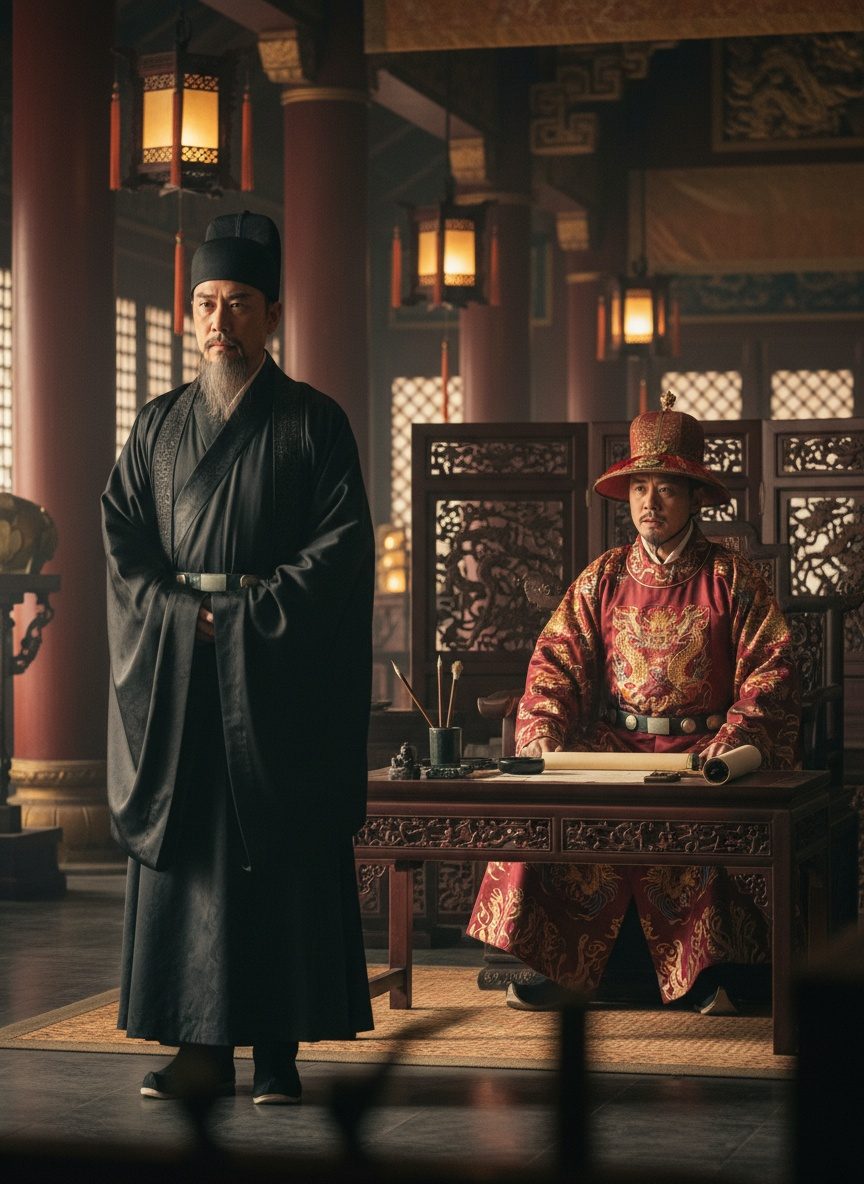
The new self-proclaimed emperor summoned Fang with a seemingly simple request: draft a proclamation legitimizing Zhu Di’s claim to the throne. Yet what seemed straightforward was in fact an arduous moral dilemma. Fang knew that no flattery, no revisionist penmanship, could wash away the stains of treachery that sullied Zhu Di’s reign.
Standing before the man who wielded ultimate authority, Fang Xiaoru's resolution did not waver. It was not the first time that men like him had been ensnared in the formidable crossfire of allegiance and honor. His refusal set the stage for an act of defiance that would echo through the annals of history.
The Brush and the Sword
In defiance, Fang Xiaoru refused to cloak treason in gilded words. The emperor, incensed by this challenge, declared the death of ten generations of Fang’s family should he not comply. Such a gambit was rarely made, and rarer still was the resolve to face it with dignity rather than submission.
Fang’s decision was not born of bravado but of conviction. With an unsteady hand that bore the weight of destiny, he picked up the brush and deliberately wrote: "Usurper." Casting down the brush, Fang Xiaoru pronounced his final defiance, knowing the cost it carried. This was no ordinary rebellion; it was a declaration soul-deep, etched not just in ink, but in the fiber of his integrity.
The emperor, though triumphant on the battlefield, found himself momentarily vanquished in this clash of ethics. Fang Xiaoru’s defiance might not have altered imperial decree, but it resonated irrevocably. Tradition would not absolve the usurper; history would note that a solitary man stood as the seething conscience of a conflicted era.
The act was both profound and perilous. Ultimately, Fang faced the harrowing fate Zhu Di had pronounced. Ten generations inadvertently became collateral, offered to sate the wrath of autocratic power. The personal loss was calamitous, but Fang's defiance went beyond a single lifetime, transcending the ephemeral nature of power and mortaldom.
The Quiet Echoes of Defiance
The story of Fang Xiaoru is neither the tale of a throne nor of wars waged and won. It is the stark recollection of a man whose legacy lies in the refusal to surrender principles at the feet of a master unchecked by conscience. Fang Xiaoru's life and the inevitable sacrifice resonate through history as a testament to moral absolutism against authoritarian excess.
In the context of an empire, the significance of Fang's stand extends beyond the domain of individual renown. It reflects the tenacious power of ethical conviction amidst the perennial conflict of self-interest and allegiance. Fang Xiaoru’s final act places him among the indefatigable voices that refuse to dim in the march of human history.
Why does such a story matter? It matters because there will always be collisions at the crossroads of integrity and compliance. Fang Xiaoru stands not as a martyr simply, but as a perpetual reminder of courage's quiet power, its ability to reverberate long after a brush has been cast down — an echo hemming in the corridors of history.