July 24, 2023. The acrid scent of burning papyrus filled the air, a reminder of the fiery disaster that had once consumed the ancient city of Herculaneum.
The Frozen Eruption of Knowledge
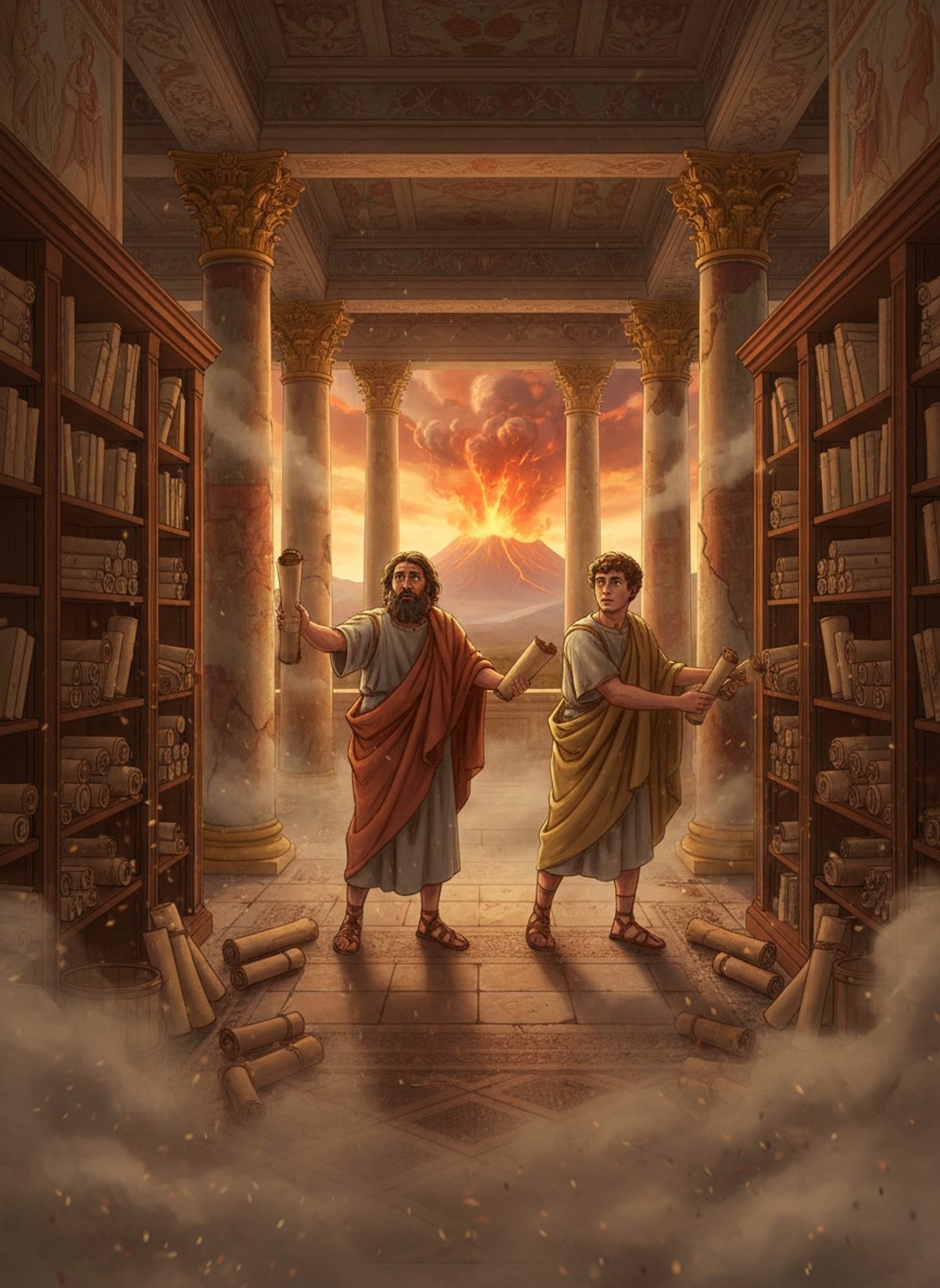
The year 79 C.E. marked a catastrophic event as Mount Vesuvius erupted with lethal fury, smothering the Roman cities of Pompeii and Herculaneum in layers of volcanic ash and molten rock. While the tragedy claimed countless lives and shrouded these cities in darkness for centuries, it also preserved an extraordinary relic — the only known intact library to survive from antiquity. Buried beneath the despair lay some 1,800 scrolls, carbonized bastions of knowledge that have both confounded and tantalized scholars for generations.
The Villa of the Papyri, as it came to be known, was a luxurious residence on the outskirts of Herculaneum, once resplendent with lavish mosaics, intricate statuary, and, most importantly, a vast collection of Greek philosophical works. The intense heat of the pyroclastic flows transformed the scrolls into fragile, charcoal-like relics, nearly impossible to unfurl without crumbling to dust. Efforts over the centuries to read these scrolls using traditional means proved largely destructive, spinning tales of tragic scholarly loss that paralleled the personal ones of the eruption's victims.
This unfinished business with history compelled modern scientists to turn towards technology in the hopes of granting one more chance for the ancients to speak. Among the myriad methods tested, none showed more promise than one involving an unlikely muse: the properties of lead-based ink. It was this element that sparked the imagination of researchers like Douglas Seiler, driven by the allure of the unread Herculaneum scrolls.
Science by Fire
In a quest that seems as fantastical as a page ripped from a science fiction novel, Douglas Seiler and his team embarked on an experiment shrouded in both audacity and historical accuracy. Recreating the conditions of Mount Vesuvius's wrath, they meticulously crafted modern papyrus scrolls, using lead-based ink to mirror the materials available to ancient scribes. Each scroll, a replica forged in the laboratory, was intended not as a permanent artifact but as a sacrifice to the potential of modern technology.
Set alight, these papyrus scrolls crackled under the intense flame, the heat echoing the conditions that forever changed the landscape of Herculaneum. As they charred and curled, Seiler scrutinized them with X-ray technology, an endeavor spurred by decades of advancements in non-invasive scanning. To their great fortune, they discovered that lead within the ink stood as a beacon amidst the blackened ashes, absorbing up to 25 times more X-rays than the papyri themselves. This revelation painted vivid, ghostly script on the X-ray screens, tantalizingly clear despite its fiery ordeal.
While this might seem like a small, almost trivial technological feat, the implications were monumental. The insight that lead in the ink could make distinguishing the written word from the surrounding husk of the scroll possible promised a watershed moment in the study of these ancient documents. And with nearly 1,800 scrolls awaiting decipherment, the race to unlock the wealth of knowledge ensconced in Herculaneum’s remains had found its champion in science, driven by an indomitable will to resurrect the voice of those silenced millennia ago.
Echoes from the Ashes
Herculaneum's scrolls lie in waiting — a dormant treasure trove of thought and literature untouched for centuries. With Seiler's breakthrough using lead-based ink and X-ray technology, we stand on the precipice of potentially unveiling ancient doctrines and philosophies that have never been read by modern eyes. Each text has the potential to alter our understanding of Greek philosophy, Roman culture, and perhaps even reshape views of the ancient world altogether.
What remains most compelling about this scientific effort is its deeply human element. The library at Herculaneum was not just a collection of manuscripts but the intellectual heart of a society that valued the written word and revered the dialogues of the past. With each X-ray scan, the distance between us and our ancient counterparts diminishes, forging a connection across the chasm of time much like the fabled Library of Alexandria might have if it had withstood the passage of centuries undisturbed.
By delving within the depths of Herculaneum’s volcanic tomb, we don't just kindle new connections to our past but also a realization of our intrinsic need to preserve and understand the knowledge we inherit. The story of the Herculaneum scrolls bridges science and history, echoing how much we have yet to learn from the past and what it still holds to teach us. It is this unquenchable thirst for wisdom and the determination to unearth it that might ultimately illuminate the long-obscured bonds between the world of today and the eras long gone.