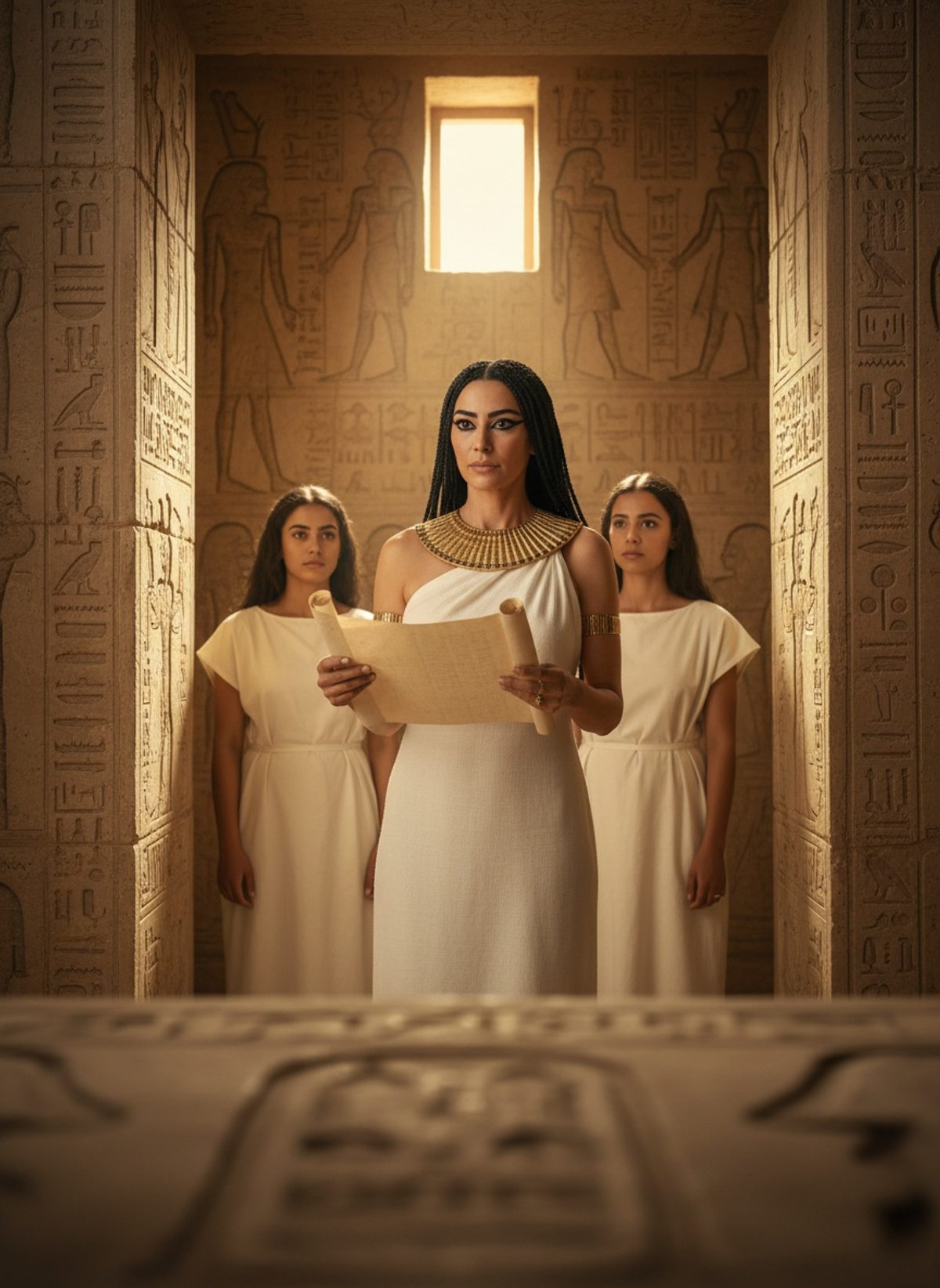
The soft candlelight flickered off the beveled limestone walls, revealing hieroglyphs etched into eternity. In the tomb's chamber, a team of archaeologists held their breath. The seal of a jar crumbled with a gentle touch, releasing the aroma of wheat, familiar yet ancient. It was a scent last experienced during the New Kingdom of Egypt, the time of Kha and his wife, Merit.
The Untouched Legacy of Kha
In 1906, a team of Italian archaeologists, led by Ernesto Schiaparelli, ventured into the scorching Egyptian desert, guided by a whisper of history buried beneath the sands. Their journey reached its crescendo when they stumbled upon a remarkable tomb at Deir el-Medina—the untouched resting place of a royal architect named Kha, dated to around 1400 BC. Unlike the tombs of pharaohs, which had long been plundered by grave robbers, Kha's final repose was adorably simple yet profoundly undisturbed.
Kha was no ordinary architect. He was a mastermind behind the construction of tombs for the divine and the royal. His expertise left an indelible mark on the Valley of the Kings. It was in death that his own tomb, alongside his wife Merit's, would reveal an abundance of treasures—not gold or jewels, but the ordinary possessions of life immortalized in preservation.
Sealed in Time: The Art of Preservation
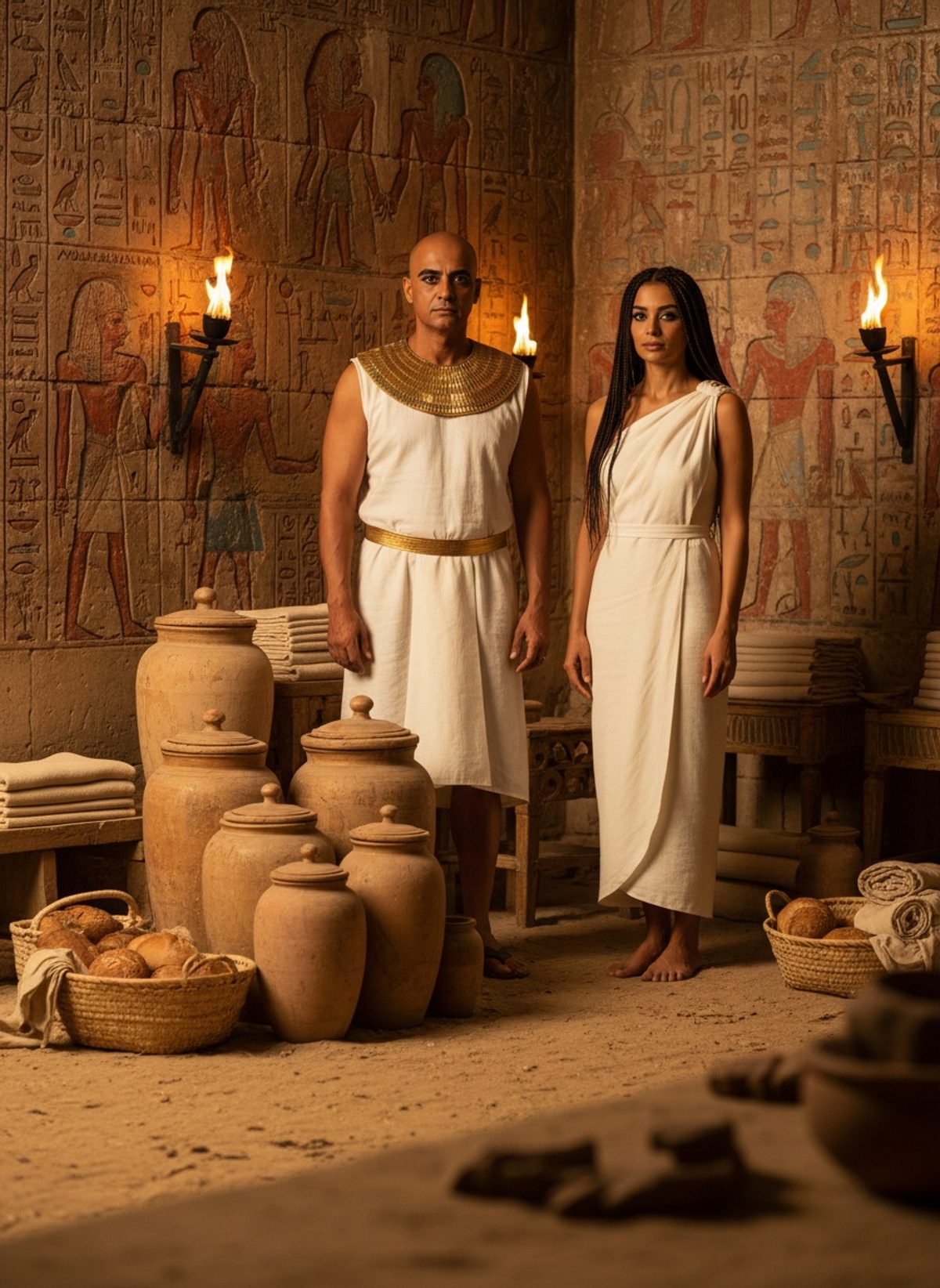
The jars—a kaleidoscope of ancient Egyptian craftsmanship—lined the shelves that flanked Kha's stone sarcophagus. Each jar had been meticulously sealed some 3,000 years prior, and their contents defied the ravages of time. Bread loaves, preserved in such pristine condition that one could almost imagine the touch of its ancient baker. Grains still as they were on the day the jar's seal was drawn closed to anoint a rite of passage into eternity.
Beyond the provisions for sustenance, Kha's tools lay beside him, a testament to his life's vocation and contribution to Egyptian society. Stone chisels, leather straps, and measuring rods spoke not only of his profession but of a civilization that had mastered the marriage of utility and ritual. This carefully organized trove offered a window into the past, offering hints about the daily life and deeply held beliefs of an ancient people.
A Husband and Wife, Together Forever
Beneath the silent embrace of the desert, Kha lay not in solitude. His beloved wife, Merit, accompanied him, as she had in life. Her burial arrangements were no less significant, yet filled with a tender simplicity. Artifacts unearthed by the archaeologists revealed that Merit shared Kha's final journey into eternity, their love immortalized in the sacred calm of their resting place.
Their tomb served as a capsule of continuity and devotion, a tangible reflection of their partnership. The proximity of Merit to Kha in death, side by side as in life, defied the passage of millennia and spoke volumes of the egalitarian nuances present in Egyptian society that are seldom acknowledged.
The Archaeological Marvel
As each artifact was unearthed from the tomb, it became apparent that this discovery was unlike any other. For millennia, pharaohs and kings dominated the discourse of Egyptology, yet here was a discovery that placed everyday life and ordinary individuals at the fore—a distinct departure from the common narrative.
The remarkable preservation of Kha and Merit's tomb offered scholars unprecedented insights. The cultural and religious beliefs of the time, encapsulated in the ordinary articles of life, provided a counterpoint to the grandeur of royalty. It was a story of humility and humanity, told through the remains of bread, grain, and the belongings of a revered couple.
The Echoes Beyond Time
The remarkable discovery of Kha and Merit's tomb melds the distant past with our present curiosity and imagination. As the jar's seal broke and gave up its secrets, it reminded us of the universal quest to stave off the fleeting nature of life. In a world forever in flux, Kha and Merit's story endured, a bridge spanning the centuries dividing us from a civilization that, in many ways, speaks to us in terms we can understand: of love, labor, and legacy.
The enthralling tales of pharaohs and kings may occupy the pages of ancient history, but the revelation of Kha's tomb underscores a powerful truth: history's magic often lies in the everyday lives that anchor our grandiose visions to the earth—a legacy as tangible and enduring as the bread preserved in a clay jar sealed three thousand years ago.