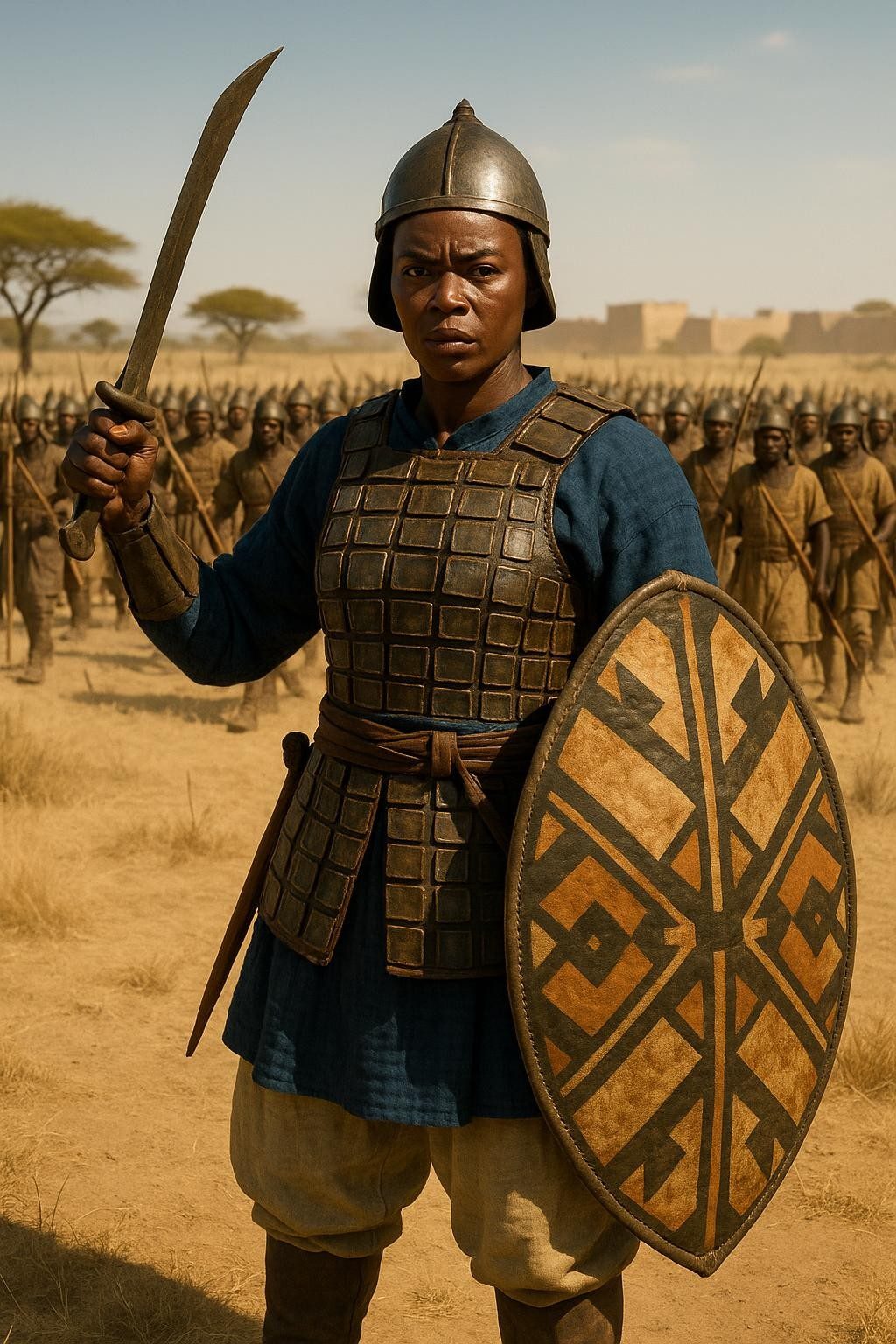
The clang of metal echoed through the air as Queen Amina of Zaria adjusted her iron helmet, her gaze fixed on the horizon beyond the plains of West Africa. Around her, an army of twenty thousand warriors stood waiting, their loyalty unquestioned and their resolve steely. Every breath blended with the thrum of anticipation and the scent of earth-rich from weeks of marching. This was Amina's dominion, not only as the ruler of Zaria but also as a legendary warrior-queen whose exploits would echo through history, if not always recorded, then felt profoundly.
The Warrior Queen Emerges
The Hausa city-state of Zaria, nestled amidst the seven Hausa Bakwai kingdoms, was Amina’s birthplace and stronghold. It was in this milieu, amid market traders and artisans, that Amina honed skills uncommon for women of her time. She was no mere diplomat or governor; she wielded a blade with the finesse of a seasoned fighter. Her ascent to power came after the reign of her brother, Karama, but rather than settling into the expected ceremonial duties, Queen Amina shattered every mold.
Her story compels us to rethink the norms about gender roles in history. While the epics of rulers often highlight their strategic acumen, Amina's life was the epitome of action, one synonymous with the expansion and construction of an African empire. Her immediate focus was Zaria's military dynamism. History tells us that upon ascending the throne, Amina strapped on her armor, a formidable figure, and took to the battlefield herself, a vivid testament to her indomitable will.
The Iron Walls of Amina
Amina's legacy transcends her battlefield prowess; she was also a pioneering builder. As her forces moved across West Africa, her eyes were set on fortifying her growing empire. The fortifications she built around cities, known as "Amina's walls," stood not only as shields against invaders but as symbols of enduring strength. These fortified walls reflected strategic ingenuity — a defense mechanism and boundary marker that would define the landscape and social order of the Hausa reign for centuries.
These structural accomplishments may even be visible today, remnants of her fortified legacy spread across the terrains of Nigeria and beyond. Her strategic vision in infrastructure solidified her stature as a ruling figure who thought beyond momentary conquests to future-proof her kingdom's security and prosperity. The enigma of Amina lies in her being remembered not for words frozen in time but through walls and stories that aged alongside the land.
A Time of Conquest and Expansion
Queen Amina's campaigns were relentless and transformative. Her leadership extended Zaria's influence over regional trade routes, leveraging economics alongside military strategy. Amina understood that power was multifaceted, its grip rooted in control over critical trade arteries. Her campaigns, driven by ambition and resolve, sought not merely subjugation but economic dominance that would increase Zaria’s wealth and prominence in West Africa.
Her army, a whirlwind of cavalry-fueled might, trotted across vast expanses—each conquest growing the borders of her empire. The tales have faded, perhaps woven into myths, but what remains indelible is the strategic brilliance and military discipline she imposed, which still piques scholarly intrigue. A force of nature in the late sixteenth century, Queen Amina's military conquests crafted a vast tapestry of power that resonates with generations long after the dust of her battles settled.
Echoes Through Time
As history almost consigned her to the footnotes, the chance to revisit Queen Amina's world offers something both illuminating and humbling today. Her story is not just about battles won, walls built, or lands conquered. It is about the enduring spirit of leadership, the challenge of breaking norms, and the vision of a ruler who dared to redefine what it meant to be a queen. As the plumes of dust scattered beneath her army's feet settled, they left behind a nuanced legacy on the tapestry of African history.
Remarkably, Amina managed to harness both fear and respect in a world defined starkly by male dominance. Her vision and tenacity serve as reminders that strength and wisdom know no gender. Her life holds lessons for modern audiences willing to look beyond the veneer of history taught in textbooks, to unearth the layered and often unseen contributions of women like Queen Amina of Zaria—an enduring breath of courage from an era that whispers through the pages of history.