Iceland exiled Gunnar of Hlíðarendi. He chose not to go.
The Beauty He Couldn't Leave Behind
On the barren expanse of Viking Age Iceland, where the vast sky met rugged mountains and the Atlantic Ocean roared against black sand shores, Gunnar of Hlíðarendi made a fateful decision. Having defied the ancient laws of his homeland, the esteemed Althing – Iceland’s parliamentary assembly – gave him a stark choice: a three-year exile or death. The year was around 990 AD, and Gunnar's ship was in the harbor, waiting to carry him into a life of uncertain wandering. With companions urging him to leave and the law demanding his absence, he rode to the peaceful idyll he had shaped — his farm nestled among the rolling hills of Hlíðarendi.
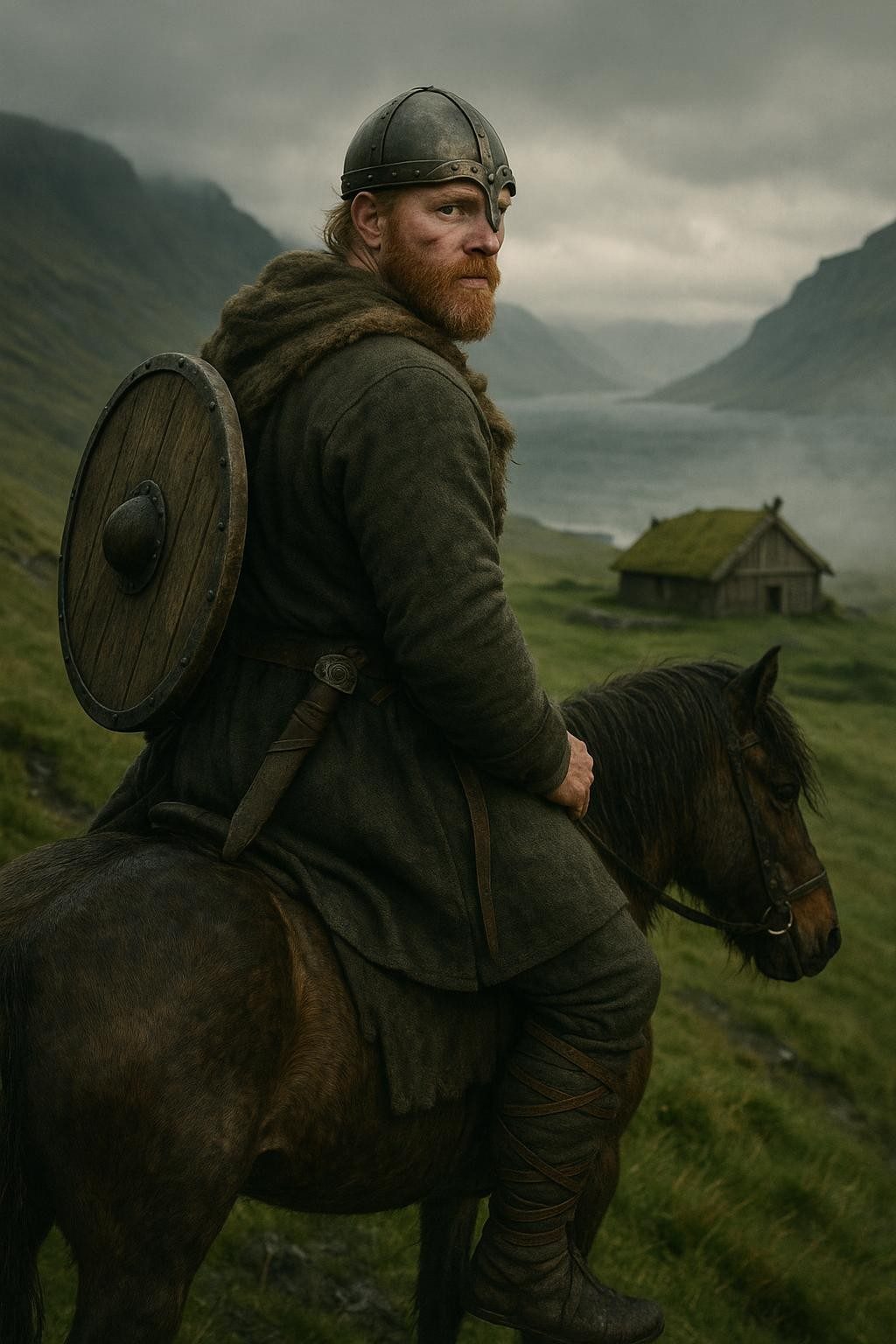
It was at this moment, atop his steadfast horse, he paused to bid farewell. But there, on the verge of departure, his gaze lingered far longer than intent allowed. The landscape he loved stretched before him, from the misty peaks to the verdant patches of pasture that he had carved with his own hands. Knowing the terrain by heart – every rise and fall, every stream and rock – his resolve wavered. How could he abandon his home, the land that had shaped him as much as he had shaped it? Iceland's beauty was stark, formidable, and intoxicating. In that moment of deep longing, Gunnar turned his horse around, choosing the certainty of death at home over life in exile.
A Defiant Warrior, Bound by Honor
In a society where honor bound men as tightly as any chain, Gunnar was celebrated for his skills both on the battlefield and in the courtroom. Respected and equally feared, he was renowned for his prowess with weapons, and the sagas speak of how his bow sang with deadly precision. Gunnar's life was as much about maintaining his personal honor as it was about upholding the intricate societal balance established by Iceland’s unwritten code of conduct and the Althing's decrees.
Gunnar's story is woven into the fabric of the “Njáls saga” — a thirteenth-century epic telling tales of blood feuds and mighty warriors. The events leading to Gunnar's fateful choice had roots deep in Iceland's unforgiving laws, which emphasized restitution over revenge, often leaving men like Gunnar caught between personal honor and societal expectations. To defy an exile decree was tantamount to inviting death, yet Gunnar was driven by an inner pull stronger than fear – a compulsion to remain and protect what he cherished.
The Homecoming and the Siege
Returning to his farm, Gunnar faced the reality of his choice. Friends and kin joined him; while some pleaded for reconsideration, others prepared for the inevitable confrontation. His refusal to leave was a bold statement: life on his own terms or death on his own land. The farm became a fortress, with preparations for the onslaught meticulously laid down. It represented a rare moment of suspended time where the normal cycle of agrarian life paused for the specter of violence.
Understanding the implications, Gunnar prepared himself, body and spirit, for what was to come. Unlike the measured courts of the Althing, the law of the land was now supplanted by the law of steel and courage. A serene night fell over the land, concealing what would be a last stand like no other. Eventually, the crack of dawn heralded the arrival of his adversaries, intent on delivering the fatal consequence of his defiance.
The battle was fierce. Those who came for him knew Gunnar’s abilities, yet they underestimated the resolve that coursed through every arrow he loosed. Cornered yet unyielding, Gunnar fought valiantly until his strength ebbed. When finally overwhelmed, he left behind a legacy not of surrender but of steadfastness, his death echoing the heroism of tales sung across mead halls.
A Lasting Echo in Time
Gunnar's story was not buried with him. The hills of Hlíðarendi nurtured an immortal legend, one that has inspired through ages. His decision was not merely an act of defiance; it was a profound statement about belonging, identity, and the eternal bond between a man and his home. In choosing what he loved over his own life, Gunnar transformed from man to myth, embodying a spirit that the Icelanders and people beyond cherished — the ultimate embodiment of integrity and courage.
In an age when boundaries were often drawn by force and loyalty tested by trials, Gunnar's tale resonates with the intimate struggle of choice versus duty. Iceland called Gunnar its greatest man, and in doing so, it enshrined the values of honor, courage, and the indelible impression of standing one's ground, even against the certainty of death. His saga, told and retold, remains a timeless message echoing amid the wild, windswept landscapes of his homeland — urging us to consider what we hold dear enough to risk everything for.