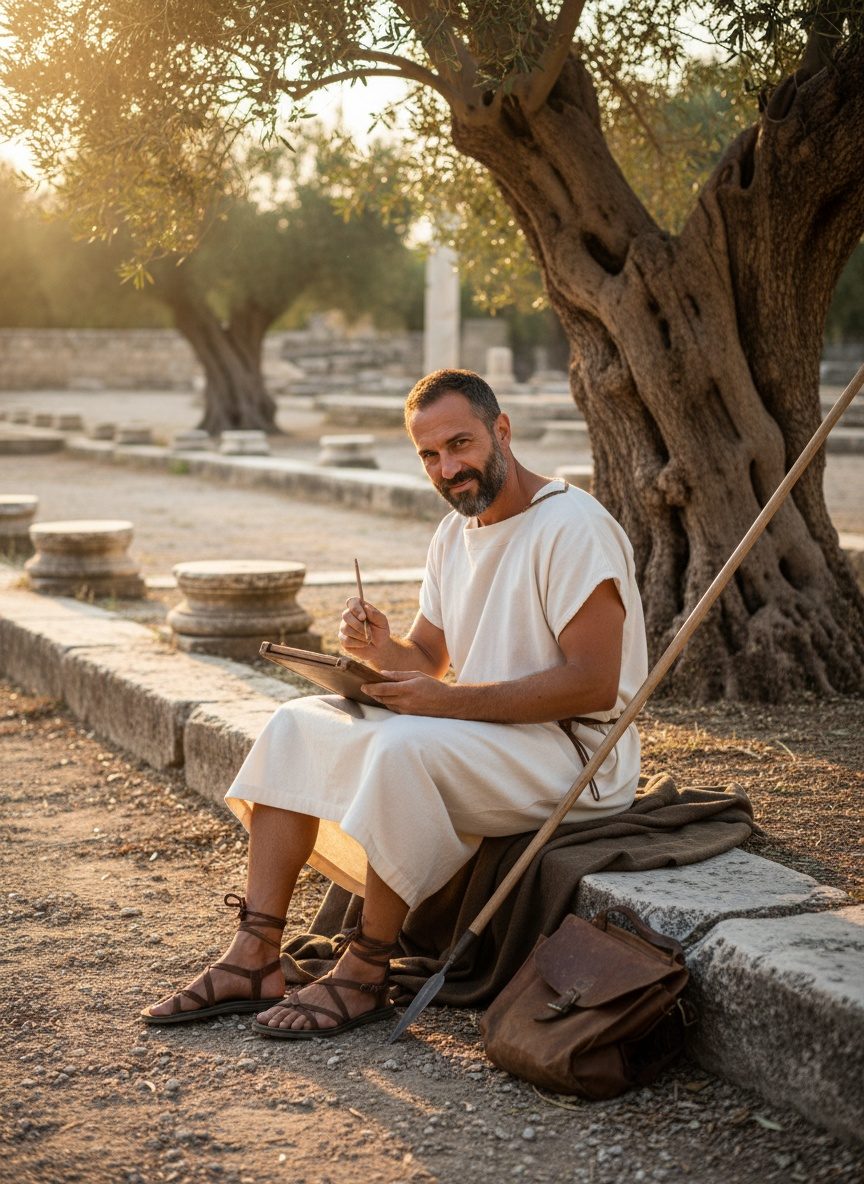
He wielded a shadow stick. While Alexander's conquests rumbled through Asia, Pytheas used his rudimentary instrument for an unimaginable journey.
A Merchant's Unlikely Voyage
In an era defined by legendary military campaigns, Pytheas of Massalia cut a distinctly different figure. Unlike the emphatic rhythms of clashing swords and sieges, he sought knowledge beneath the vast, cloud-laden skies. With his heart tethered to the mysteries of the ocean's wind-swept surface, Pytheas's journey began not with aspirations of glory but with the natural curiosity of a merchant eager to map the untold world.
Massalia, known today as Marseille, served as a bustling nexus of trade on the edge of the Mediterranean world. Its harbors echoed with myriad tongues and the scent of exotic goods. Amidst this was Pytheas, a man driven by a different vision—one that extended not eastward towards Persian treasures, but westward, beyond the familiar blue expanse and into the whispering unknown. Armed with his determination and a simple tool, a wooden gnomon that cast shadows illuminating the sun’s celestial path, Pytheas embarked upon what would be a scientific odyssey, not just a commercial venture.
Pathways Beyond the Pillars
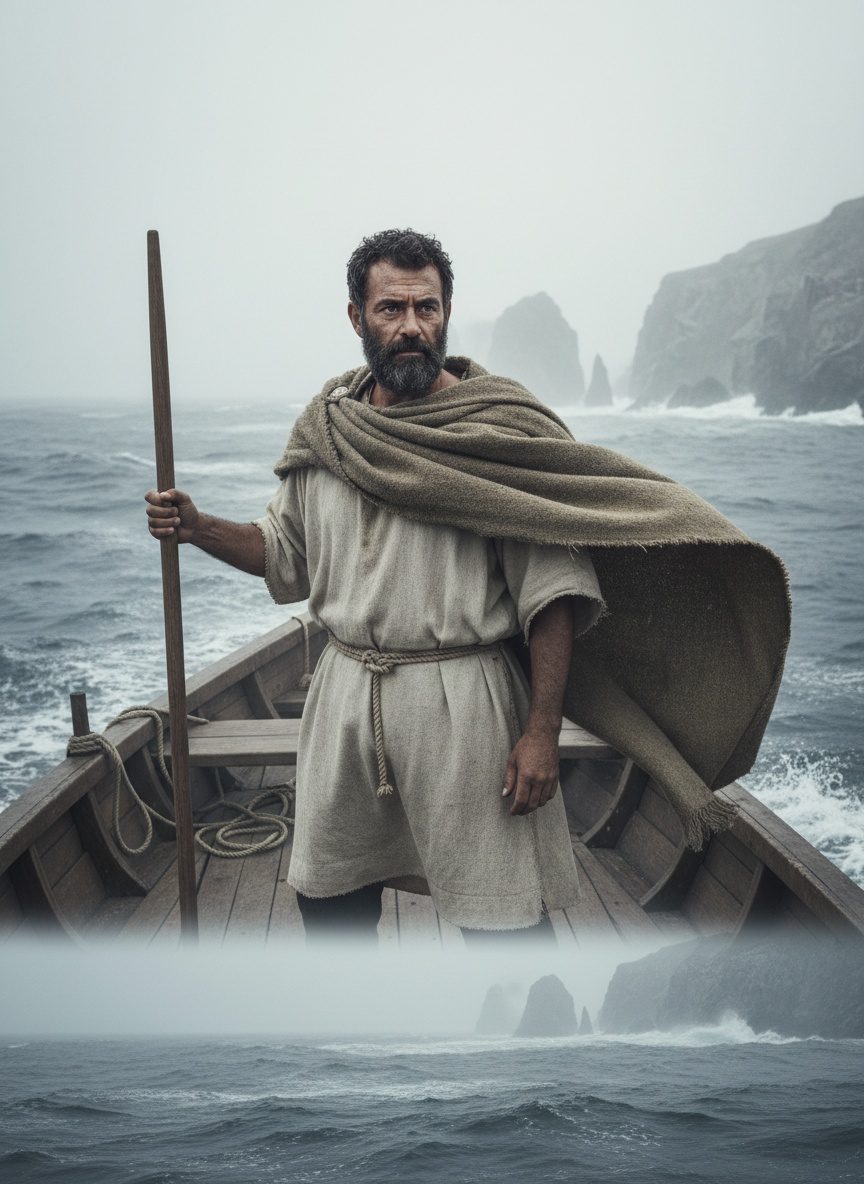
As his vessel slipped past the Pillars of Hercules, known today as the Strait of Gibraltar, Pytheas and his courageous crew broke the metaphorical chains of the known world. The waters swirled around a ship that carried with it hopes as boundless as the ocean beneath. The Greeks, enamored with tales of the wider world, had always imagined what lay beyond this maritime gateway. Yet, cautious of the mythical titans said to guard this threshold, Pytheas sailed past, propelled not by the winds of myth but by the fresh gusts of exploration and inquiry.
His voyages led him up the vast coastlines, wrapping the edges of continental Europe into his sailing log. Before long, the ship reached the grey and magnificent cliffs of Britain. As Pytheas laid eyes upon lands unknown to fellow Greeks, he did not pause long—he was ready to venture even further. To those witnessing this, it seemed impossible. Who among them had heard of Thule, the land shrouded in perennial mystery? Yet Pytheas pressed on, using his simple gnomon to chart positions of celestial bodies, estimating latitudes that few could fathom achieving in his time.
The Clutches of Ice and Fog
The journey into Thule would challenge the very nerves of Pytheas and his crew. The defining majesty of the sea had transformed into a landscape clothed in icy fogs and treacherous, drifting icebergs. This uncharted north, painting the edges of the known world with frost-touched hues, was inhospitable. Yet to Pytheas, it was a tableau eager to yield secrets. The sun’s arc across these distant skies, observed with resonance by his shadow stick, guided him ever-forward, coaxing him deeper into realms supposedly drawn by cosmic forces, bound by no man's hand.
As the seas grew colder and shallower, Pytheas encountered a mystical phenomena that few had documented—vast landscapes of sea ice, a disconcerting yet inspiring sight. To the people of the Mediterranean, accustomed to warm, sunlit shores, tales of an ocean stilled by ice would have been nothing short of enchantment. But for Pytheas, this was not simply the end of a geographical expansion; it was a dawning appreciation for the boundless secrets held within the universe.
The Unexpected Legacy
Pytheas returned to Massalia with his chronicles, brimming not with treasure but with insights. Strikingly, his accounts were met with skepticism and amusement; so implausible did they seem that even some scholars refused to believe the glimmers of truth they held. His stories of the northern lights dancing across the sky, of midnight suns and frozen seas, were bound with the fine weft and weave of the unknown, dismissed at times as mere exaggerations.
Yet, the truth born upon Pytheas's voyages eventually threaded itself into the greater tapestry of exploration. The shadow stick, a tool so simple yet revolutionary, became an emblem of the stark possibilities that awaited beyond common perception. Though history almost let his narrative fade, it serves as a poignant reminder of the insatiable human desire to stretch beyond our horizons, to delve into the whispers of the universe that call forth from paths untraveled.