May 6, 7th Century BCE. The sun bore down mercilessly on the dusty plains.
A Soldier's Retreat and Survival
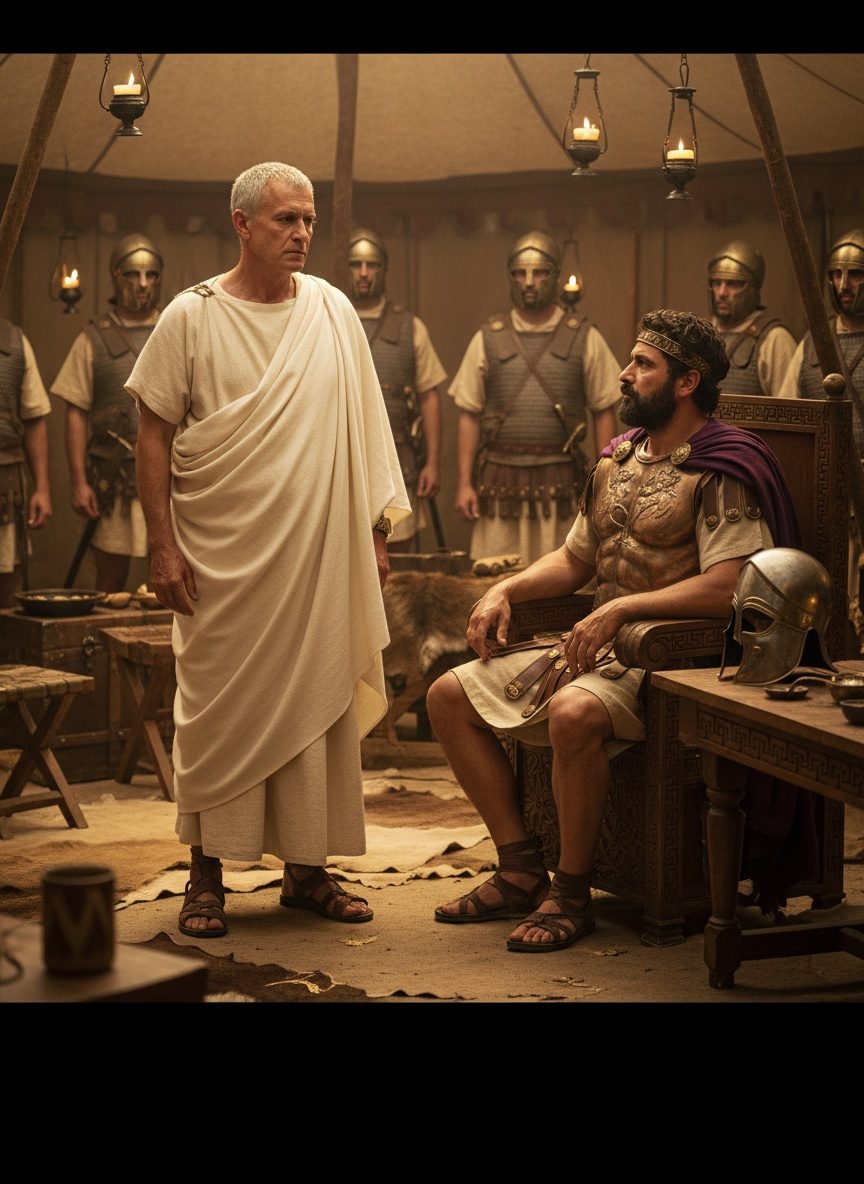
In the thick of the Mediterranean heat, amidst the clatter of bronze and the cries of combat, a Greek warrior found himself facing a critical decision. Archilochus of Paros, a soldier known more for his way with words than his prowess in battle, chose life over honour. With the close-pressing danger of advancing foes and the chaos of the retreating lines, he abandoned his shield — an act of disgrace in the Spartan ideal of war. In ancient Greece, a soldier's shield was more than a piece of defensive gear; it was a sacred symbol of their commitment to stand firm, to protect both oneself and one’s comrades no matter the cost. Losing or abandoning one’s shield was tantamount to losing one's honour entirely. The penalty was often social ostracism or worse, a tarnished family name that could last generations.
Yet Archilochus, undaunted by the shame typically associated with such an act, turned to his mastery of poetry to process his actions. In an era dominated by epics extolling heroic feats, his voice was radically different. Instead of hiding what others would see as his cowardice, he embraced it, expressing a raw, human desire for survival over death in battle. His famous lines declare, quite unapologetically, that while his shield lay forgotten in a bush, another would replace it, highlighting a practical outlook that was refreshingly honest, if not scandalous, to his contemporaries. This mindset contrasted sharply with the prevailing ethos, yet it was this vulnerability and defiance of convention that would immortalise Archilochus as a pioneer of personal expression and satire in Greek literature.
Archilochus: The Anti-Heroic Bard
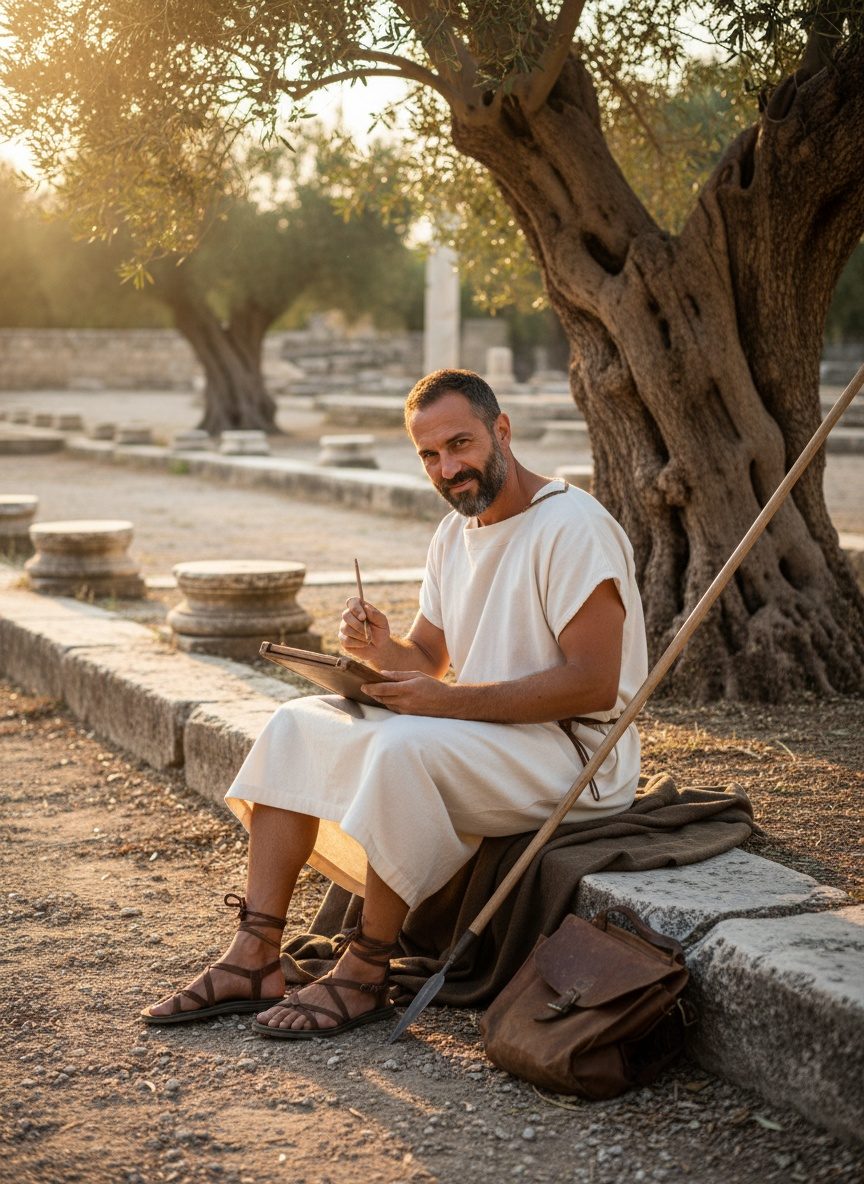
Paros, the home of Archilochus, was a modest island in the Cyclades, surrounded by the deep blue Aegean. Its chief pride was its marble, sought after throughout ancient Greece, and its poet, who carried the rare gift of a versatile voice that could wag cuttingly like a sword or lure mellifluously like a lyre. Although he was not a military man by choice, it was his time as a mercenary that fueled much of his piercing verse. Unlike the lofty, larger-than-life heroes immortalized by Homer, Archilochus wrote not only of war’s grim reality but also of its trivialities and discomforts.
The stark untraditional nature of Archilochus's observations drew both critique and praise. His fragments reflect not just the physical clashes of men but the inner turmoil, the mundane concerns, and the psychological trials hidden behind tales of glory. Where Homer portrayed the grand sweep of combat's fury, Archilochus tuned into the soldier’s more banal realities – hunger, fear, love, and the bitter irony of survival versus honour. He crafted a distinctive voice and tone that carved out a new niche for Greek poetry, one that resonated deeply with those who could see themselves in his words, those who were less demigod and more man.
Though much of his work survives only in fragments, what remains showcases his wit and observational prowess. Archilochus did not concern himself with the judgment of his peers who considered his forsaken shield an unconscionable act of cowardice. Instead, he immortalized it in verse, capturing not just a single moment of wartime retreat, but a universal human instinct to survive, which, in its defiance of the heroic narrative, strikes a familiar chord even today.
The Legacy of a Reluctant Hero
In transforming personal failure into an artistic triumph, Archilochus left an indelible imprint on the world of literature and, arguably, on the broader historical psyche. His shield may have been lost to time, hidden beneath age-old earth and story, but his words flourished into a quiver of truths that still penetrate the human consciousness. What he offered was not merely poetry but a testament of complexity, embracing human fallibility in a society that demanded unwavering heroism. Archilochus had effectively given voice to the inner doubts and reflections that many experienced but few dared to express out loud in his time.
His influence extended far into the future, paving the way for lyric poets and writers who would challenge societal norms by engaging more intimately with emotion and existential uncertainty. By proudly declaring that he would acquire a new shield, he underlined the notion of practicality in distress, a sentiment that resonates with realists who view the world through a pragmatic lens rather than the romantic idealism of Homeric legends. Furthermore, his choice opened the gates for a poetry that embraced the personal, the flawed, and sometimes, the ignoble aspects of human nature.
The legacy of Archilochus is a reminder that history's true narratives often dwell in the uncomfortably personal and the unequivocally honest. His unyielding embrace of selfhood — irrespective of societal disgrace — fosters a dialogue about the value of individual expression over collective judgement. In a world where the façade of honour often overshadowed the candour of humanity, Archilochus carved his own path, leaving behind not a mere gilded shield but a legacy far richer: the power and precision of words to capture the essence of being human.