278 BCE. A brisk wind swept through the Greek camp, carrying with it the mingled scents of damp earth and the salinity of the distant Ionic Sea. It was here, in the camp of Pyrrhus of Epirus, that one of the storied encounters of the ancient world was about to unfold, a meeting that would reverberate through history not with the clamor of weapons, but with a profound display of moral conviction.
The Reluctant Offer of Gold
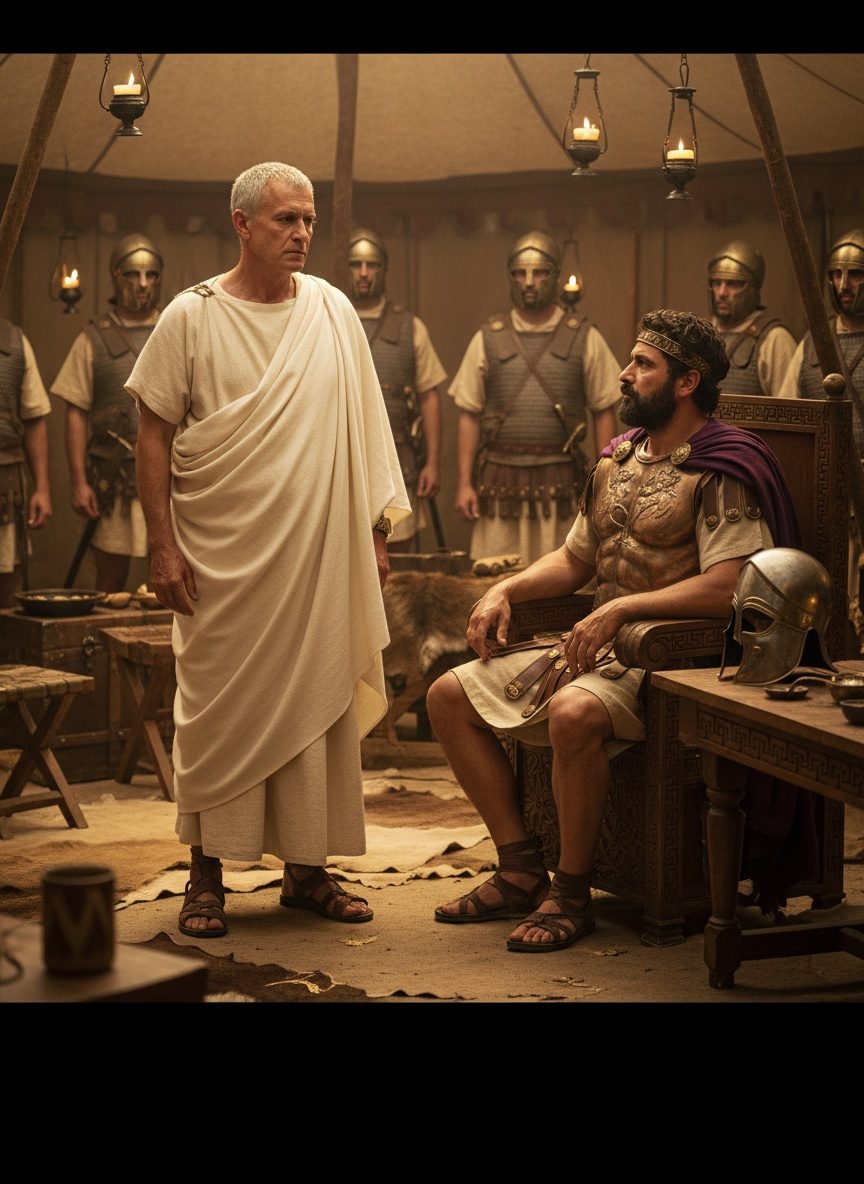
In the makeshift throne room made of rich yet hastily assembled surroundings, a solitary Roman envoy stood unwavering before the flamboyant King Pyrrhus. This was Gaius Atilius Regulus Fabricius, a man whose reputation for incorruptibility had reached even the ears of this warrior king. Pyrrhus, who had spent his life in the maelstrom of endless campaigns, battling first for survival, then for glory, now faced the challenges of diplomacy.
Pyrrhus, often referred to as the "eagle" of Epirus, possessed both martial prowess and a penchant for theatrical displays of wealth. Yet, he understood the utility of political maneuvering. Attempting to coax the Romans into peace, he extended an offer of gold to Fabricius. It was a fortune that would have made the humble envoy's descendants wealthy beyond their dreams. But Fabricius, steadfast and virtuous, regarded the glinting coins with indifference. His heart, as it were, was far from being seduced by material luxury.
The refusal was polite yet firm—a gentle wave of a hand that brushed away the golden bribe like it was mere dust in the air. Fabricius's eyes betrayed no avarice, no hesitation, only the stoic resolve of a servant loyal to the mandates of Rome.
The Unleashing of Fear
Having failed with temptation, Pyrrhus turned to intimidation. He schemed to unsettle this unmovable Roman through the manifestation of terror himself—a trick that would showcase the awe-inspiring might of his exotic war beasts. Concealed behind a thick drape, an armored elephant, a creature unknown to the Roman legions, was made to rear its massive form with an earth-shaking roar.
Yet, as the curtain fell, revealing the looming figure with its tusks adorned for battle, Fabricius merely turned, eyes steady, posture serene. Despite the initial roar and the heavy stomp of the creature drawing closer, the envoy met the beast's eyes with the steady assurance of a man at peace with his fate.
This reaction, so devoid of the expected fear, left Pyrrhus momentarily bereft of words. Fabricius’s response was simple yet profound: should he not fear the multitude of troops that lay astride the king, why would he cower before one beast no matter how large?
The Unprecedented Gesture
The king paused, the realization dawning on him that here was a man beyond his reach by bribery or intimidation. But rather than a defeat, Pyrrhus saw in Fabricius the reflection of the valor he had so deeply respected throughout his adventurous life. In a fit of admiration, one might say, Pyrrhus made a decision that stunned even his closest advisors.
Pyrrhus could have held the captured Roman soldiers to ensure concessions. Conventions of war would have deemed it yet another strategic maneuver. Instead, the king ordered their immediate release. It was an act of magnanimity that would echo louder than any proclamation of war. Each prisoner walked out without shackles, released not in exchange for ransom or territory, but by the rare mutual respect between two men of stubborn honor.
The unconditional release was perceived across Italy and beyond as a legendary act of diplomacy—a gesture that went against the very essence of utilizing power for gain. For Pyrrhus, it was neither a defeat nor a victory, but a statement eclipsing even the mightiest of armies.
Ripples Through Time
The tale of Pyrrhus and Fabricius spread like the crackling flames of a wildfire. It became not only a benchmark of ethics but also a lesson in the nuanced theatre of international relations in antiquity. For Rome, Fabricius became emblematic of the virtue and rigidity expected from its statesmen and soldiers alike, a living tribute to the Senatus Populusque Romanus — the Senate and the People of Rome.
In the years that followed, the audacity shown by these two great figures compelled generations on both sides to ponder the effects of showing humanity amid strife. Had Pyrrhus calculated that freeing these soldiers would bring him strategic advantage by weakening Roman resolve, history did not record such a motive. Rather, it left behind a narrative on the unlikely camaraderie formed on the battlefield of ethics.
The Relevancy of Integrity in the Perils of Power
In many ways, the tale of Fabricius and Pyrrhus still whispers through the corridors of time, its lessons impervious to the erosion wrought by centuries. It is a testament to the rare but powerful phenomenon of principled actions altering the course of history, a change birthed not from conquest or suppression but from the unyielding resolve of moral integrity.
Today, the confrontation in Pyrrhus’s tent, with its refusals and releases, serves as a beacon from antiquity, illuminating pathways to resolve conflicts in more harmonious ways. In a world continually embroiled in its own struggles of bedevilment and compromise, the story of Fabricius and Pyrrhus contends with the permanence of power and the infallibility of character. Ultimately, it reveals this enduring truth: that genuine respect and unwavering integrity can disarm even the fiercest of foes.