The sun had barely crested over the red-tiled rooftops of Rome, casting long shadows across the cobbled streets as a chill morning breeze whispered between the towering columns of the Senate’s Forum. It was not an ordinary day; the air was heavy with apprehension. Cicero had called for an urgent meeting, and whispers of a conspiracy crackled through the city’s heart like an impending storm. In the shadow of the mighty temples and the Senate House, a singular drama was about to unfold — a moment that would determine the Republic's fate.
The Shadow of Catiline
Turbulence had gripped Rome in 63 BC. The streets buzzed with rumors of Catiline, a senator with a dangerous vision and a handful of desperate allies. While the Republic teetered, Catiline’s whispers promised a new order — one crafted with fire and ambition. He planned to ignite the city and seize control. But Cicero, the Republic's vigilant consul, pierced through the veil of secrecy surrounding Catiline’s plot. He possessed a critical piece of evidence: a written confession obtained under careful maneuvering and shared in whispers among trusted allies.
But to bring words to justice was daunting. Even Cicero couldn’t wield this alone. He needed a messenger brave enough to walk through the lynching shadows of despair and danger — a senator who would dare risk life for the Republic's heartbeat. Enter Publius, a man whose moral compass would guide him through the murk of political treachery.
Carrying the Republic's Hope
As the sun climbed higher, Publius gripped the scroll containing the confession, his heart thundering like the legions marching across open fields. Every step towards the Senate was fraught with peril, for Rome’s underbelly was rife with Catiline's operatives, prowling for any chance to silence him and his truth. Each breath brought the weight of duty closer to crushing, yet conviction steeled his resolve.
The Forum, bustling yet expectant, echoed with the murmurs of the Roman populace. The grand edifices loomed, their storied walls ready to witness a reckoning. Publius, with the eyes of history upon him, knew this day could reshape the destiny of Rome. As he mounted the rostrum, even the birds seemed to pause, lending their silence to the unfolding drama.
Voice Against the Shadows
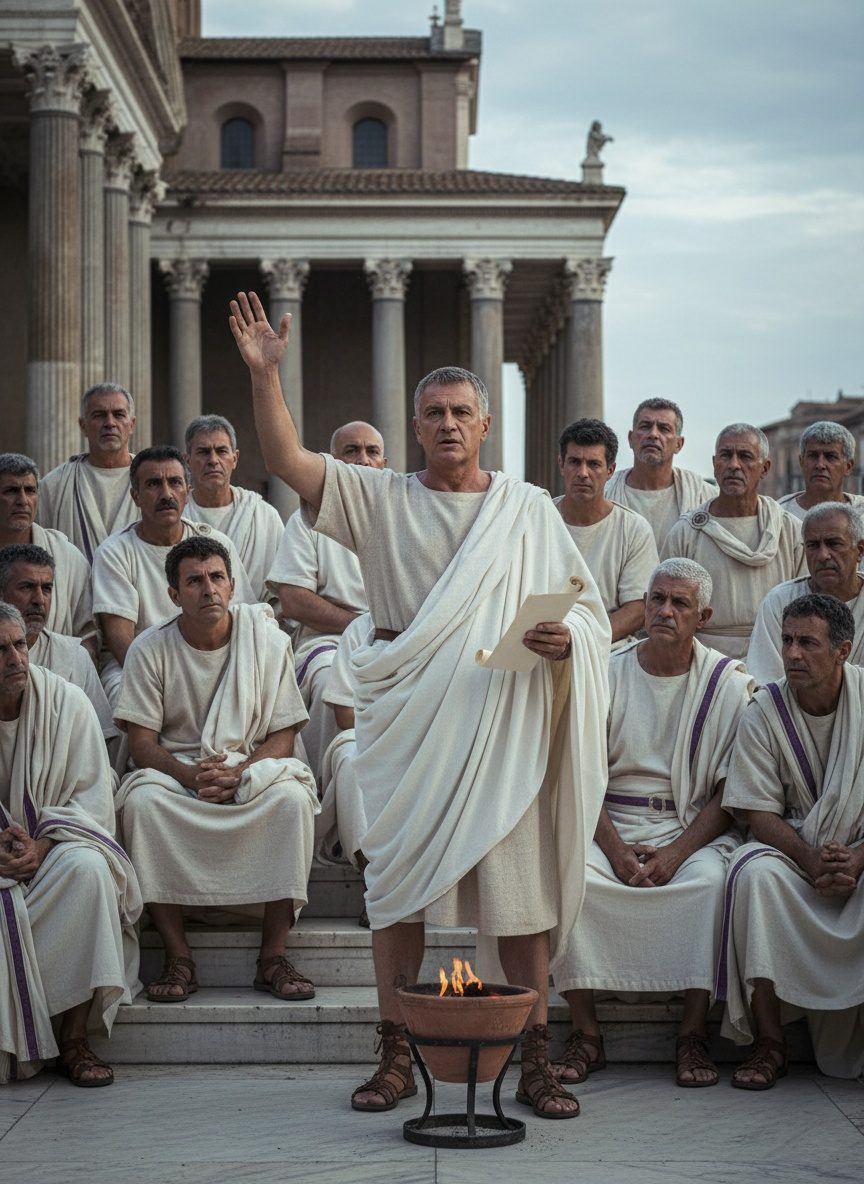
Standing high above the assembly, Publius unfurled the parchment, its fragile fibers whispering secrets of betrayal and treason. With a voice honed through years within the Senate’s passionate debates, he began reciting the words of conspiracy. The confessions leapt from the pages like lethal vipers, revealing names and deeds plotted beneath Rome’s noble façade.
The senators, riveted by a mixture of disbelief and dread, sat frozen like statues. Every name read aloud deepened the fissure of revelation, exposing the naked ambition and greed of those whose aim was to tear apart the Republic from within. Within moments, the path to ruin stood exposed, and the weight of this knowledge coursed through the Forum like wildfire.
Destroying the Evidence, Saving the Republic
With the final words still echoing in the crisp morning air, Publius held the scroll aloft one last time. And then, with a decisive motion that spoke both of duty and a warning to conspirators, he set the confession ablaze. Flames danced voraciously, consuming the evidence, leaving nothing but ashes and the indelible memory seared into the minds of those present.
The gesture was more than symbolic. It was a testament to the Republic's fragile nature – a truth undeniable and preserved only by courage, integrity, and faith that Rome’s people would choose governance over chaos, justice over ambition. Though the confession was gone, its spirit would guard the Republic’s walls against the whispers of future would-be tyrants.
The Republic Endures
In the days that followed, Cicero and his allies tightened their net around the conspirators, driving the traitors into the shadows or the grave. Catiline himself would fall, his dreams buried beneath the dust of battle, but not before casting a long shadow over the Republic. Yet, this day was not about the fall of traitors; it was about the enduring spirit of Rome — a testament to the indomitable will of the people who refused to watch their city burn.
As years turned to centuries, the story of Publius and his fiery testament lingered as both warning and inspiration. It was a tale of courage in the face of annihilation, a reminder that Rome’s greatness lay not in its marble nor in its armies, but in the souls of men like Publius who, against all odds, carried the flame of the Republic within their hearts. At that moment, they had saved the Republic; they reminded the world of the beauty and fragility of democracy, forever echoing through history's long corridors.