June 19, 1354. The intricate shadows of the Alhambra cooled the air beneath its arches.
The Visionary Sultan
In an era fraught with tension and conflict, where empires rose and fell beneath the Andalusian sun, Yusuf I of Granada stood not as a warrior-king but as a patron of progress and beauty. His vision diverged from the path of conquest, seeking instead to craft a legacy carved in stone and poetry — the Alhambra, a shimmering beacon of Islamic art and architecture. Under Yusuf's guidance, this palace became a canvas where artists, architects, and scholars painted with light and shadow, bringing forth stunning symmetry and intricate arabesques.
The Alhambra was more than just walls and ceilings; it was a spiritual enclave, a reflection of paradise on earth. The Sultan prioritized spaces like the Hall of the Ambassadors, intended not only for audiences with Christian and Muslim dignitaries but also for fostering a dialogue about knowledge and culture across the Mediterranean. Each room of the Alhambra whispered stories of coexistence, where Muslims, Christians, and Jews contributed their craft in an era of rare collaboration. These hidden tales manifest in the calligraphy adorning the walls, where the poetic verses urge contemplation of creation’s delicate balance.
Echoes in Stone
Constructed over two decades, the structural design of the Alhambra mirrored the Sultan's desire for harmony between nature and the divine. The Lion Court, known for its centerpiece fountain supported by twelve carved stone lions, symbolizes power balanced by grace, apt for a ruler who fashioned his reign as a period of cultural flourishing rather than endless campaign. With gardens that teased the senses and water that sang through elaborate channels, Yusuf's Alhambra became a microcosm of heaven on earth, a shrine to an era when peace existed not in conquest but in the elegance of creation.
Yet, beyond the beauty was a deeper story of resilience. Each carved geometric stalactite, each polished tile, told of a sultan's determination to build an eternity in an age obsessed with the impermanence of war. Yusuf's construction boomed amid political turbulence with the Christian kingdoms to the north and rival Islamic empires in North Africa. In the quiet shimmer of reflection pools, visitors today glimpse the past sultan’s hope for an enduring enclave of peace beneath the sweeping arches and stars etched into ceilings.
Tragedy at Prayer
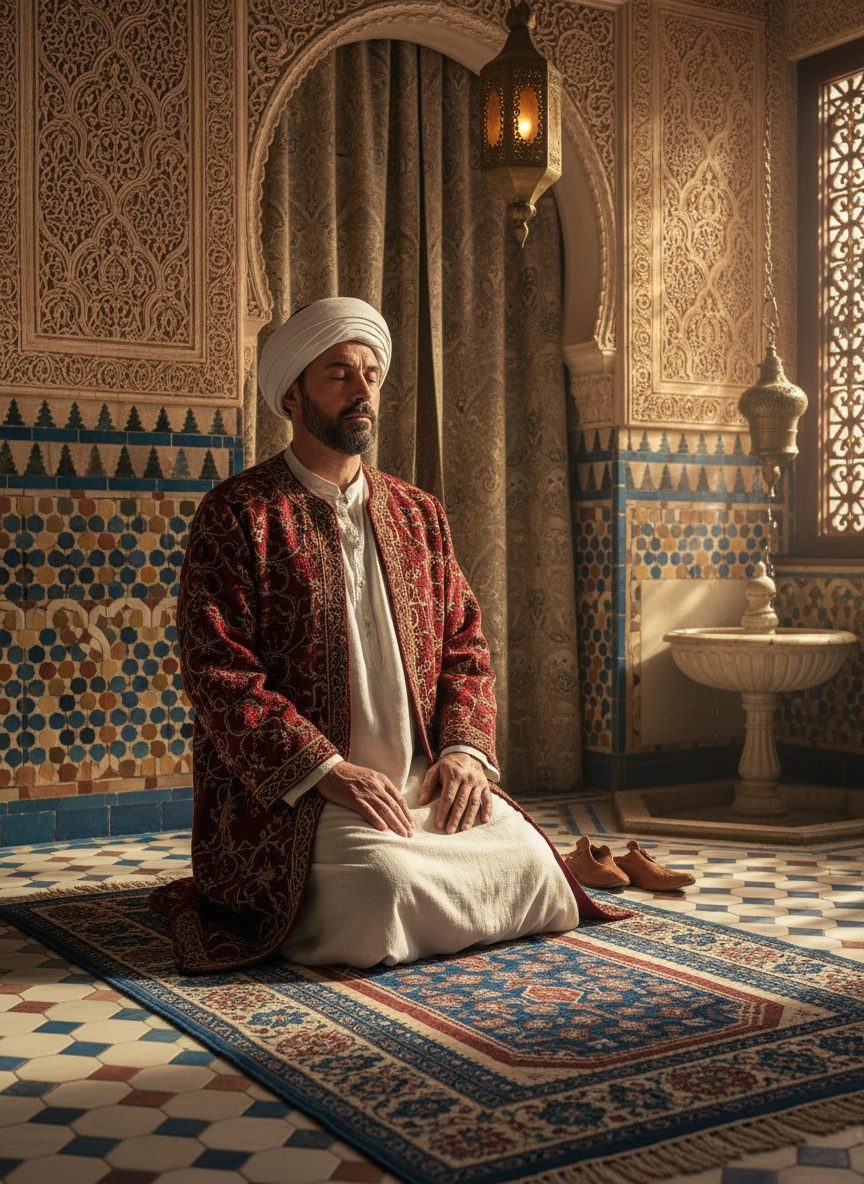
Amid the harmonious symphony of creation, the story of Yusuf I abruptly shifts to tragedy on that fateful day in June. As the Sultan knelt in prayer, his thoughts perhaps echoed the reverent verses inlaid in his halls, seeking divine guidance in tumultuous times. But serenity in the Alhambra was shattered by a single act of insanity, as a madman — whose identity and motive remain hidden in the threads of history — managed to evade the palace guards and end Yusuf’s reign with a dagger's plunge.
This shocking moment, occurring in the sanctum of prayer, sends ripples through time and narrative. The Sultan, who had painstakingly safeguarded his kingdom with diplomacy and art, fell victim to an unexpected violence that no fortress or friendship could prevent. In cruel poetry, Yusuf I, the builder of walls laced with divine verses, met his fate as he sought divine communion. In the aftermath, his kingdom was left to face the storms of an uncertain future, now without its visionary.
The Enduring Legacy
The splendor of the Alhambra continued to unfold beyond Yusuf's untimely demise, transcending the loss of its creator. Though he did not live to see it completed, his dream persisted. The Alhambra stands to this day, a testament to the beauty and transcendence wrought from human endeavor against the passage of time. Each visitor since then walks through a space where stone and history converse in silence — a place that once reverberated with the hopes and dreams of Sultan Yusuf I.
Yusuf's story conveys timeless truths. In a world where power often bows before the sword, one man's dedication to aesthetic brilliance reveals an alternative legacy. His efforts remind us that within the persistent cycle of conflict and change, art and beauty find ways to survive and inspire, nurturing souls long after names fade into obscurity. His story whispers that while kingdoms fall and fade, creations fired by the imagination of builders like Yusuf I might long outlast the hands that crafted them, urging humanity to look forward with each backward glance.