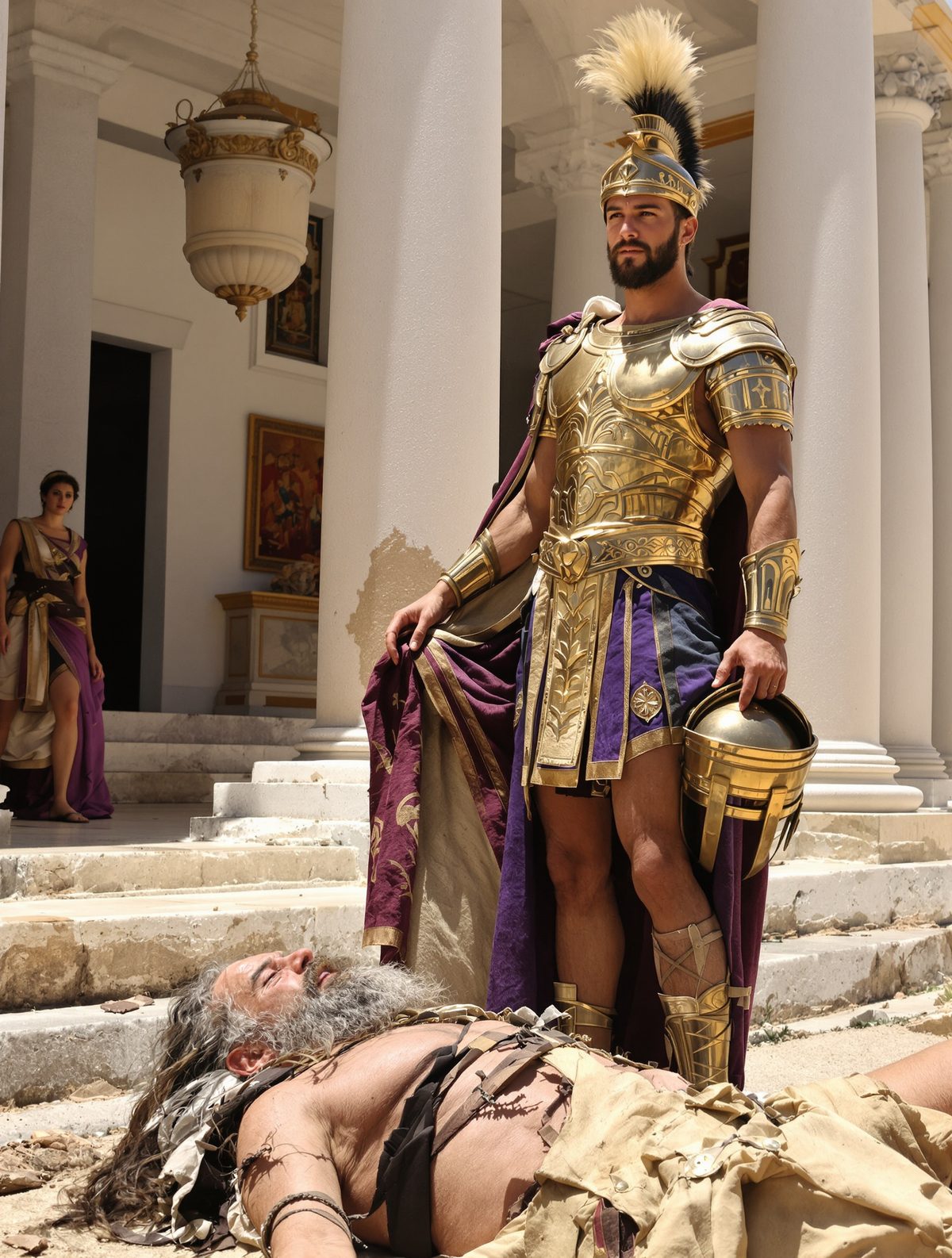
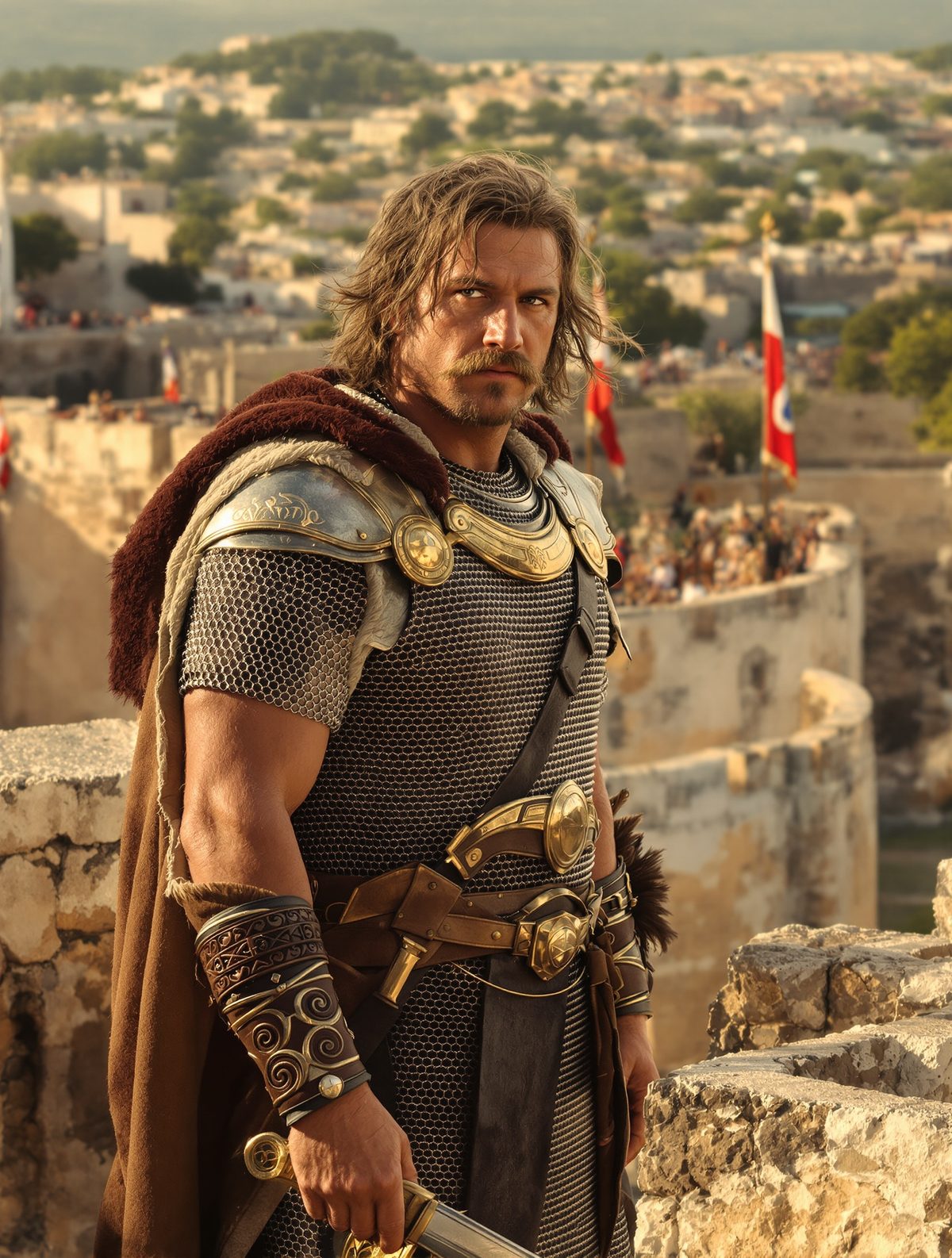
The fisherman's hands trembled as he held out the massive catch, its silver scales still glistening with Mediterranean seawater. Polykrates, tyrant of Samos, barely glanced up from his golden throne—until the servant's knife split open the fish's belly and something impossible tumbled onto the marble floor. There, glinting in the afternoon sunlight streaming through his palace windows, lay his precious emerald ring. The very same ring he had hurled into the depths of the sea just days before, hoping to appease the jealous gods who seemed determined to destroy his perfect life.
What happened next would become one of history's most chilling tales of hubris, divine intervention, and the terrifying price of absolute power. This is the story of a man whose wealth was so vast, whose luck so extraordinary, that even the gods themselves took notice—and decided to teach him a lesson about the fickle nature of fortune.
The Golden Age of a Mediterranean Paradise
In the 6th century BC, when the ancient world was still young and gods walked closer to mortal men, the island of Samos gleamed like a jewel in the Aegean Sea. Under the rule of Polykrates, who seized power around 540 BC, this small Greek island had transformed into something unprecedented: a maritime empire that controlled the eastern Mediterranean with an iron fist wrapped in silk.
Polykrates wasn't just wealthy—he was impossibly wealthy. His fleet of 100 pentekonters (fifty-oared warships) and 40 triremes dominated the seas, making him the most powerful naval commander of his age. Pirates, merchants, and rival city-states all paid tribute to the tyrant of Samos. Gold flowed into his treasury like water, funding magnificent building projects that would make even the pharaohs envious.
The numbers tell an extraordinary story: under Polykrates' rule, Samos boasted the longest tunnel ever built in the ancient world (the Tunnel of Eupalinos, stretching over 1,000 meters through solid limestone), the largest temple in the Greek world (the Heraion), and a harbor mole that ancient engineers considered one of the wonders of their age. His court attracted the greatest minds of the era—the philosopher Pythagoras walked these halls, as did the master sculptor Theodoros and the brilliant engineer Eupalinos.
But it was Polykrates' personal luck that truly set him apart. Every venture succeeded, every gamble paid off, every enemy fell before his might. He seemed touched by divine favor, blessed by the gods themselves. And that's precisely what worried those closest to him.
A Warning from the Land of Pyramids
Around 525 BC, as Polykrates basked in yet another string of victories, an urgent message arrived from an unexpected source: Amasis II, the pharaoh of Egypt. The two rulers had formed an alliance that benefited both their kingdoms—Egyptian grain and gold for Samian naval protection and luxury goods. But now Amasis was writing not as an ally, but as a friend genuinely concerned for Polykrates' soul.
The Egyptian king's letter, preserved for us by the historian Herodotus, contained a chilling warning: "I know that the divine power is jealous by this—that I have never heard of any man who after being in all things successful did not finally come to an evil end." Amasis had witnessed firsthand how the gods punished those whose fortunes rose too high. Egyptian mythology was filled with such cautionary tales.
The pharaoh's advice was as practical as it was spiritual: deliberately sacrifice something precious, something that would cause genuine pain to lose. Only by voluntarily accepting loss could Polykrates hope to appease the divine jealousy that his unprecedented success had surely aroused.
What makes this correspondence remarkable isn't just its content, but its existence at all. Here was one of the most powerful rulers in the ancient world essentially telling another to sabotage his own good fortune. It speaks to a shared understanding across cultures that the gods—whether Greek, Egyptian, or otherwise—demanded balance, and that mortal happiness could become so complete it was actually dangerous.
The Ring That Ruled an Empire
Polykrates took the warning seriously, but choosing what to sacrifice proved agonizing. His treasure vaults contained riches from across the known world—Persian carpets, African ivory, Indian spices, Scythian gold. But material wealth, no matter how vast, wasn't truly precious to a man who could acquire anything. What could possibly matter to someone who had everything?
The answer gleamed on his finger: an emerald signet ring of breathtaking beauty and immense personal significance. Ancient sources describe it as a masterwork created by Theodoros, the same artist who had crafted the golden plane tree given to the Persian king Darius. But this wasn't merely a display of wealth—it was the symbol of Polykrates' authority, bearing the seal he used to authenticate his commands across his maritime empire.
In the ancient world, a ruler's signet ring was far more than jewelry. It was the physical embodiment of royal power, the tool that turned royal will into legal reality. Every treaty, every trade agreement, every military order bore its impression. To lose one's signet ring wasn't just personal tragedy—it was political catastrophe. Without it, Polykrates' ability to govern his far-flung empire would be severely compromised.
Standing on his palace balcony overlooking the wine-dark sea, Polykrates raised his hand and hurled the ring into the Mediterranean depths. The emerald caught the sunlight for one final, brilliant moment before disappearing beneath the waves forever. The sacrifice was complete—or so he thought.
The Fish That Defied the Gods
Three days passed in blessed normalcy. Polykrates felt the weight of divine displeasure lifting from his shoulders. He had made his sacrifice, paid his debt to the gods' jealousy. Surely now he could continue his remarkable run of success without supernatural interference.
Then came the fisherman—a weather-beaten local who had hauled in a catch so magnificent he felt it worthy only of his island's ruler. The fish was a kolios, likely a type of large tuna, bigger than any seen in those waters before. Its size alone made it a princely gift, the sort of offering that might earn a humble fisherman a handful of silver coins and a story to tell his grandchildren.
But as palace servants prepared the fish for the royal table, their knives revealed something impossible. There, nestled in the creature's belly like a terrible joke from the gods themselves, lay Polykrates' emerald ring. The very ring he had sacrificed to divine jealousy had been returned to him by the sea itself, delivered as if on a silver platter.
Herodotus tells us that when news of this miracle spread, even Polykrates' closest advisors were filled with dread. This wasn't divine favor—this was divine mockery. The gods had refused his sacrifice, rejected his attempt to appease their jealousy. They were, in effect, saying: "You cannot escape your fate so easily, mortal. Your prosperity will continue until we decide to destroy you utterly."
When Fortune Becomes a Curse
The returned ring marked the beginning of the end for Polykrates, though he didn't know it yet. Even Amasis, when he heard the tale, immediately severed his alliance with Samos. The pharaoh had seen enough of divine judgment to recognize the signs—Polykrates was marked for destruction, and Amasis wanted no part of the coming catastrophe.
The tyrant's downfall came in 522 BC, just a few years after the ring's return. Oroetes, the Persian satrap of Sardis, lured Polykrates to the mainland with promises of treasure and alliance. Despite warnings from his daughter, who had dreamed of her father hanging in the air, washed by Zeus and anointed by the sun, Polykrates sailed to his doom. He was captured, tortured, and crucified—left hanging exactly as his daughter had envisioned, his body washed by rain and anointed by the brutal Anatolian sun.
The irony was complete: the man whose naval empire had made him master of the seas died on dry land, betrayed by the very ambition that had made him great. His perfect luck had finally run out, just as the returned ring had foretold.
But perhaps most chillingly, Oroetes himself met a gruesome end shortly after, suggesting that even those who served as instruments of divine justice weren't immune to its ultimate reach. The gods' jealousy, once aroused, seemed to consume everyone it touched.
The Eternal Return of Fortune's Wheel
Why does this ancient tale still captivate us 2,500 years later? Perhaps because Polykrates' story speaks to something eternal in human nature—our simultaneous attraction to and fear of absolute success. In our age of billionaire entrepreneurs and viral celebrities, we still grapple with the same questions that haunted the ancient world: Is there such a thing as too much good fortune? Do we pay a price for unprecedented success?
The ring of Polykrates has become a symbol for the inescapable nature of fate, the idea that trying to cheat destiny only ensures its fulfillment. Modern psychology might interpret his story as a case study in survivor's guilt or the anxiety that comes with impostor syndrome—the nagging fear that our success is undeserved and will inevitably be taken away.
But there's something deeper here, something that transcends cultural boundaries and historical epochs. Polykrates' tale reminds us that fortune is cyclical, that what the Greeks called the wheel of fate continues to turn regardless of our desires or actions. His emerald ring, returned by the sea, serves as an eternal reminder that some gifts cannot be refused, some destinies cannot be avoided, and some prices must ultimately be paid—no matter how far we throw our rings into the depths.