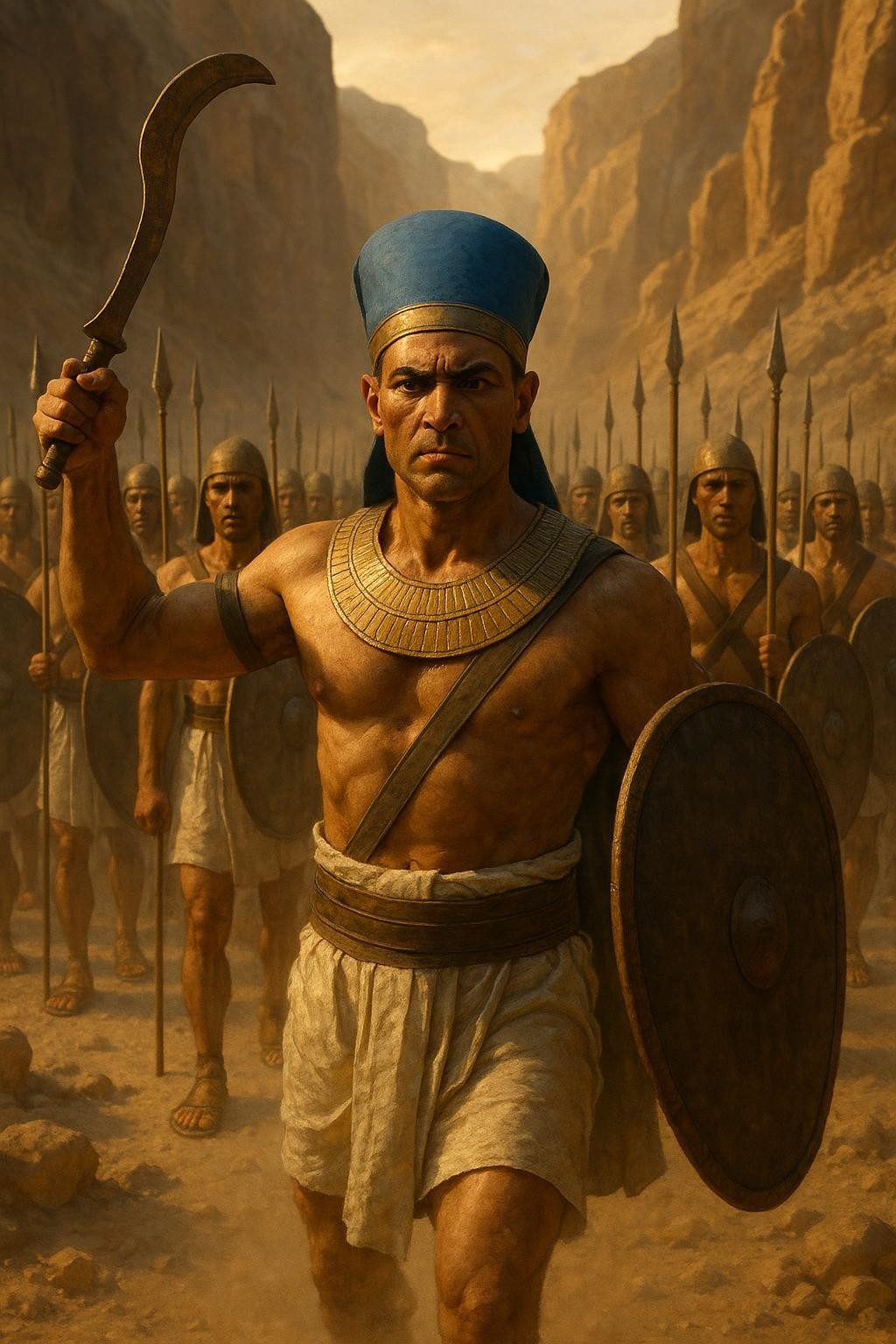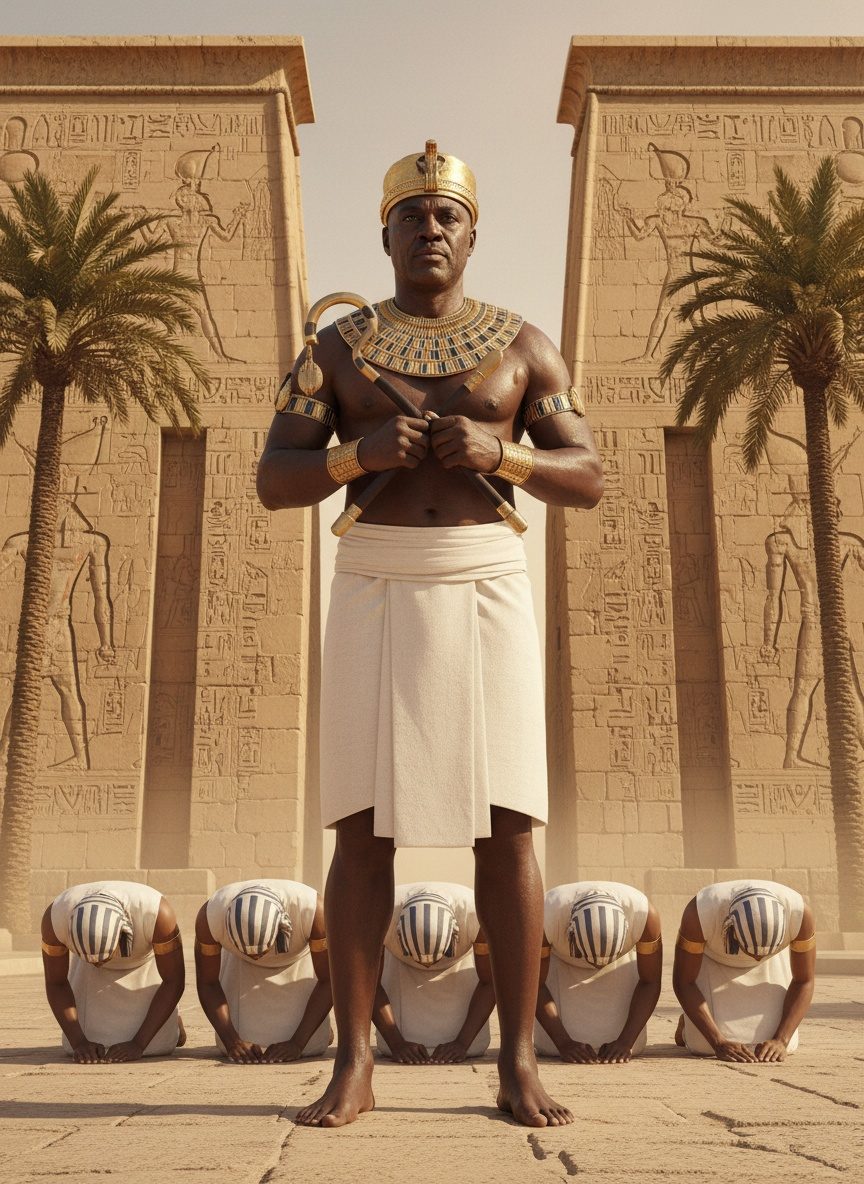
728 BCE. The desert sands of the Nile Valley seemed restless under the unmistakable brilliance of the Egyptian sun. As the day unfolded, a new power rode forth, neither to conquer for territory nor plunder, but with a mission steeped in religious conviction and cultural restoration.
The Southern Sovereign's March
From the rich and vibrant lands of the Kingdom of Kush, a force moved with calculated intent. Piye, the indefatigable Nubian king, embarked on a journey few could have foreseen. He hailed from a region once under the yoke of Egyptian colonizers, yet he was driven not by vengeance, but by reverence for a culture his predecessors cherished. The kingdom of Kush, nestled south in Nubia, had emerged resilient and robust, its heart beating to the rhythm of its African roots.
Piye’s troops, sleek and sinewy like the panthers of their homeland, crossed vast distances with an uncanny swiftness. The ancient Nile guided their path northward, a liquid road whispering tales of gods and men. Their destination: the decaying seat of Egyptian power, a civilization besieged by its internal schisms rather than external foes. Egypt, at the time, lay fragmented, a fading shadow of its illustrious past, with its great cities run by petty rulers and dissatisfied aspirants who barely clung to their fragmented domains.
Yet, as Piye rode, his aim was not conquest born of bloodlust. Here was a man who carried with him an unyielding faith in the restoration of Ma'at, the principle of truth and balance that now lay tarnished. City after city capitulated, drawn not merely by the might of his chariots but by the magnetism of his conviction. As whispers of his advance echoed ahead, pharaohs and nobles, dressed in the grandeur that once signified Egyptian invincibility, appeared insignificant, laying treasures at his feet, acknowledging an authority they did not dare question.
The Surrender Before Memphis
Memphis, the ancient capital, stood as Piye's prominent objective—a city legendary for its opulence and power. The air here was thick with tension and anticipation. The Nubian ruler, not one to shroud his ambitions, had drawn a line in the spiritual sands of time. His strategy was as much about the symbols of power as it was about the tangible assets. Those who sought to resist were swiftly dispatched, their struggles crushed not under a vindictive heel, but beneath the weight of their own moral decay.
Before the gates of Memphis, Piye saw what Egypt had become—a fractured tableau of vestigial grandeur held together by self-serving lords and floundering claims to divine favor. The city’s leaders cowered, bearing gifts and tributes like penitents before a noble priest—a testament to Piye's indomitable will and sagacious statecraft. Yet, amidst the prostration and offerings, Piye did not revel in conquest or demand new monuments to his glory.
Instead, he wept. His heart, though fierce in battle, was tender when faced with the withering glory of the gods. Great temples, once playing host to the mighty ceremonies of Amun-Ra, stood neglected, their sacred halls echoing with a silence as profound as the universe. This disregard pained him more profoundly than any resistance he had quelled. With a king’s authority and a believer’s devotion, Piye called for the restoration of these sacred spaces, demonstrating that true power lay in the resurgence of divine order.
A King Returns, Leaving a Legacy
Having integrated the wisdom of the southern lands into the heart of Egypt, Piye did not tarry. He had no desire to forge an empire from the corroded skeletons of serpentine politics or the fractious hearts of subjugated lords. Leaving behind a stronghold of cultural revival, he turned southward, back to the land of his beginnings—a kingdom now anointed by divine favor. His retreat was as deliberate as his advance, a journey back to the source, carrying with him the echoes of his triumph and teachings.
This conquest without permanent occupation is what makes Piye’s campaign an enduring narrative of leadership. Here was a king whose motivations ran deeper than territorial gain—a ruler focused on lasting stewardship over transient domination. The old gods had been honored in his sight, and with his back to the fading sun of Egypt, Piye’s legacy was planted in the soil of cultural and spiritual continuity.
In a world where empires rose and fell like the tides of history, Piye’s journey northward endures as an often-overlooked chapter of visionary leadership. One where strength was paired with enlightenment, and conquest was measured not by land held, but by ideals restored. His tale prompts us to consider the stories obscured by sands of time, reminding us that sometimes, the most profound transformations come not from those who remain but from those who pass through, leaving their mark in the ether of human heritage.