He was not the tallest man on the field, nor the most imposing. Yet Thutmose III, Pharaoh of Egypt, was about to make a decision that would echo through millennia. The narrow path at Aruna lay before him, a gauntlet that was deemed impassable — a death trap, every advisor said. But the young Pharaoh, resonant in his belief and strategy, would lead his men through it, alone if necessary, to rewrite the course of history.
Ancient armies were no strangers to strategic challenges, but the situation at Megiddo in 1457 BC was particularly delicate. Megiddo was a crucial prize, a city that controlled the trade route between the ancient powers of Mesopotamia and Egypt. Thutmose III faced a coalition of Canaanite forces that threatened Egypt’s northern frontier, their confidence bolstered by the terrain that seemed to favor their defensive stance. To go around the city would increase the journey and lose the element of surprise. But to take the pass at Aruna seemed nothing less than a fool’s dare.
As the council of generals convened beneath the towering Egyptian standards, the atmosphere was tense with the rumble of what might become an insurmountable task — the steep mountain passes lined with thickets that could conceal a hundred ambushes. Militarily, the pass was a thin thread, wide enough only for soldiers to march single file, presenting themselves as vulnerable targets to adversaries lurking amid the rugged cliffs. While debates waged, Thutmose, a leader with an unerring instinct for bold maneuvers, watched his commanders and surveyed the limited map available to him.
Thutmose III, who had been Pharaoh since childhood following the death of his father, Thutmose II, knew this wasn't just a battle for land; it was a test of his legitimacy and a reaffirmation of his reign’s divine protection. The resolve of the young Pharaoh was shaped during his education under Hatshepsut, his stepmother, whose peaceful regency left him little opportunity for military schooling. Yet, it was now, amid crises and uncertainties, that Thutmose would unveil his burgeoning prowess as a military strategist.
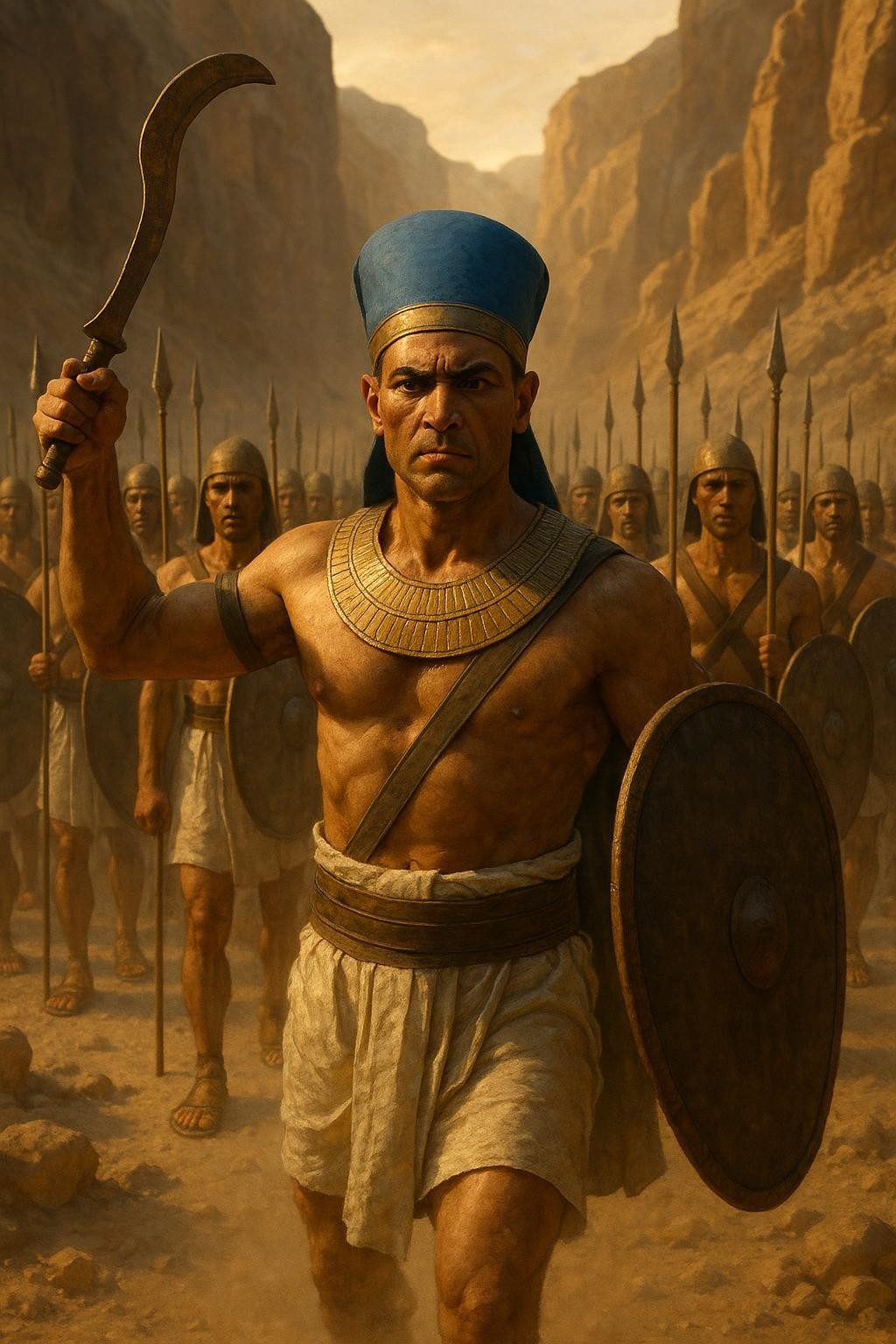
With a plan as audacious as it was dangerous, Thutmose called upon the resilience of his troops, urging them to trust in his vision. "I, your Pharaoh, stand with you at the front. Together, we shall carve our path through this mountain," he declared, donning the war crown of battle. The gamble was immense, and even more the astonishment of those who saw the Pharaoh himself lead the charge into the narrowing jaws of Aruna's clasp.
As Thutmose III led his army single-file through the clutches of the pass, the reverberation of sandals echoed off the rocks like a steady drumbeat, a testament to assertiveness over trepidation. They marched with arms at ready, hearts pounding in anticipation, each man knowing the risk yet driven by their leader’s unflagging confidence. He banked not on numbers, but on the stealth and speed of his decision; indeed, this march was not just a test of strength, but of will and strategic art.
The art of warfare would be on full display shortly after the emergence on the other side. The Canaanite armies, expecting the Egyptians to retreat through their safe encirclement, were caught off guard by this incursion from such an unthinkable angle. Thutmose’s forces burst from the pass like a torrent released — their swords catching the morning sun as they surged over the astonished defenders. Egyptian chariots and infantry, staging a stunning display of martial prowess, sliced through the enemy lines. The clash that unfolded at Megiddo wasn’t merely a testament to the physical warfare, but the psychological, as the audacity of the maneuver shook the heart of their foes.
The Egyptian victory at Megiddo, immortalized in hieroglyphs and annals, signaled more than territorial gains; it marked the initiation of Thutmose III as an indomitable military genius. His triumph would echo from the banks of the Nile to the farthest reaches of the ancient world, weaving a tapestry of subjugation and diplomacy that would see Egypt’s borders stretch to unprecedented expanses. The siege of Megiddo, followed by a seven-month encampment, showcased both the tenacity and patience of the Egyptian campaigners as they waited the city’s surrender.
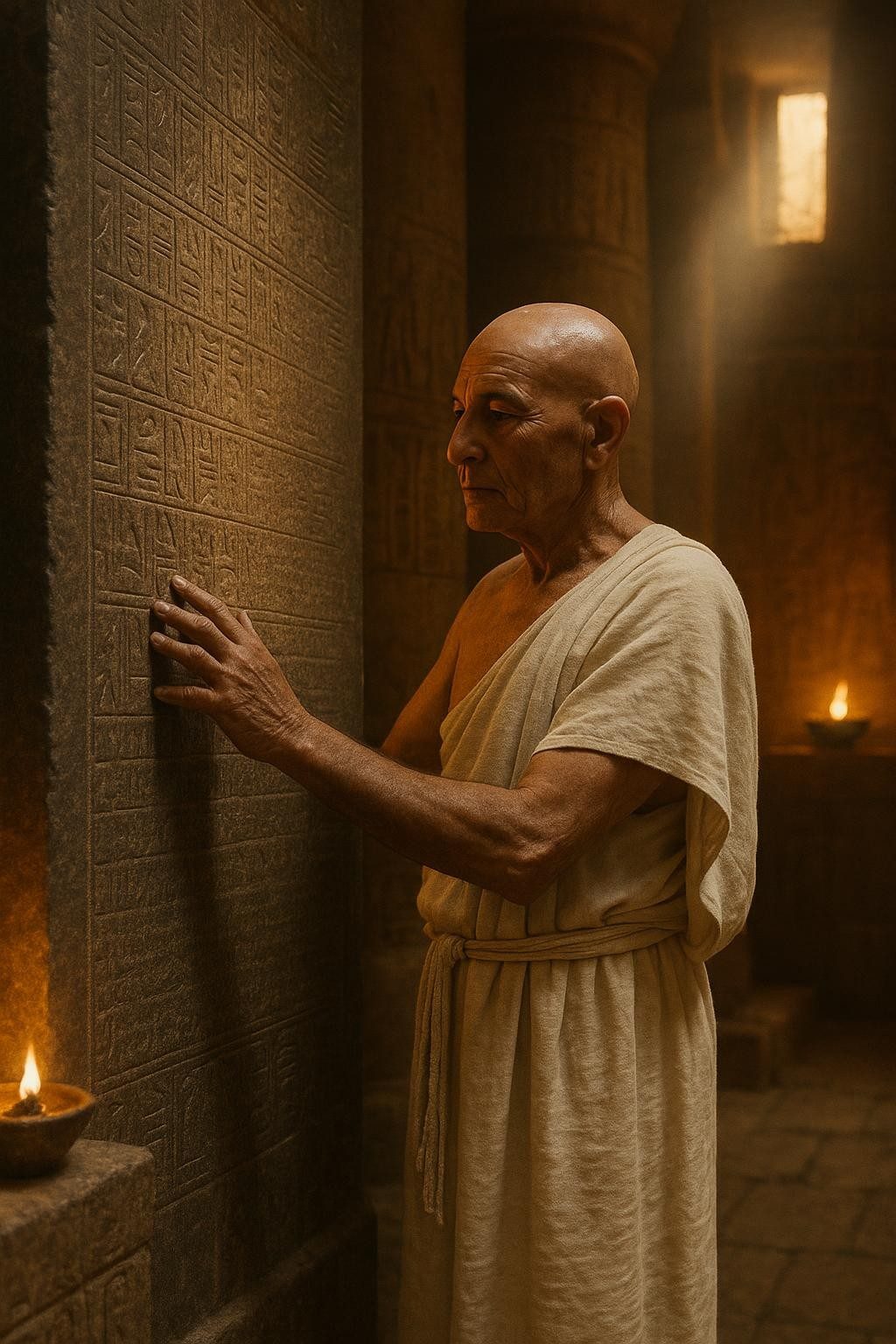
As scribes meticulously documented the events, depicting Thutmose III's fearless leadership amidst adversity, a legacy was forged — one that would herald Egypt’s apex as an imperial power. These chronicles served not only as a record of military feats but as instructional texts, preserved and revered by future generations of commanders and leaders, illustrating the value of calculated risks and daring leadership.
Why does this story matter, thousands of years later? Thutmose's decision was not a whim, nor mere bravado; it was a lesson in leadership and courage — a demonstration that sometimes, the narrowest paths lead to the most significant victories. It reminds us that the essence of progress often lies outside the realms of comfort, in choices that redefine boundaries and alter destinies. Thutmose III did not merely enter history through a mountain pass; he carved a path for Egypt among the great powers of antiquity, leaving behind a narrative of audacity that continues to inspire the spirit of innovation and fearless leadership today.