The air was thick with anticipation as the sun reached its zenith over the sandy plains of Olympia. Beneath the cobalt sky, thousands of spectators filled the wooden stands, their voices a cacophony of excitement and fervor. The pungent aroma of olive oil mingled with the dust kicked up by racing hooves, creating an atmosphere that was both earthy and electric. This was not a mere sporting event; it was the ancient Olympic Games, a festival where gods were honored, and men aspired to become legends. Among the competitors, a single charioteer from Syracuse had captured the audience's attention. In mere moments, his fate—and the legacy of those who dared to push the boundaries of human capability—would be forever altered.
The roar of the crowd peaked as the chariots charged forward, wheels spinning, horses straining with every ounce of muscle and fervor. This was a spectacle of skill, speed, and dangerous bravado. Victory here meant more than just personal glory; it meant an eternal place in history. As the charioteer from Syracuse crossed the finish line, a triumphant cheer swept across the plain like a living wave. The victor's wreath, an interwoven crown of olive leaves, was placed upon his brow—a simple yet profound symbol. In that moment, he achieved athletic immortality, his name capable of echoing through the ages. But what followed would ensure that echo persisted long beyond the Games themselves.
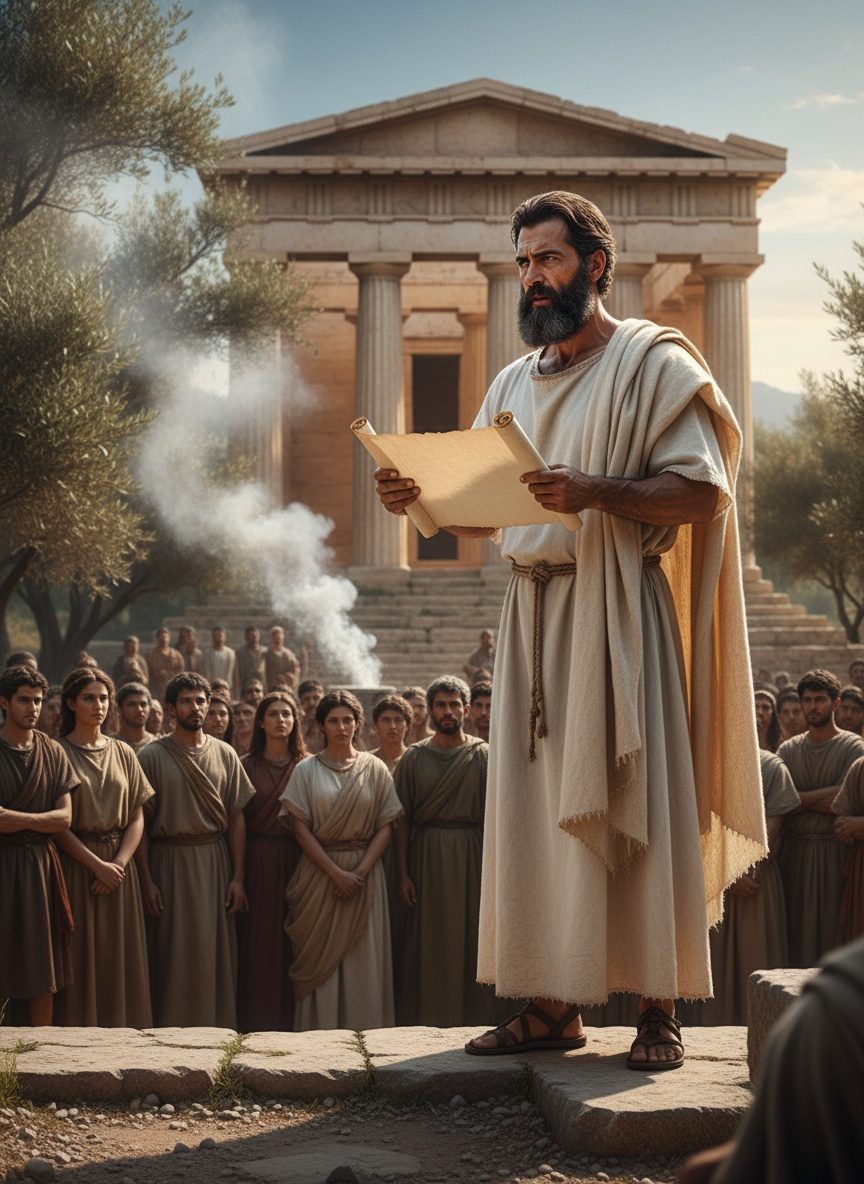
As the noise settled to a hushed awe, another figure emerged from the throng, a man who wielded a weapon of a very different kind: the power of words. Pindar of Thebes, Greece's most illustrious poet, stepped forward. Known for his artful compositions that melded myth, history, and personal achievement into a seamless narrative, Pindar had a reputation for transforming victors into legends through his meticulous verses. As the newly-crowned champion stood, basking in the glory of the crowd's adulation, Pindar unfurled his latest masterpiece—a thirty-line ode destined to etch the name of the charioteer into the marble of eternity.
In a world where oral tradition and epic poetry were the media through which histories were preserved and celebrated, Pindar's odes served as both commemoration and testament. They danced the fine line between truth and embellishment, perfectly capturing the spirit of heroism and divine favor that was inherently felt in every Olympic victor. And the victors were willing to part with considerable fortunes to procure these literary gems, understanding that Pindar's words would do more than recount a mere race. They would impute grace, honor, and valor, elevating the achievements of mortal men to the sphere of the divine.
Pindar's odes were more than mere congratulatory verses; they were compositions polished with profound skill and enriched with layers of meaning. Each line was a thread woven into a larger tapestry of cultural and personal narrative. His style was robust—a harmonious blend of grand imagery and rhythmic rigor, touching on themes of virtue, morality, and the transient nature of human life. Yet, perhaps his greatest gift was the ability to invoke the gods themselves, appeasing them through praise and recalling their deeds alongside those of the athletes he lauded. It was a high-stakes balancing act which Pindar managed with timeless elegance.
Through his words, the victorious charioteer was no longer just a name. He was a heroic figure standing tall on the stage of myth and reality. Pindar transformed him into an exemplar of physical excellence and divine grace, ensuring his actions stood as an aspiration for generations. The lush, arcane language of his odes resonated with the richness of shared cultural mythology, reminding listeners not only of the current feat but of the grand continuum of human achievement.
Pindar's reputation reached far beyond the tracks of Olympia. He was sought after by city-states across Greece, with each hoping to capture a piece of his brilliance for their pride-laden victories. His influence was such that he was able to command great sums for his work—a testament to its perceived value in an age where a victorious name could float into the oblivion of history or be immortalized through crafted verse. The city of Thebes itself basked in his glow, deriving an academic prestige that stretched even past its own borders.
With each composition, Pindar's words carved a niche in eternity for those he celebrated, solidifying the symbiotic relationship between athlete and artist. His verses were so revered that they were often inscribed onto stone tablets, ensuring their survival against the ravages of time. Remarkably, they outlasted the dust of Olympia; many of his odes survive to this day, serving as precious windows into a time and place long vanished but not forgotten.
The story of Pindar and the charioteer from Syracuse reflects a dynamic intersection of poetry and sport—a reminder of the transcendent power of human achievement when captured in the enduring beauty of language. As one stands in Olympia today, amidst the ruins where spectators once roared and poets once praised, the silence speaks to the limitations of physical structures. Yet, the echoes of Pindar's odes remind us that stories, once told, can outlast even the stones themselves.
This tale matters because it highlights an eternal truth: that while the physical acts of achievement are fleeting, the stories we tell about them have the power to reach across time and speak to the fundamental human experience. Pindar gave voice to this potential by immortalizing human effort and divine glory alike. Through his odes, the victors of ancient Greece whisper to us still, urging us to remember that while actions may belong to a singular moment, their narrative carries eternal weight when sculpted in words. These tales, born of the dust at Olympia, are no less significant in their quiet retelling today.