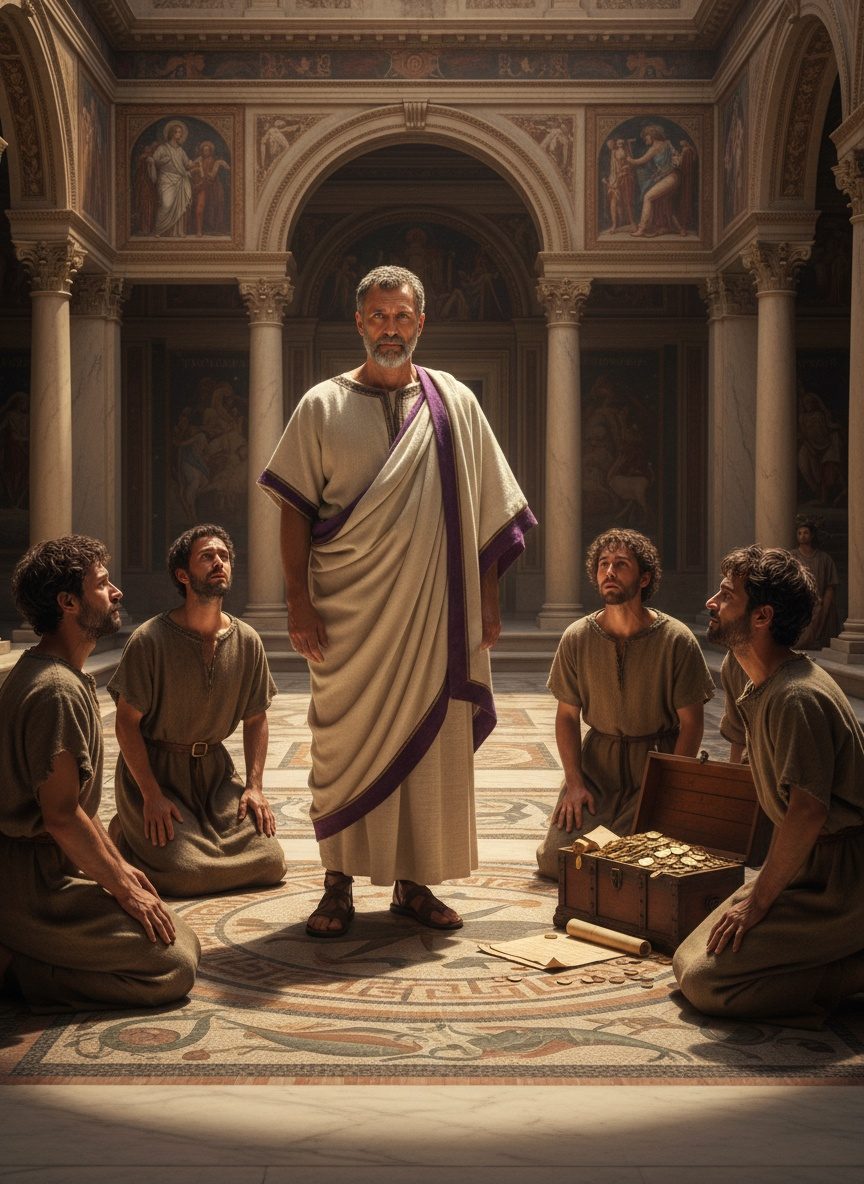
Phocion was a man of immense influence in Athens. Yet he chose not to leverage it for personal gain.
The Tide Turns in Athens
In 318 BC, Athens teetered on the brink of famine. The bustling city that had once stood as a bulwark of democracy and culture now found itself beleaguered, struggling under the heavy shadow cast by the newly fragmented world of Alexander the Great's empire. The conqueror's death just a few years earlier had left Greece, once again, at the mercy of his successors—powerful generals vying for control over vast swathes of territory. The city was bleeding, not only from its loss of power but also from its empty granaries and destitute populace.
Amidst this dire backdrop stood Phocion, a man whose reputation for integrity had earned him the trust and respect of Athenians for decades. He was a figure of such moral grandeur that even Athens' rivals acknowledged his virtues. Thus, when the Macedonian regent Antipater sought influence in Athens, he approached Phocion with what he assumed was an irresistible offer: a fortune in silver, sufficient not only to secure Phocion's compliance but perhaps even a future free from the troubles that beset his city.
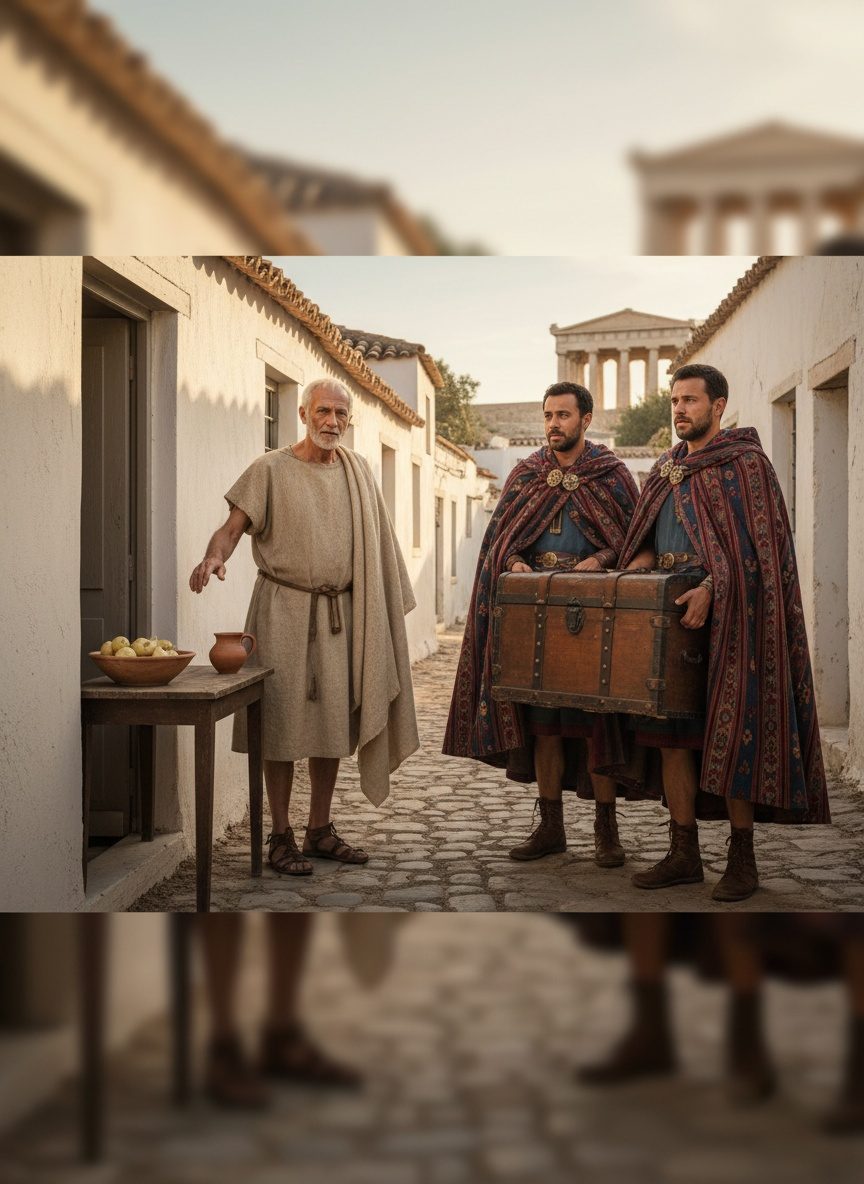
Antipater's envoys arrived at Phocion's austere home, bearing the Macedonian's lavish promise. For most in Athens, this offer would have been a dream—enough wealth to rise above the municipal squalor plaguing the city. However, Phocion greeted them with characteristic stoicism, unconcerned with the glint of silver. The silver, he'd come to realize, was but a fleeting shine against the enduring brilliance of personal honor and duty to his fellow Athenians.
The Humble Meal
The moment the object of such intrigue rests upon the table—silver coins catching the light as they spill from velvet pouches—Phocion's response seemed to hail from a bygone era of heroes and sages. Calmly, knowingly, he gestured to the simple fare on his table: boiled turnips, stained slightly from a drizzle of olive oil, steam rising like a faint whisper of warmth amidst the otherwise sparse surroundings. This, he declared, was not a feast, but it was enough. It was sustenance sustained not only by the earth but by the satisfaction of a clear conscience.
For the Macedonian envoys, accustomed to dealing through the conduit of wealth, this display was both puzzling and profound. Here was a man who stood resolute, unfazed by the promise of opulence despite being surrounded by a world crumbling into disarray. While Athens faltered, Phocion's rootedness in frugal virtue planted him as a lone sentinel amidst the swirling winds of change.
One can imagine the envoys departing, their satchels heavy once more with the weight of their untaken bribe, their minds left grappling with the complexities of a truly incorruptible man. In a time when loyalty was often auctioned to the highest bidder, Phocion's unyielding stance underscored the potential for a different kind of legacy—not one built, bought, and embellished, but enduringly honest.
The Price of Integrity
Phocion's act was more than a simple refusal; it signaled his steadfast belief that integrity was priceless, a currency far more crucial and timeless than silver. With Athens on the brink of destruction, perhaps he understood clearer than anyone that moments like this defined civilizations. Athenian history, rich with tales of philosophers and lawmakers, demanded a new narrative—one where even in decline, principles stood as unwavering as the Acropolis itself.
The aftermath of this encounter, while perhaps unnoticed by the hungry masses, reverberated through Athens' political veins. Here was a leader not swayed by wealth, an anomaly in a time of chaos and compromise. Despite the struggles his actions would inevitably invite, Phocion was much more concerned with remaining true to the values that had shaped his long, principled life. The ramifications were significant; his decision was a beacon illuminating the path for those who possessed the fortitude to walk it.
The eventual fate of Athens, that storied city bruised and battered by external pressures and internal fracture, does not erase the shadows of honesty and humility Phocion cast. Today, his legacy reminds us that character transcends the centuries; it is carved not from the granite of monuments, but from deeds of quiet yet formidable defiance. Phocion's boiled turnips fed more than his body—they sustained an ideal.