395 AD. The morning light broke crisply over Rome, casting long shadows through grand marble archways.
The Wealthiest Man in Rome
In the heart of the Roman Empire, a figure of immense stature prepared for a day quite unlike any other. Paulinus of Nola, a man of renowned wealth and prestige, once held the admiration and envy of Rome with his opulent estates and commanding influence as a senator. Born into a distinguished senatorial family, Paulinus was educated for leadership, his formative years steeped in philosophy and statesmanship. As he matured, he amassed an unequaled fortune, overseeing vast lands and numerous villas spread across Italy and beyond.
Yet, despite his fortune, Paulinus remained a man unsettled by the world around him. The Roman Empire, while mighty, was a place of stark contrasts—a glittering facade underpinned by suffering and inequality. Witnessing the degradation of humanity as slaves toiled his lands and prisoners languished without hope, a knot of discomfort grew within him—knowing the luxury he enjoyed was built upon the backs of others.
A Luminous Change
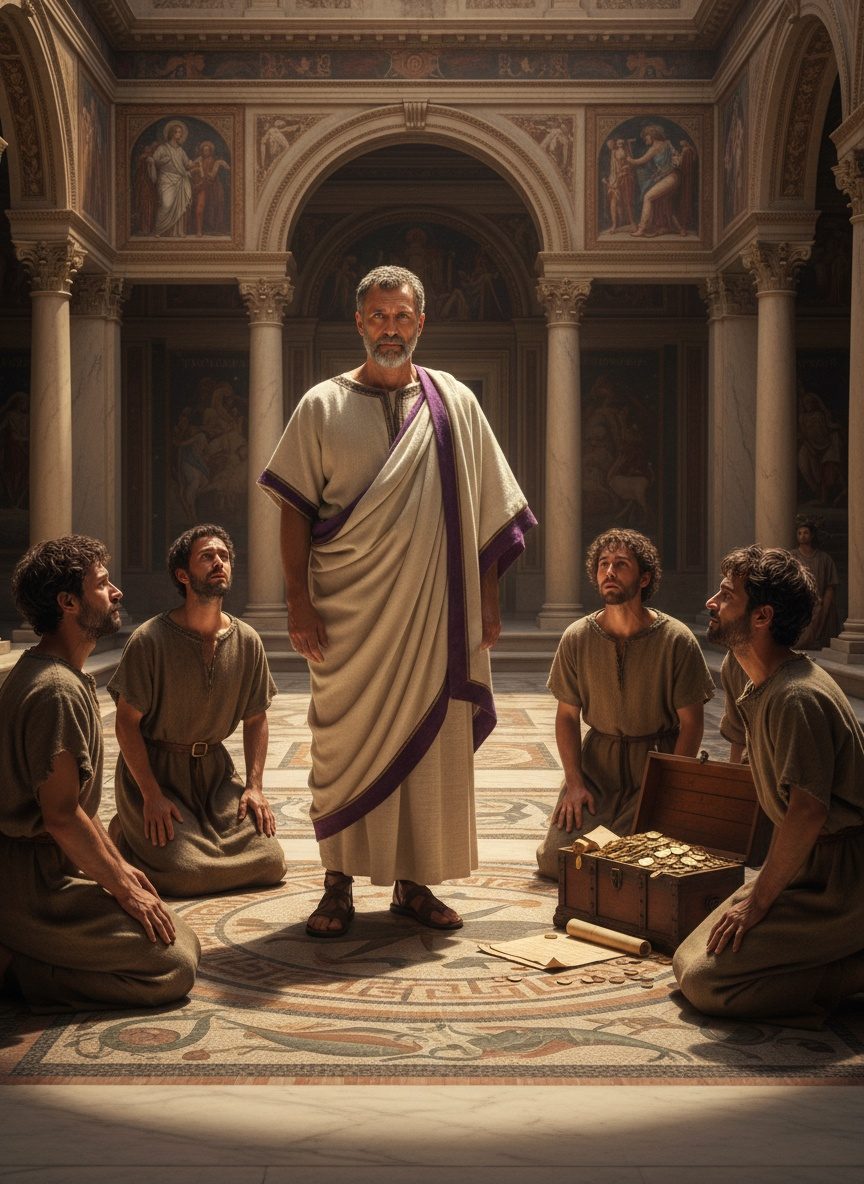
In a radical departure from the norms of Roman societal expectations, Paulinus made an extraordinary decision—he would divest himself of his worldly possessions. It was an unprecedented move that would shock the Senate and resonate throughout the empire. Corps of slaves emancipated, two hundred and fifty thousand gold coins freely given away, each a calculated act of kindness toward the downtrodden.
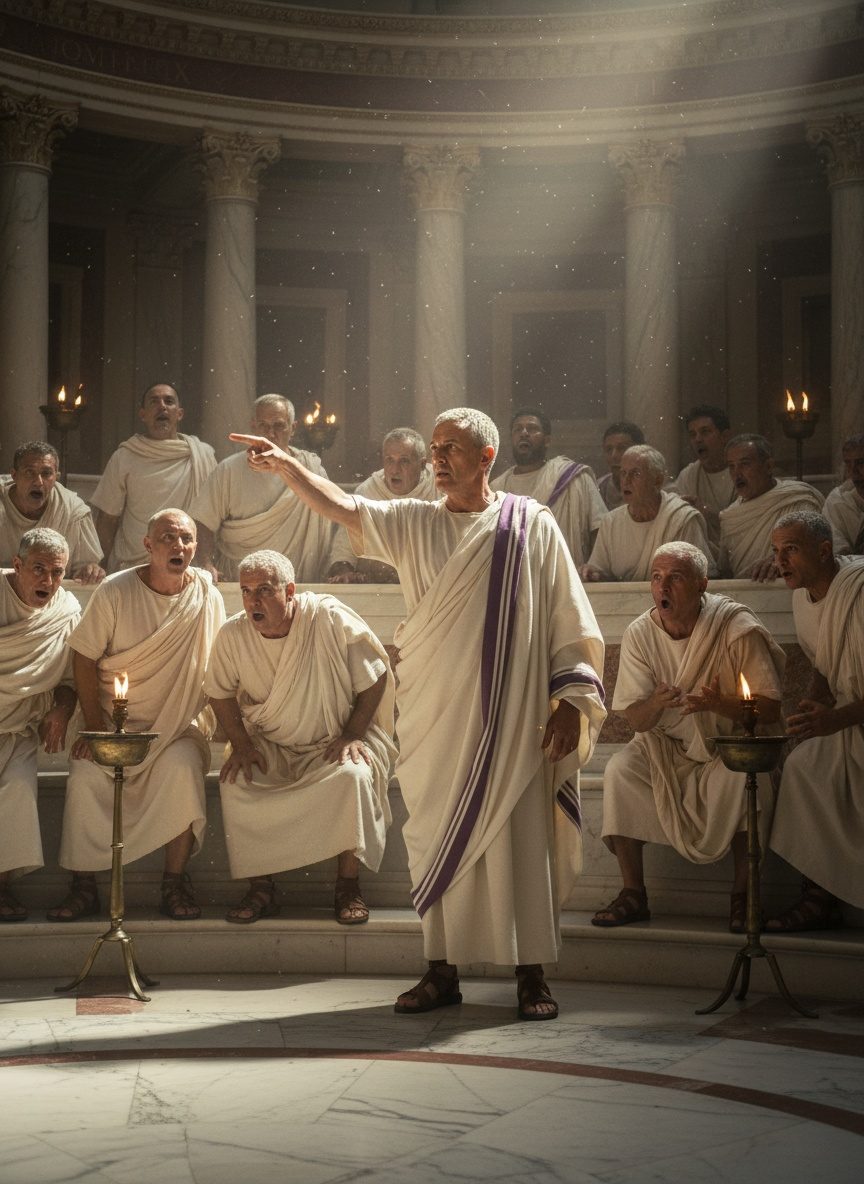
The announcement of his intentions rippled like a seismic shock, not just through Rome, but the entire empire. To relinquish wealth was more than unthinkable; it was an act of madness in a city founded on strength and virtue through material and societal conquest. Rome watched, breath held in disbelief, as Paulinus executed his plan, piece by piece, selling estates, auctioning off his grandiose household. Reports spoke of his adamant resolve, matched only by the staggering speed at which his riches were dispersed.
Heart of Charity and Devotion
It wasn’t enough just to abandon wealth; for Paulinus, this was merely the beginning. With the proceeds of his estates, Paulinus sought to liberate, empower, and heal. Among the hardships he targeted were the plights of prisoners, some wrongfully imprisoned, others unable to ransom their freedom. Paulinus’s actions reflect a core tenet he embraced: caritas, or charity, thrust into tangible forms.
One story shares how upon selling one particularly large estate, he distributed the entirety of its worth among struggling communities, providing the stability they needed to cultivate, develop, and self-sustain. Paulinus morphed from a distant senator to a beloved figure of hope, his deeds reshaping the lives of countless individuals. Acts such as these not only challenged the norms of Rome but offered a vision of a society rooted in compassion rather than conquest.
Retreat to Nola
His journey ended in Nola, a small town in Campania, where he withdrew from public life to embrace the life of a Christian ascetic. With the physical sacrifices behind him, Paulinus turned inward, seeking the spiritual contentment that had eluded him in his prior life of excess. It was here that his literary gifts flourished, composing hymns and letters that reflected unyielding devotion and theological exploration.
Paulinus continued his advocacy for those less fortunate, transforming faith into action. He attracted a following, not by command or decree, but through an authentic connection to divine mercy, underscoring the possibility of spiritual simplicity amidst worldly complication. Nola would become not just a refuge but a beacon—this was where his wealth of spirit truly manifested.
Legacy of Faith and Compassion
What drove Paulinus to pursue this path? Some might view his life choices as folly, classifying them as nothing more than the whims of a capricious soul. Yet for Paulinus, relinquishment was an avenue towards selffulfillment—a pursuit that paid spiritual dividends beyond measure. By trading prominence for poverty, he demonstrated that true wealth lies in acts of grace.
His story, a unique blend of piety and practicality, forces us to reevaluate the metrics of success and challenge our perceptions of power and greatness. Paulinus of Nola did not merely survive beyond the textbooks and forgotten annals of Roman history. Instead, he carved out a legacy of altruism and faith, offering a timeless testament: It is when we give everything away that we stand to gain the most.