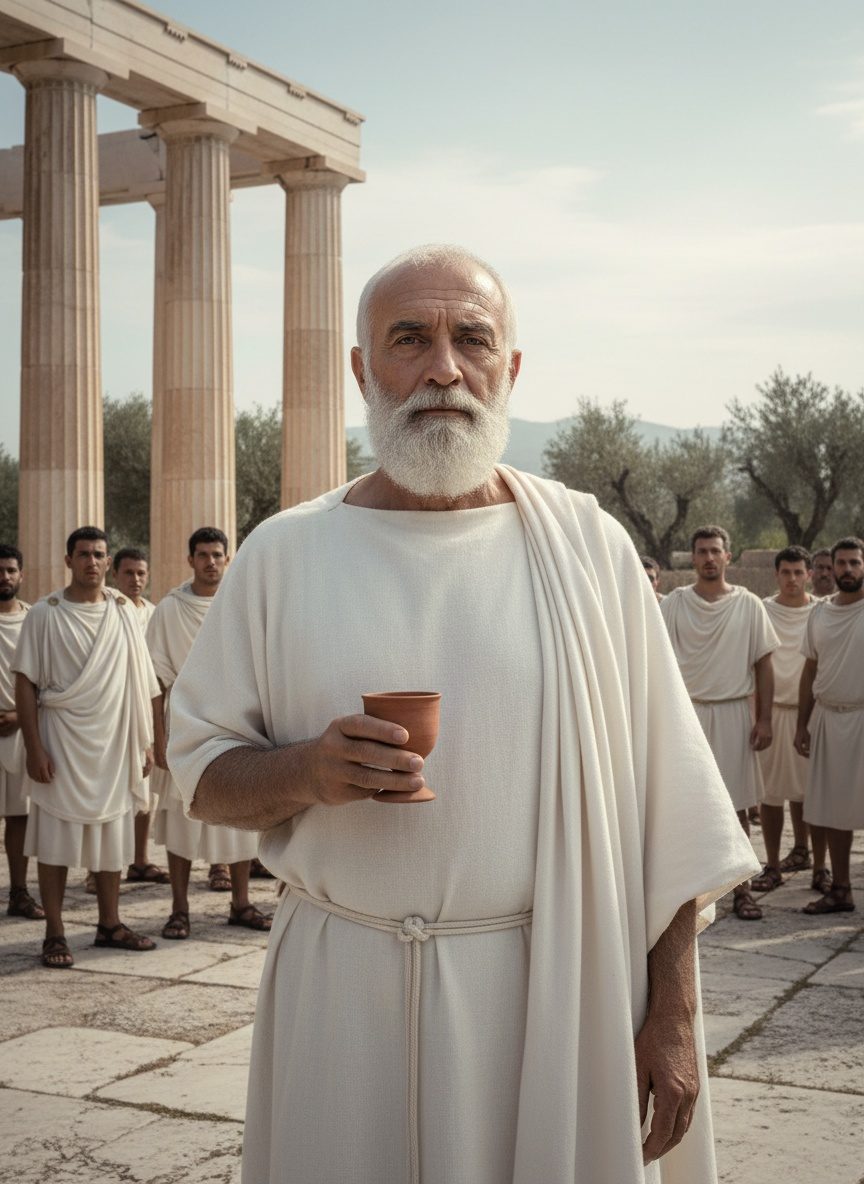
318 BC. The stones of the Athenian road felt cold beneath Phocion's footsteps.
The Unyielding Statesman
Phocion had served Athens with unwavering loyalty for forty years, earning a reputation as a paragon of virtue and integrity. Known as "The Good," his strategic acumen and dedication on the battlefield had won numerous victories for his city-state. Yet, despite his military prowess, it was his moral steadfastness that truly set him apart. Phocion was renowned for his stoic disposition and his refusal to indulge in the corruption that plagued Athens' political arena.
He was a voice of reason in the frenzied assembly, often dissenting when policy veered towards recklessness. Phocion warned the Athenians against their imperial hubris and the dangers of provoking two great powers—Macedon and Rome. His pleas for prudence were often met with scorn by an impassioned populace eager for glory. In a city swayed by rhetoric more than reason, Phocion's steadfast convictions were both his armor and his Achilles' heel.
Betrayal in a City of Philosophers
Despite his long record of service, fate would soon twist cruelly. The political tides of Athens were fickle, and amidst the tumult of shifting allegiances and envious rivals, Phocion found himself ensnared in a web of betrayal. After the death of the Macedonian regent Antipater, a power struggle erupted, and Phocion’s moderate stance became a target for the city’s volatile politics.
Accusations of treason were brought against him by unscrupulous enemies. The very assembly that had once applauded his victories now turned its back, whipped into a frenzy by skilled orators who painted Phocion's caution as cowardice. Despite his lifelong service, his fate was sealed not by fair trial but by political maneuvering. The irony was palpable—a man who had lived every day in service to Athens and for its betterment was abandoned when he stood accused without evidence.
The Walk to Hemlock
It was a somber procession that made its way to the prison where the poison chalice awaited. Phocion, having embarked on this final journey, bore himself with a dignity that belied the outrage of his circumstances. His face, well-weathered by years of duty, remained impassive, an embodiment of stoic principles. As he walked, a man from the crowd approached him, filled with outrage on Phocion's behalf, and implored him to curse Athens for this grave injustice.
Phocion's response was not one of bitterness but of calm magnanimity. "I wish them no harm," he declared. Even in the face of such betrayal, he refused to utter a curse against his beloved city. In those final moments, his magnanimity and restraint proved legendary. Phocion's decision to forgive and forgo retribution resonated deeply, confounding those who expected rage. His acceptance of fate was profound, a testament to his steadfast principles. Finally, with an unshaken hand, he drank the hemlock, retaining that serene smile that seemed to say he had made his peace long ago.
Echoes of an Unforgotten Man
The story of Phocion's execution is more than an account of a historical figure's demise; it is a reflection of the volatile nature of public opinion and the perilous waters navigated by those in positions of power. In the annals of history, Phocion stands as a stark reminder of the cost of integrity and the sometimes cruel caprice of democracy. His refusal to curse Athens illustrates the profound strength of character that ancient philosophers so extolled in their teachings yet was so rarely practiced in the arena of politics.
The Athenians did not forget this quiet act of mercy. Phocion’s legacy became a moral touchstone, a lesson on the valor of integrity even in the face of adversity. For generations, his life and death served as a powerful reminder of both the fickle nature of public favor and the enduring strength of character. As we remember Phocion today, we are invited to reflect upon the qualities that define leadership—not merely by strength and shrewdness but by courage, humility, and an unwavering commitment to the greater good.