He wasn't an intrepid adventurer. Hugh Clapperton was, in fact, a skilled navigator and a cartographer at heart. Yet, it was his remarkable journey across the Sahara that would etch his name into the annals of exploration lore, leading to discoveries that reshaped Britain's understanding of Africa.
A Land Swallowed by Sand
The Sahara Desert — a vast, relentless sea of dunes and fiery horizons that extended beyond the imagination's reach. It had claimed many lives of those daring enough to challenge its inhospitable expanse. By the early 19th century, rumors of a great Islamic sultanate hidden in this vast desert land piqued the interest of European nations eager to forge new alliances and extend their imperial reach. Yet, the Sultanate of Sokoto remained enigmatic, cloaked in intrigue, as no European had ever returned to tell its tale.
In 1826, a Scottish explorer named Hugh Clapperton dared to cross these daunting sands. Known for his earlier exploits, Clapperton carried with him not only the fervor of discovery but the expectations of a nation eager to expand its imperial map. Initially a quiet naval officer, Clapperton stood determined to translate his cartographer's skills into a journey that many had considered impossible. The Sahara's menacing winds blowing across trade routes stretching far beyond the familiar had swallowed many before him. Yet, Clapperton was driven by a singular vision — a vision that he believed could lay the groundwork for Britain's grand designs in Africa.
Encounter at the Heart of the Sultanate
After enduring the Sahara's punishing environment, Clapperton's persistence bore fruit when he ultimately reached Sokoto. Founded by the visionary scholar-king Sultan Muhammad Bello, this sultanate was one of Africa's most powerful Islamic states. Enclosed by an aura of scholarly sophistication and strategic dominance, Sokoto came alive in the juxtaposition of bustling markets and disciplined orderliness, the likes of which Clapperton had never before witnessed.
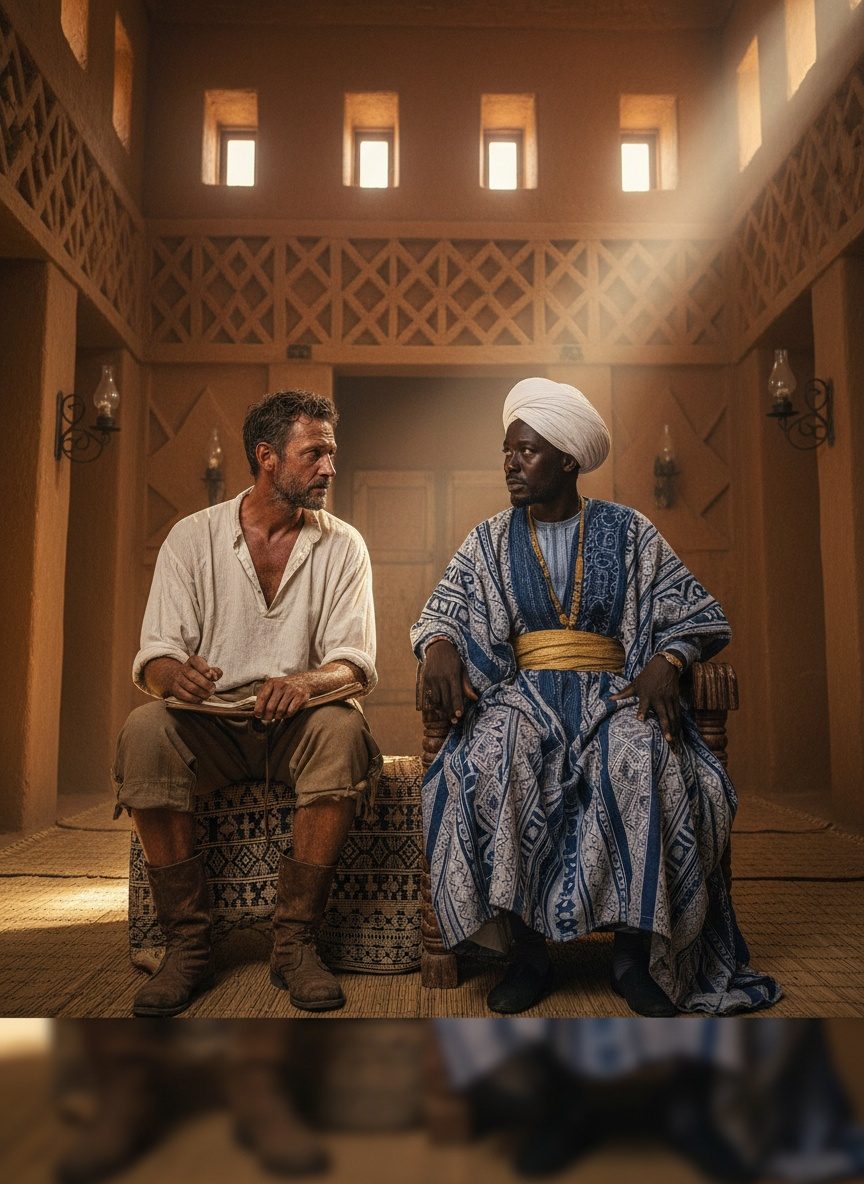
Clapperton's arrival was met with the timeless hospitality inherent in many African traditions. Astonishingly, despite being a stranger in this strange land, Clapperton found in Sultan Bello a curious and erudite figure eager to learn about the outside world. The sultan, favoring diplomacy over enmity, welcomed Clapperton into his court — a decision that would mark a pivotal moment of intercultural exchange. Here, in the heart of Sokoto, Clapperton unveiled a civilization that straddled trade routes and wielded influence over vast territories. It was a sovereignty underpinned by vibrant trade in gold, salt, and other treasures veiled by the Sahara's sandy curtains.
The Final Journey and An Unlikely Hero
Despite being received as a guest in Sokoto, Clapperton’s time there took a toll on his health. The harsh conditions and ailing health conspired to bring his journey to a premature end. In April, as Clapperton succumbed to illness, he entrusted his precious notes, maps, and discoveries to Richard Lander — his devoted servant and companion throughout this treacherous voyage.
Young Richard Lander, with resilience coursing through his veins and an unwavering commitment to salvaging his master's legacy, embarked on the solitary journey home. Alone, he bore the weight of not just the letters and documents, but the realization that the future understanding of an uncharted world hinged upon his survival. Navigating the expanses of the Sahara once more, braving distrustful eyes and merciless sands, Lander proved an unsung hero whose perseverance starkly contrasted with his humble beginnings.
Lander's successful journey back to Britain transformed him from a faceless servant to a celebrated figure, ushering back tales of a grand sultanate that expanded the horizons of Victorian imaginations. His unwavering loyalty and tenacity ensured that Clapperton's endeavors would not vanish into history's anonymous sands.
The Threads that Bind
The extraordinary tale of Hugh Clapperton is not merely one of exploration but a testimony to human ambition and the bonds that unify disparate worlds. Clapperton's fearless journey offered Britain a crucial key, unlocking the potential for understanding Africa not as just a collection of tribes but as a network of sophisticated states with their own histories and destinies.
In a world eclipsed by the shadows of once-proud empires, stories like Clapperton's illuminate the enduring threads of human determination and curiosity. Richard Lander's solitary stride across the Sahara back home with a legacy in hand reminds us that history's greatest exploits are often propelled forward by the unsung and undervalued voices at its periphery. This tale, harnessed in the crucible of Saharan trials and triumphs, forever stitched Britain's perception to Africa's rich tapestry, echoing the universal quest: to understand and to be understood.