The fjords of Norway gleamed cold and unyielding beneath the slatey sky. The waters, a steely blue, lapped quietly against the jagged rocks, whispering secrets only the winds could translate. In such an intimidatingly serene setting, Egil Skallagrimsson navigated his ship closer to hostile shores. It was a journey fraught with peril, for Egil, despite his illustrious reputation as both warrior and poet in Iceland, sailed into enemy waters, driven by a force more potent than fear.
The shadow of death loomed large over Egil's family, with his father, Skallagrim, lying on his deathbed back in Iceland. Yet more immediate was a specter of vengeance that consumed him. The king of Norway, notoriously ruthless, had deprived Egil of his closest friend, a wound deepened by the king's subsequent seizure of his friend's estate. In Norway, his friend's life was taken with a nonchalance that only the powerful could muster, a chilling reminder of the king's dominance and disregard for the sanctity of bonds that transcended mere bloodlines. To Egil, it was a betrayal so profound that inaction was simply not an option.
As his ship sailed into the heart of Norway, defying the admonitions of allies and the faintheartedness of those who would brand it suicide, Egil's mind must have been a tempest of emotions. The Norse sagas, passed down through generations, paint Egil Skallagrimsson as a formidable figure, not only for his brawn but for his words, a skald whose verses were as sharp as his blade. Yet it was in this moment of vulnerability, with his heart torn between vengeance and grief, that his true mettle faced its sternest test.
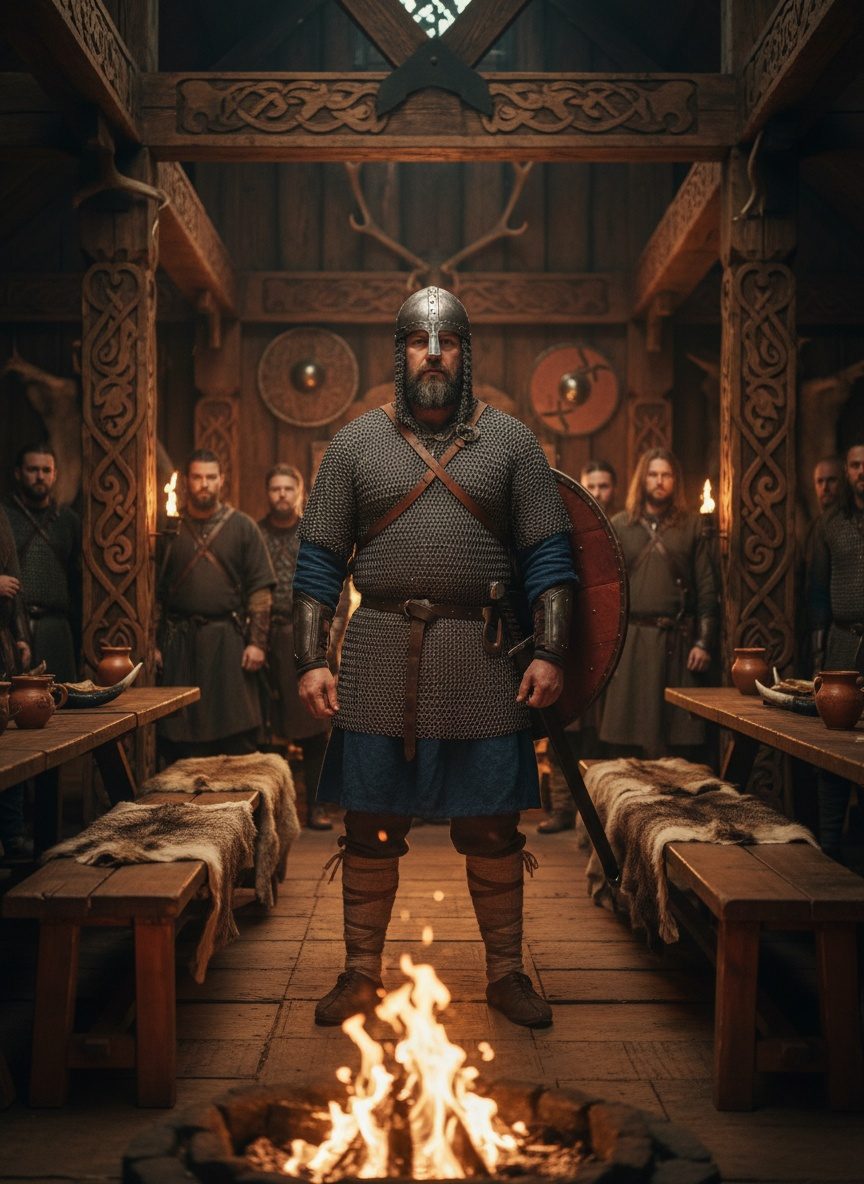
The hall where he boldly sought justice was a locus of power, where the tension within its wooden confines mirrored the crackling air outside. The king, ensconced on his throne, surrounded by men loyal to his every whim, understood the audacity of Egil's presence. To march into such a hall demanded either unfathomable courage or reckless despair. The torches lining the hall flickered, their flames a timid whisper in the ear of history, as Egil approached the king without a hint of submission.
Though history records the daring entrance, it is what unfolded within that hall that echoes through time. Egil did not bow, nor did he sheath his words. Instead, he composed a dirge on the spot, a verse seething with passion and eloquence, calling out the injustice dealt by the king. It was an act of poetic brilliance, a skald's version of a battlefield challenge that left the hall stunned into silence. Evoking ancient traditions and invoking the gods themselves, his words struck with the force of thunder, rendering the king momentarily speechless.
What transpired was a poignant reversal – a monarch, reared in the art of ruling through tyranny, found himself outmatched by a skald's searing resonance. The king, perhaps recognizing in Egil the indomitable spirit of the Norse, blinked first. The outcome of their encounter lacked the glitter of crowns and the bloodshed of typical warfare, yet it was as definitive as any battle. A path to truce was paved, one that allowed Egil to return to Iceland, unscathed yet fiercely resolved, his mission vindicating his slain companion's memory.
This episode in Egil's life vibrates with the raw intensity of a world where words wielded genuine power. It was in moments like these that the Viking Age's cultural dynamics revealed their complexity. While raids and conquests often dominate narratives about the Norsemen, it was in the halls of negotiation, whether through the clanging of swords or the stanzas of a skald, that Scandinavian legends were forged.
Egil Skallagrimsson's confrontation was more than an isolated tale of tenacity. It exemplified the fusion of intelligence and courage that defined the chieftains of the North. He underscored how power, even in the hands of the mighty, could be swayed not just by fear and force, but through eloquence and heritage. Stories preserved in the chilling winds of Norway, like Egil's daring voyage, challenge us to reevaluate notions of strength, where true heroism often lay not in the act of violence, but in the courage to speak out against it.