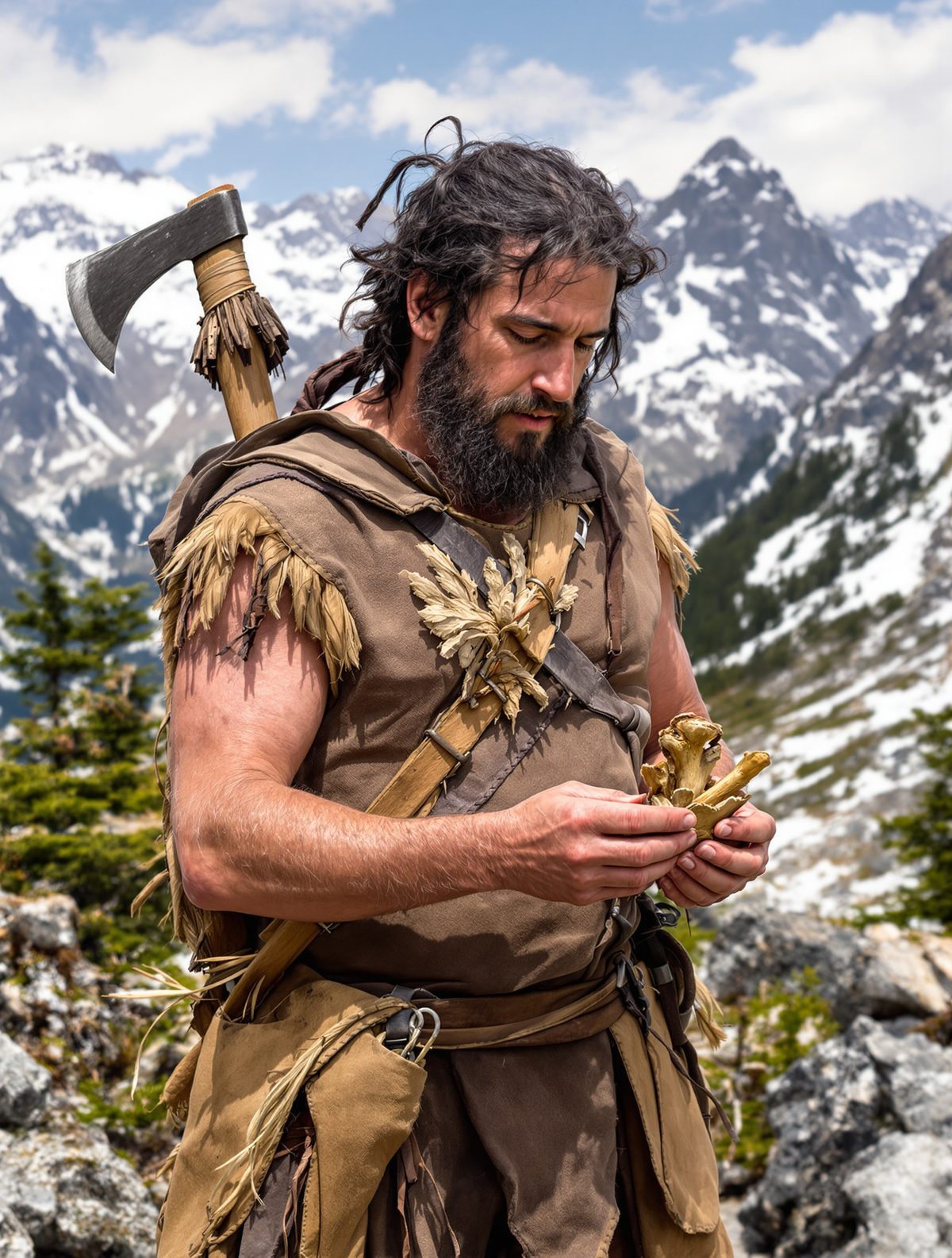
Picture this: a 32-year-old scholar stands gasping for breath on a windswept peak in southern France, his robes whipping around him as he gazes out over a vista that no human had ever climbed to see for pleasure alone. The year is 1336, and Francesco Petrarch has just accomplished something that would have seemed utterly mad to his contemporaries—he has climbed a mountain simply because it was there.
But as Petrarch reaches into his traveling pack and pulls out his beloved copy of Augustine's Confessions, he has no idea that the random page he's about to read will transform his moment of triumph into one of the most profound spiritual crises in literary history. What happened next on Mont Ventoux would help birth the Renaissance and change how humanity saw itself forever.
The Mad Idea of Climbing for Fun
To understand just how revolutionary Petrarch's climb was, you need to grasp how medieval people viewed mountains. In 1336, mountains weren't majestic—they were terrifying. They were places where demons lived, where travelers got lost and died, where the very geography seemed to rebel against God's ordered creation. The idea of climbing one for pleasure was so foreign that no word existed for it in any European language.
Yet Francesco Petrarca—known to us as Petrarch—had been obsessed with Mont Ventoux ever since moving to the papal court at nearby Avignon. Standing 6,273 feet tall, this limestone giant dominated the landscape of Provence, visible for miles around. Ancient Romans had called it Mons Ventosus—the Windy Mountain—and local peasants whispered that its slopes were haunted.
But Petrarch wasn't a typical medieval man. Born in 1304 to a family exiled from Florence, he had spent his youth devouring ancient Roman texts with an enthusiasm that bordered on obsession. While his contemporaries focused on preparing for the afterlife, Petrarch found himself captivated by the very earthly concerns of Cicero, Virgil, and Augustine. He was developing what we now recognize as Renaissance humanism—the radical idea that human experience and emotion were worthy of serious study.
The inspiration for his climb came, according to Petrarch himself, from reading about Philip V of Macedon's ascent of Mount Haemus. If an ancient king could climb a mountain to survey his dominions, why couldn't a modern scholar do the same to survey the world of ideas?
An Unlikely Expedition
On April 26, 1336, Petrarch set out from Malaucène, a small village at Mont Ventoux's base, accompanied by his younger brother Gherardo and two local servants. The contrast between the brothers couldn't have been starker: while Francesco was consumed by worldly ambitions and literary fame, Gherardo had recently become a monk, dedicating himself entirely to spiritual matters.
The ascent proved grueling. Medieval clothing wasn't designed for mountain climbing, and Petrarch found himself repeatedly taking longer, supposedly easier paths that often led nowhere. Meanwhile, his monk brother consistently chose the steepest, most direct routes—a detail that would later take on profound symbolic meaning for Francesco.
As they climbed higher, something unexpected happened to Petrarch. The physical exertion began to mirror an internal journey. With each step, he found his mind wandering from thoughts of literary glory to deeper questions about the nature of human ambition. The mountain, it seemed, was changing him even before he reached the summit.
What makes this climb historically significant isn't just that it was recreational—it's that Petrarch was consciously aware he was doing something unprecedented. He was, in effect, conducting an experiment in human experience, testing whether the act of climbing itself might reveal something profound about the human condition.
The Summit and the Book
After hours of grueling ascent, the Petrarch brothers finally reached Mont Ventoux's summit as the afternoon sun began its descent toward the horizon. The view was spectacular—Petrarch could see the Rhône River winding toward the sea, the peaks of the Pyrenees in the distance, and the Italian Alps that separated him from his beloved homeland.
For a few precious moments, Petrarch basked in pure triumph. He had achieved something no one had ever done purely for the joy of achievement. The wind that gave the mountain its name whipped around him, and he felt, perhaps for the first time in his life, truly connected to the physical world that medieval Christianity taught him to despise.
Then he remembered the book in his pack.
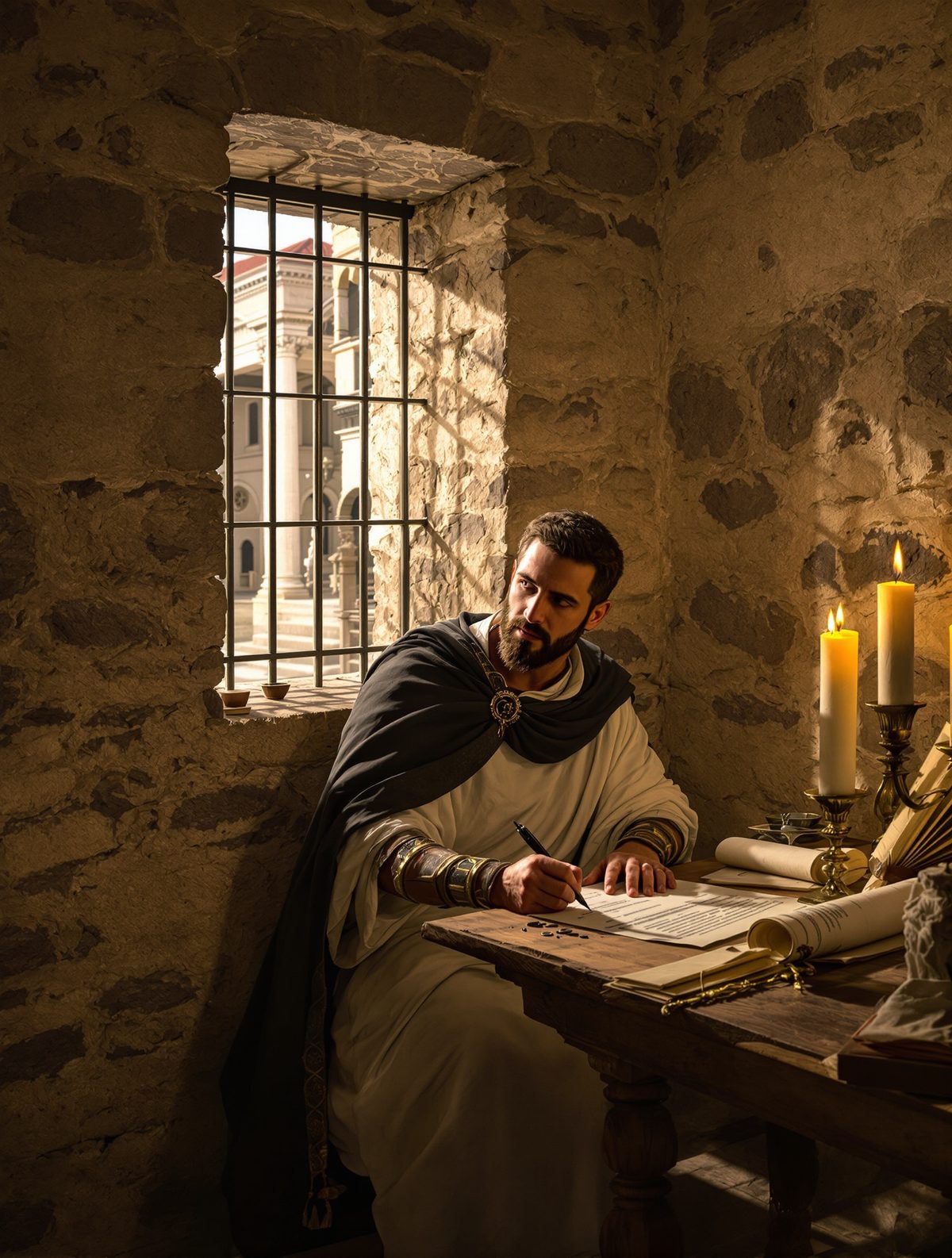
Petrarch always traveled with his pocket-sized copy of Augustine's Confessions—the spiritual autobiography of Christianity's greatest theologian after Saint Paul. Feeling contemplative after his achievement, he decided to open it randomly and see what wisdom the saint might offer at this moment of triumph.
The passage his eyes fell upon was from Book X: "And men go about to wonder at the heights of the mountains, and the mighty waves of the sea, and the wide sweep of rivers, and the circuit of the ocean, and the revolution of the stars, but themselves they consider not."
The Moment That Changed Everything
Petrarch later described the effect of reading those words as being struck by lightning. In that single moment, Augustine seemed to be speaking directly to him across nearly a thousand years, condemning his very reason for making the climb. The saint was warning against exactly what Petrarch had just done—marveling at earthly heights while neglecting the infinitely more important landscape of the soul.
The irony was devastating. Here was Petrarch, who had spent years studying Augustine's life and works, being rebuked by his intellectual hero at the very moment of his greatest worldly achievement. The random page seemed to suggest that his entire approach to life—his love of fame, his fascination with earthly beauty, his pride in human accomplishment—was nothing more than spiritual vanity.
According to his later account, Petrarch closed the book immediately and descended the mountain in contemplative silence. But here's what makes this story so fascinating: rather than abandoning his humanistic interests, this moment of supposed spiritual shame actually deepened his commitment to exploring the tension between earthly and heavenly concerns.
The experience on Mont Ventoux taught Petrarch something revolutionary—that the conflict between spiritual and worldly desires wasn't a flaw to be resolved, but rather the very essence of human experience. This insight would become central to Renaissance thought and help distinguish it from medieval scholasticism.
The Letter That Launched a Revolution
Petrarch didn't keep his mountain experience private. Shortly after the climb, he wrote a detailed letter about it to Dionigi da Borgo San Sepolcro, the Augustinian monk who had given him his copy of the Confessions. This letter, known as Familiares IV, 1, would become one of the most influential documents in European literature.
But here's where the story gets really interesting: modern scholars have discovered that Petrarch probably didn't write this letter immediately after the climb. Evidence suggests he composed it years later, carefully crafting the narrative to explore themes of spiritual and intellectual development that had become central to his mature philosophy.
This doesn't make the story less important—it makes it more so. Petrarch was consciously creating a new kind of literature, one that used personal experience as a lens for examining universal human truths. He was inventing what we now call autobiography as a serious literary form.
The letter's influence was enormous. It circulated throughout European intellectual circles, inspiring countless imitations and establishing the template for what would become the Renaissance ideal of the scholar-explorer, the person who seeks truth through both study and direct experience.
Why a 700-Year-Old Hike Still Matters
Petrarch's climb up Mont Ventoux represents far more than history's first recorded recreational mountain ascent. It marks the moment when Western civilization began to embrace a fundamentally new relationship with the physical world and human experience.
Before Petrarch, medieval thought generally viewed the natural world as either a collection of symbols pointing toward divine truths or a dangerous distraction from spiritual concerns. After Petrarch, educated Europeans began to see nature and human emotion as worthy of study in their own right. This shift in perspective would eventually lead to the Scientific Revolution, the Age of Exploration, and the modern environmental movement.
Perhaps most importantly, Petrarch's experience demonstrates something we're still grappling with today: the tension between achievement and meaning, between external accomplishment and internal fulfillment. In our age of social media and constant performance, his moment of triumph turning to shame on Mont Ventoux's summit feels remarkably contemporary.
The next time you see someone posting their hiking achievements online, remember that they're participating in a tradition that began with a lonely scholar in 14th-century France who climbed a mountain just to see what was there—and discovered something profound about what it means to be human. Sometimes the most important journeys are the ones that force us to question why we're traveling in the first place.