The orange glow of ten thousand bonfires painted the night sky across China in 213 BC. But these weren't celebration fires—they were funeral pyres for human knowledge itself. In the crackling flames disappeared centuries of poetry, philosophy, and history. The man who ordered this intellectual holocaust sat on his dragon throne in Xianyang, watching reports flow in from across his vast empire. Emperor Qin Shi Huang, the ruler who had unified China through brutal conquest, had decided that books were his most dangerous enemy.
What he couldn't control with his million-man army, he would control by erasing it from existence entirely.
The Emperor Who Feared Words More Than Swords
Qin Shi Huang wasn't born an emperor—he clawed his way to absolute power through two decades of merciless warfare. By 221 BC, he had conquered the last of the warring states and declared himself the first emperor of a unified China. He standardized currency, weights, measures, and even the width of cart axles across his realm. But there was one thing that remained stubbornly diverse: ideas.
In the conquered territories, scholars still taught the philosophies of their defeated kingdoms. Confucians spoke of benevolent rule and moral governance—a direct challenge to Qin's iron-fisted authoritarianism. In private academies, teachers read from the Book of Songs and the Book of Documents, ancient texts that praised virtuous rulers who listened to their people. To the emperor's paranoid mind, every scroll was a potential spark of rebellion.
The final straw came during a palace banquet in 213 BC. A Confucian scholar named Chunyu Yue had the audacity to criticize the emperor's policies in public, arguing that wise rulers should learn from the past, not ignore it. The emperor's face reportedly turned crimson with rage. How dare this bookworm question the Son of Heaven?
Li Si's Diabolical Solution
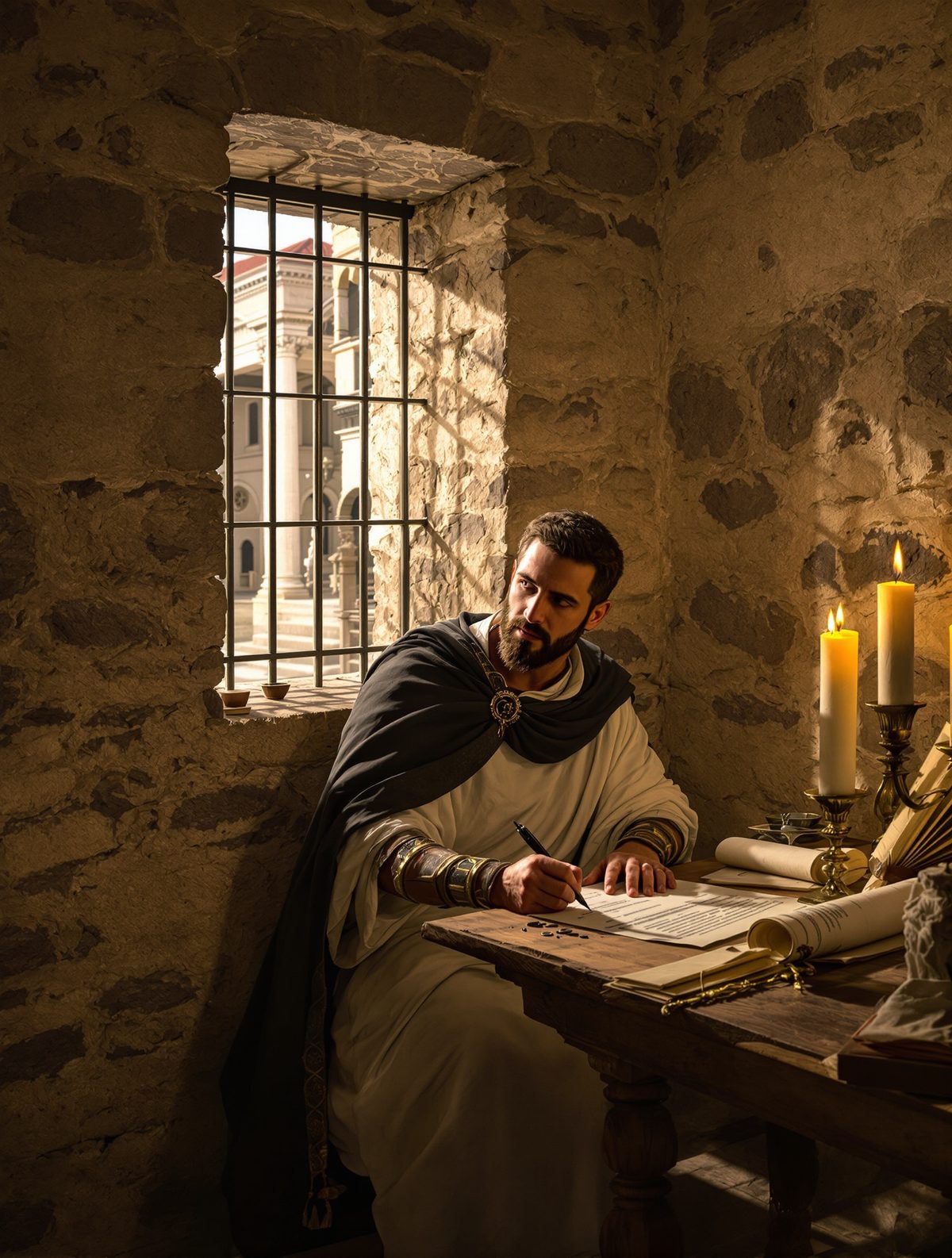
Emperor Qin turned to his most trusted advisor, Li Si, the brilliant and ruthless chancellor who had helped him conquer China. Li Si's solution was breathtakingly simple: if books were causing problems, eliminate the books.
In a chilling memorial to the throne, Li Si laid out his logic: "The common people are confused by the past, and use it to oppose the present. They praise ancient kings and criticize Your Majesty's great works." His recommendation was radical—burn every book in the empire except those dealing with medicine, agriculture, and divination. History, philosophy, poetry, and political theory would be wiped from existence.
The emperor didn't hesitate. Within days, his decree thundered across China: all forbidden books must be surrendered to local authorities for burning within thirty days. Anyone caught hiding books after the deadline would be tattooed, mutilated, and sentenced to hard labor. Anyone discussing the forbidden texts would be executed along with their entire family.
But Li Si had an even more sinister twist in mind. The imperial library would keep copies of everything—ensuring that only the emperor and his chosen officials had access to the accumulated wisdom of Chinese civilization. Knowledge would become the ultimate imperial monopoly.
When Wisdom Went Up in Smoke
The book burning began immediately and with terrifying efficiency. In the capital of Xianyang, imperial guards went house to house, collecting armfuls of scrolls from private libraries. Wealthy merchants watched helplessly as servants hauled away collections their families had built over generations. In the markets, the precious bamboo strips and silk scrolls that contained the words of Confucius, Laozi, and Mencius were stacked like cordwood.
The destruction was staggering in scope. Historians estimate that over 99% of all books in China were destroyed during this period. Centuries of poetry vanished overnight. Historical chronicles that recorded the rise and fall of dynasties disappeared forever. The philosophical debates that had flourished during China's intellectual golden age were silenced.
Provincial governors competed to show their loyalty by reporting increasingly impressive burn totals to the capital. The smoke from burning books could be seen for miles around major cities. In some regions, the ash fell like black snow for days.
But perhaps most heartbreaking was what happened in the villages. Rural teachers who had spent their lives memorizing classical texts watched their physical copies turn to ash. Many of these humble scholars were the last living links to oral traditions that stretched back centuries. When they died, entire branches of Chinese literature would die with them.
The Scholars Who Chose Death Over Silence
Not everyone submitted quietly to intellectual annihilation. A group of 460 scholars in the capital dared to resist, hiding books and continuing to teach in secret. When Emperor Qin discovered their defiance in 212 BC, his response was swift and merciless.
In one of history's most chilling acts of state terrorism, all 460 scholars were buried alive in a mass grave outside Xianyang. Historical accounts describe how they were forced to dig their own pit before being pushed in and covered with earth. The emperor reportedly watched the executions personally, wanting to send an unmistakable message: ideas that challenge the state will be met with death.
The mass execution sent shockwaves across the empire. Intellectuals fled to remote mountains or abandoned scholarship entirely. Libraries that had survived the initial book burning were voluntarily destroyed by terrified owners. Even private discussions of philosophy became whispered conversations behind locked doors.
One of the emperor's own sons, Prince Fusu, was so horrified by the executions that he publicly criticized his father's actions. The prince argued that such brutality would turn the people against the dynasty. His reward for speaking truth to power? Exile to the northern frontier, where he would later be forced to commit suicide.
The Ironic Twist of History
Emperor Qin Shi Huang believed that destroying books would make his dynasty eternal. Instead, it helped ensure its rapid collapse. Just four years after the book burning, the emperor died during a tour of his empire in 210 BC. Within three years, his dynasty had crumbled in rebellion and civil war.
The cruel irony wasn't lost on later historians: the man who tried to erase the past ended up being remembered primarily for his intellectual vandalism. While he had built the Great Wall and created a unified Chinese state, it was the book burning that would forever stain his legacy.
When the Han Dynasty came to power in 206 BC, one of their first acts was to actively search for surviving books and reconstruct what had been lost. Elderly scholars emerged from hiding with fragments memorized decades earlier. Farmers plowing fields occasionally unearthed scrolls hidden in ceramic jars. But the damage was irreversible—entire schools of thought had vanished forever.
Some texts, like the Book of Songs and portions of the Analects, were painstakingly reconstructed from memory. But countless works of poetry, history, and philosophy were lost to humanity forever. We'll never know what brilliant insights or beautiful verses went up in smoke during those terrible months of 213 BC.
The Eternal Warning
The burning of the books wasn't just an ancient Chinese tragedy—it was a blueprint that would be followed by tyrants throughout history. From the destruction of the Library of Alexandria to Nazi book burnings in Berlin, from Stalin's purges of intellectuals to digital censorship in the modern era, the pattern remains depressingly familiar: those who seek absolute power always target knowledge first.
Emperor Qin Shi Huang understood something that every dictator since has grasped instinctively—that information is power, and controlling what people can read, learn, and discuss is the most effective way to control what they think. In our age of information abundance, when knowledge seems limitless and permanent, it's sobering to remember how quickly centuries of human wisdom can vanish.
The emperor's great wall still stands as a testament to human ambition and engineering. But his greatest legacy might be the reminder that civilization itself is more fragile than we imagine—and that the price of intellectual freedom is eternal vigilance against those who would burn books to control minds.