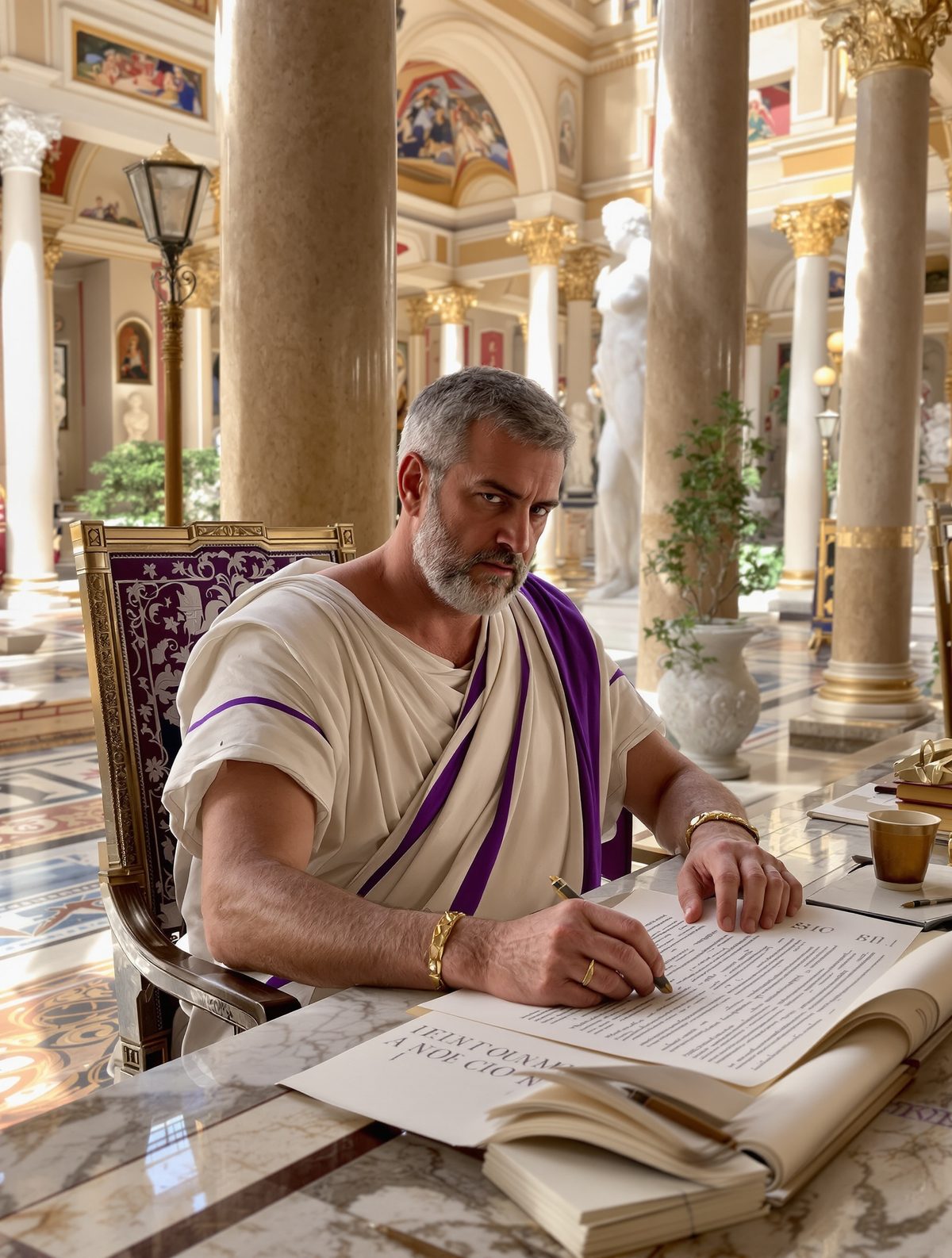
The tension in the Portuguese colonial headquarters at Luanda was thick enough to cut with a machete. It was 1622, and across the polished stone floor of the governor's reception hall, two worlds were about to collide in the most dramatic diplomatic encounter in African history. Governor João Correia de Sousa sat smugly in his ornate European chair, surrounded by the trappings of colonial power. Before him stood Queen Nzinga of Ndongo, ruler of what would become Angola, draped in royal cloth and radiating an authority that made the Portuguese officials visibly uncomfortable.
But something was wrong with this picture. In a room filled with chairs for Portuguese dignitaries, there was conspicuously nowhere for the African queen to sit. This wasn't an oversight—it was a calculated insult designed to force Nzinga to stand like a supplicant before her supposed colonial masters. What happened next would become the stuff of legend, a moment that perfectly captured the cunning, pride, and unbreakable spirit of one of history's most remarkable rulers.
The Queen Who Refused to Bow
Nzinga's response to the Portuguese slight was as swift as it was brilliant. Without missing a beat, she snapped her fingers. One of her female attendants immediately dropped to her hands and knees, positioning herself as a human chair. The queen gracefully settled onto her attendant's back and proceeded to negotiate the future of her kingdom from her improvised throne, meeting the Portuguese governor's gaze as an equal—perhaps even as a superior.
The Europeans in the room were stunned. In one elegant gesture, Nzinga had transformed their intended humiliation into a demonstration of absolute power. While they needed furniture to establish their authority, she commanded such loyalty that her subjects became her throne. When the negotiations concluded hours later, Nzinga rose and casually informed her attendant to remain where she was—the woman was now a gift to the Portuguese governor.
This wasn't just royal pettiness; it was psychological warfare of the highest order. Nzinga had shown that she possessed something the Portuguese, for all their military might, could never truly command: the unwavering devotion of her people. Every time the governor looked at that woman, he would remember that he was dealing with a ruler who operated by entirely different rules.
The Making of a Warrior Queen
To understand the woman who would orchestrate this legendary power play, we need to journey back to Nzinga's origins. Born around 1583 as Njinga Mbande, she was the daughter of Ngola Kiluanji, ruler of the Ndongo kingdom in what is now northern Angola. From childhood, she was groomed not just as a princess, but as a warrior and diplomat—skills that would prove essential in navigating the treacherous waters of 17th-century African politics.
The world Nzinga inherited was already under siege. Portuguese slave traders had been operating along the African coast for over a century, and their hunger for human cargo was insatiable. The Atlantic slave trade was reaching its devastating peak, with an estimated 12.5 million Africans eventually forced across the ocean. The Portuguese had established a foothold at Luanda in 1575, and from there they launched increasingly aggressive campaigns into the interior, seeking to control the source of this horrific but profitable trade.
When Nzinga's brother Ngola Mbandi assumed the throne in 1617, the kingdom was already fragmenting under Portuguese pressure. Mbandi was a weak ruler who lost territory after territory to the better-armed Europeans. By 1622, the situation had become so desperate that he sent his sister—renowned for her intelligence and negotiating skills—to treat with the Portuguese as his representative. It was supposed to be a mission to save a dying kingdom. Instead, it became Nzinga's audition for power.
The Art of African Diplomacy
The 1622 negotiations revealed Nzinga's mastery of what we might call "diplomatic theater." Beyond the famous chair incident, she demonstrated an sophisticated understanding of both African and European political customs. She had converted to Christianity and taken the name Anna de Sousa (after the governor's wife), understanding that religious conversion was often necessary for diplomatic credibility with the Portuguese.
But this conversion was likely strategic rather than spiritual. Throughout her life, Nzinga would seamlessly blend Christian symbolism with traditional African religious practices, using whatever tools served her political purposes. She understood that in the complex world of 17th-century Angola, survival required flexibility—but never submission.
The negotiations themselves were remarkably successful from Nzinga's perspective. She secured Portuguese recognition of Ndongo's independence, the withdrawal of Portuguese forces from captured territories, and the return of many captured subjects. These were extraordinary concessions, achieved through a combination of diplomatic skill, strategic intelligence, and sheer force of personality. For a brief moment, it seemed as though the African kingdom had outmaneuvered the European colonial machine.
From Princess to Queen: A Throne Earned in Blood
But peace was not to last. Within two years, the Portuguese had violated virtually every provision of the 1622 treaty. They continued raiding for slaves, occupied Ndongo territory, and installed a puppet ruler. When Nzinga's brother Mbandi died under mysterious circumstances in 1624—possibly poisoned, though some sources suggest Nzinga herself was involved—she moved quickly to claim the throne.
This succession was far from automatic. African kingdoms didn't always follow European rules of inheritance, and many questioned whether a woman could effectively lead a nation at war. Nzinga's response was characteristically bold: she had herself crowned not as queen, but as king—"Ngola"—adopting male dress and taking male concubines to emphasize her complete authority. She understood that desperate times required dramatic gestures.
What followed was nearly four decades of almost constant warfare. Nzinga proved herself a master of guerrilla tactics, leading her forces personally into battle well into her sixties. She formed strategic alliances with Dutch traders (Portugal's rivals), incorporated escaped slaves and Portuguese deserters into her armies, and created a mobile kingdom that could vanish into the wilderness when faced with superior forces, only to reemerge where least expected.
The Warrior Queen's Final Act
Perhaps most remarkably, Nzinga managed to outlast her enemies through sheer persistence. She died in 1663 at the age of 80, still ruling, still fighting, still refusing to surrender her people's independence. Her death came not from Portuguese bullets or poison, but from old age—a luxury few African rulers of her era enjoyed.
Even in death, Nzinga controlled the narrative. She arranged for her succession, ensuring that her kingdom would survive her passing. She had spent four decades proving that African rulers could stand as equals with Europeans, that traditional societies could adapt and evolve without losing their essential character, and that sometimes the most powerful weapon against colonialism was simply the refusal to accept colonial terms.
Her funeral was attended by Portuguese officials who had spent decades trying to defeat her—a final irony that she would have appreciated. These same men who had once tried to humiliate her by denying her a chair were now paying respects to one of the most formidable opponents they had ever faced.
Why the Chair Still Matters
In our modern world of corporate boardrooms and international summits, Nzinga's chair moment resonates with surprising relevance. We live in an era where symbolism and power projection remain crucial tools of leadership. Every time we see a politician choose their setting carefully, or a CEO orchestrate a public appearance to send a specific message, we're witnessing echoes of Nzinga's diplomatic theater.
But the deeper lesson of Queen Nzinga's story isn't about clever comebacks or royal attitude—it's about the power of refusing to accept other people's definitions of your worth. The Portuguese expected her to be grateful for their attention, to accept their terms, to acknowledge their superiority. Instead, she redefined the entire encounter on her own terms.
In a world where African history is still often reduced to victimization narratives, Nzinga's story reminds us that resistance, intelligence, and political sophistication have always been part of the African experience. She didn't just survive the encounter with European colonialism—she turned it into a platform for demonstrating African capability and dignity. That human throne wasn't just a chair; it was a statement that some people will never be reduced to furniture in someone else's power games.