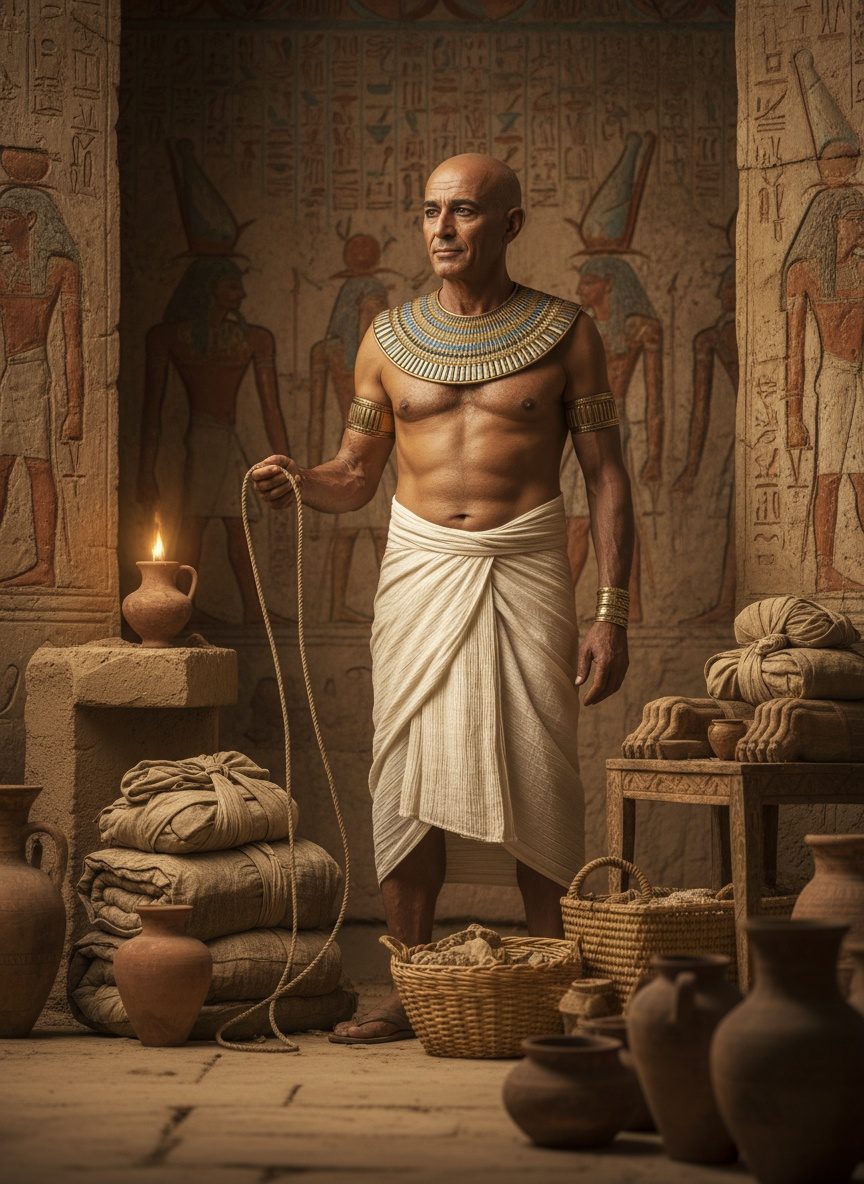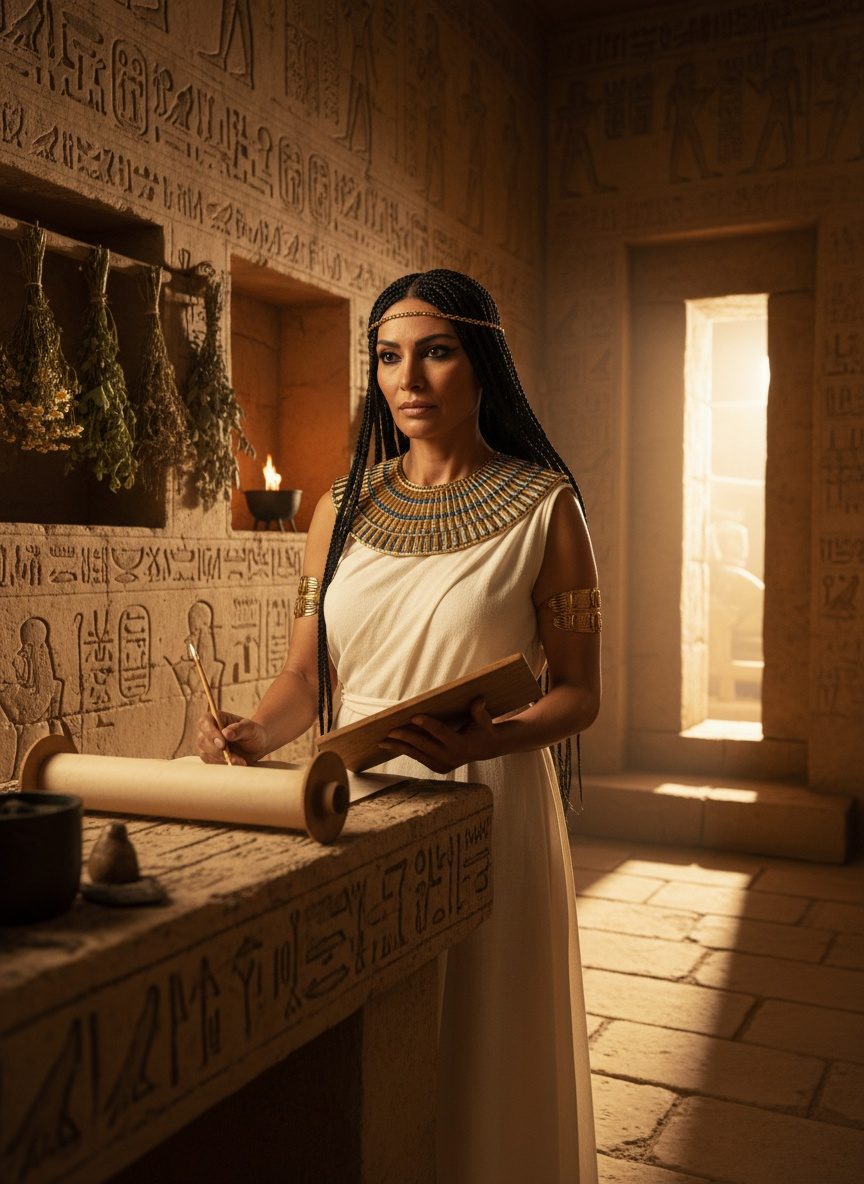
Approximately 2500 BC. The sun beat down relentlessly on the sands of ancient Memphis, its rays bouncing off the limestone walls of the sprawling city. In the heart of this vibrant hub of the Old Kingdom, one woman redefined the world of Egyptian medicine.
The Forefront of Healing
In the great dynastic era of Egypt’s Old Kingdom, when pyramids rose to touch the sky and the Nile's floods dictated life, Peseshet was a name that resounded among the healers. Known by her illustrious title, Lady Overseer of Healers, Peseshet held a position of unprecedented authority and respect. At a time when women were largely relegated to traditional roles, she stood at the helm of Egypt’s medical teachings, guiding and shaping the doctors of the land.
Peseshet’s contributions were not fleeting whispers lost to the wind, but deeply etched markings on the papyri of history. She served in a unique position previously unattainable for women, entrenched in the heart of ancient Egypt's thriving medical scene. Training physicians, overseeing healers, and establishing standards, she was a trailblazer recognized by all, cherished in a society where few women before her had held such influence in public institutions.
A School of Healers
The school over which Peseshet presided was not merely a place of learning but a sanctum of healing knowledge. This ancient institution was dedicated to nurturing the skills of budding physicians and was a beacon for those looking to enter the medical profession in one of its most revered forms — midwifery. Peseshet’s role within this school was nothing short of revolutionary; she led the charge in teaching the subtleties of Egyptian medicine, a practice rooted in not just physical but spiritual understanding.
The art of midwifery, especially, thrived under her leadership. At a time when childbirth was both a literal and metaphorical rebirth, the guidance of a trained midwife was crucial. Peseshet understood this profoundly, ensuring that her students were not just medically knowledgeable but also compassionate caregivers. She infused the curriculum with both rigorous practical knowledge and the essential human touch, a balance that set a standard in her field.
Inscriptions and Remembrances
The world might have almost forgotten Peseshet, had it not been for the inscriptions that immortalized her contributions. Tomb engravings outlined her pivotal role, marking her achievements in stone. These inscriptions are precious glimpses into a past that recognized her authority and esteem, rare acknowledgments of a woman’s place within the annals of medical history.
Artifacts discovered in the necropolis of Giza provided insights into her life and work. Among these relics, her titles were carved with precision: an eternal testament to her role as the leader of medical endeavours. They tell us of a revered woman whose voice echoed through the halls of ancient healing, and whose teachings informed generations of Egyptian doctors.
A Lesson for Eternity
Peseshet’s story transcends the sands of time, presenting a narrative that resonates with modern values of equality and empowerment. In a contemporary world where the struggle for gender equality persists, Peseshet’s existence as a pioneering female medicine practitioner stands as a beacon of what was, and what still can be achieved. Thousands of years ago, she broke barriers with grace, competence, and an unyielding dedication to the service she upheld.
Her legacy serves as a monumental reminder of the potential that lies in knowledge and education, regardless of gender. Peseshet’s journey encourages us to re-examine the narratives forgotten in history books and to appreciate the enduring impact one individual can make. It beckons today’s society to reflect on the strides made in gender equality and the women, like Peseshet, who first dared to tread the path.