Kha built tombs for pharaohs. His own was never robbed.
The Architect of Eternity
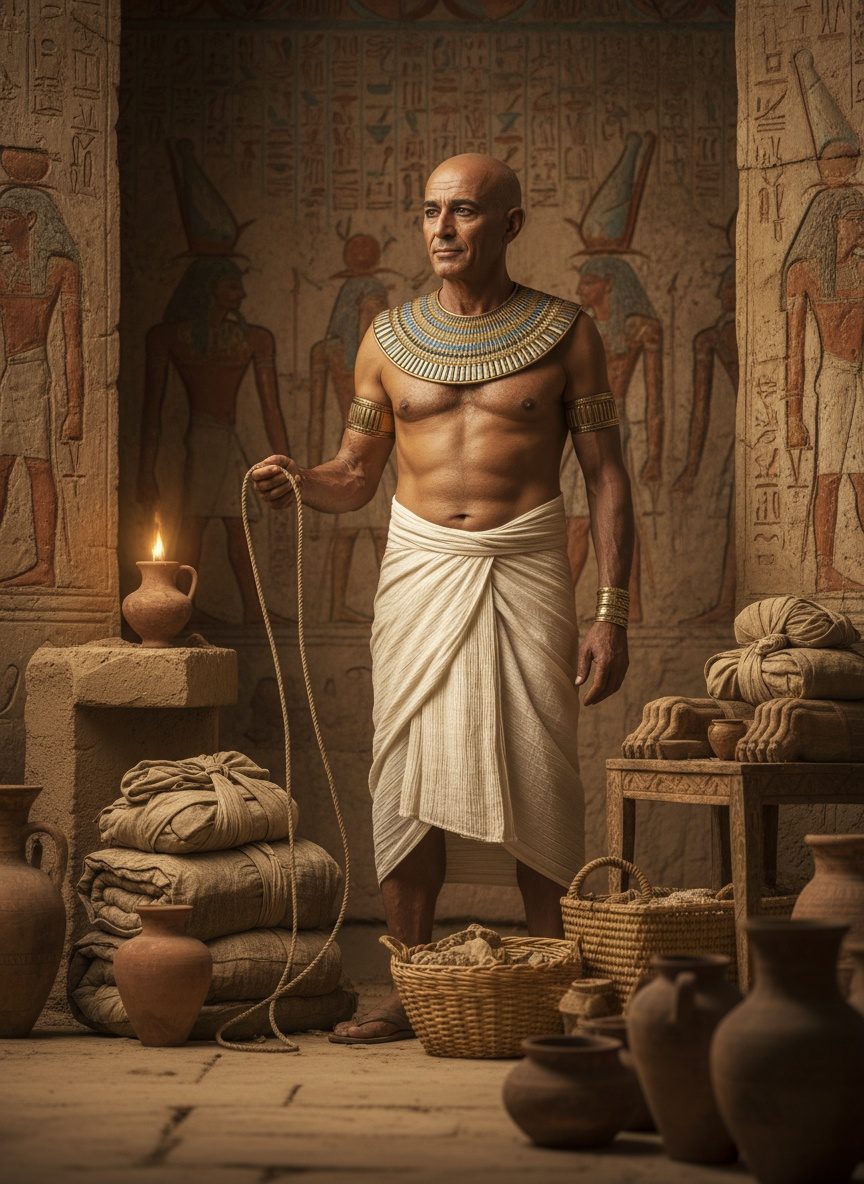
In the timeless sands of ancient Egypt, during the New Kingdom around 1400 BC, the architect Kha lived a life intertwined with the divine mandate of eternity. Kha was no ordinary builder; he crafted the homes of gods on earth, the eternal resting places of pharaohs who were destined to transcend time itself. As the chief architect under the reign of three pharaohs of the 18th Dynasty, Kha’s hands and mind were responsible for ensuring that these colossal structures withstood the ages, speaking of their greatness into eternity.
Yet Kha was more than the sum of his creations. He was a master of his craft, driven by a profound understanding of the sacred art of architecture, which in ancient Egypt meant harnessing the spiritual and physical worlds. His tomb, discovered miraculously intact in 1906 in Turin, presents an extraordinary tableau of his life and that of his beloved wife, Merit. Unlike the pharaonic tombs vulnerable to plundering hands over the centuries, Kha and Merit’s final resting place remained untouched for millennia, a hermetically sealed time capsule offering unique glimpses into a life lived in the shadow of the pyramids.
Inside, archaeologists found more than just tools or trinkets. The preservation of Kha's tomb stands as a quiet testament to his dual legacy: the grandeur of architectural achievement and the serene intimacy of domestic life. Among the artifacts lay his tools, his wife’s wig, articles of clothing, and astonishingly well-preserved food offerings, still wrapped as if awaiting a banquet 3,300 years in the making. Every item spoke not only of skilled craftsmanship but also of a life that, even in death, resonated with dignity and reverence.
Life and Death in the Eighteenth Dynasty
In Ancient Egypt, the Eighteenth Dynasty represented a time bursting with religious and cultural vibrancy. This era set the stage for Egypt’s supremacy, fueled by rich artistic and architectural innovations. Kha, thriving in this Golden Age, was entrusted with monumental responsibilities, including the construction of funerary structures destined to ensure the immortality of his pharaonic patrons.
His role was crucial – as these sacred structures served to guide the soul of the pharaohs into the afterlife. The success of a pharaoh's journey to eternity depended in part on the accuracy and sanctity of these tombs. Thus, Kha's work had to be flawless. Yet, amidst the grandeur, Kha and Merit’s personal tomb, discovered in the Deir el-Medina area, offers an intimate snapshot of everyday life otherwise overshadowed by monumental structures.
The tomb was discovered with its seal intact after thousands of years, an almost unheard-of occurrence in Egyptology. Inside was a meticulous array, a silent testament to what mattered most to Kha and Merit: from Merit’s perfectly styled wig to finely crafted pottery and the modest, untouched presence of their favorite meals, ready for eternity. Such a collection not only provides a direct look into daily life but also reflects the intrinsic intertwining of personal and spiritual beliefs in ancient Egyptian culture. It underscores how Kha, who lived his life building homes for the dead, ultimately ensured that his own passage into the afterlife was secured with similar care and precision.
Preservation Through Death
Why was Kha’s tomb left untouched for so long, while others around it looted and stripped? Perhaps fate played a hand, or perhaps it was a reflection of his less ostentatious status compared to his royal patrons. Regardless of the reason, Kha’s tomb survived as a pristine time capsule, outlasting the greed that saw so many other tombs emptied and desecrated.
The discovery of his tomb in 1906, intact and brimming with a trove of artifacts, was an archaeological triumph, offering an unparalleled peek into the lives of non-royal elite in ancient Egypt. The stories whispered by the objects found within tell of a deep appreciation for life in all its facets as they were lovingly preserved for the journey beyond. Foods, tools, a bed, and other household items were still positioned carefully, waiting to serve their eternal purpose.
Kha’s story speaks volumes about an era where the belief in the afterlife significantly influenced daily life and death preparations. The presence of artisanal goods, works of genuine craftsmanship from the best hands of the era, reflects a society built on both piety and practicality. Such finds are incredibly rare, making Kha’s tomb an invaluable piece of the historical tapestry.
Today, the tomb of Kha and Merit not only uncovers facets of an ancient world but resonates with the timeless human quest for legacy and remembrance. Every artifact serves as a profound reminder that while the throne and its occupants basked in splendor, those who built their world were also creating lasting testaments hidden in the silent desert sands. Perhaps, just sometimes, those who serve great kings are granted the rarest luxury of all — untouched peace through eternity.