The Viking Age is often painted with broad strokes of thunderous raids and longships slicing through icy waters. Yet, one such Viking embarked on a journey not as a marauder, but as a merchant—his quest for silver leading him to the heart of the Islamic world.
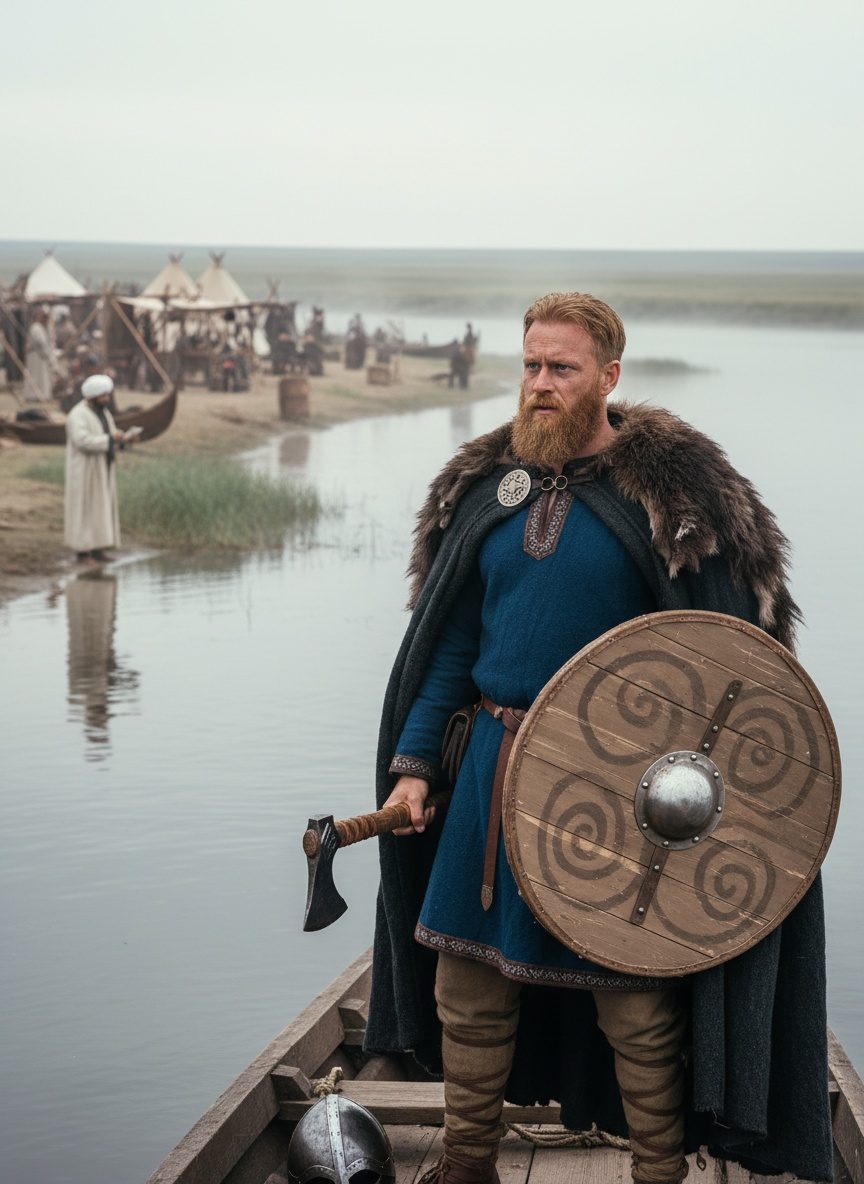
In the year 922 AD, shadows of a different kind danced along the banks of the Volga River. The sun hovered low, casting its golden glow on a bustling scene that lay hidden from the textbooks of history. Where one might expect the clamor of conquest, there was instead the hum of trade. Arab diplomat Ahmad Ibn Fadlan, dispatched from Baghdad, chronicled what he observed: a band of Norse Rus traders, not with weapons brandished, but with goods for exchange. These were the Vikings who took to the waterways not for plunder, but for profit, steering their way from the chill of Scandinavia to the grandeur of Baghdad.
Comprising an eclectic band of adventurers, these Norsemen had traversed over four thousand miles by navigating treacherous rivers and forging through dense forests. The journey was long and fraught with peril, but the potential rewards were great. Ibn Fadlan's writings offer an invaluable window into a day in the life of these traders, capturing their demeanor and demeanor. Clad in cloaks adorned with intricate brooches and wielding axes not for battle but for bartering, the Rus approached the Islamic world as equals in commerce.
Baghdad, thriving under the auspices of the Abbasid Caliphate, was a hub of prosperity and cultural renaissance. The streets of the city radiated with the vibrancy of markets where exotic goods from far-flung corners of the world awaited eager merchants. For the Rus Vikings, Baghdad was not merely a stop on their trading odyssey; it was the zenith of their journey—an opportunity to partake in a civilization whose wealth was measured by towering minarets and bustling souks, and whose currency was the coveted silver dirham.
While the popular image of Vikings often conjures up seafaring marauders with horned helmets—a trope long debunked by historians—these Norse traders were part of a lesser-known narrative. Their ventures were a testament to the complexity and adaptability of Viking society. In pursuit of wealth, they navigated intricate networks of rivers and engaged with diverse cultures. This was trade on a grand scale, and it required more than brute force; it demanded shrewd negotiation and respect for local customs.
Silver was the prize that drew the Rus Vikings to these distant lands. In Scandinavia, where barter was more common than coin, the acquisition of silver dirhams was crucial for amassing wealth. These coins bore inscriptions in Arabic, a language alien to the Norse, yet infused with a mystique that made them a highly sought-after currency back home. With them, the Rus could transform raw ambition into tangible wealth. Indeed, such was the influx of Islamic silver that it shaped the very fabric of Scandinavian society, influencing both economy and craft.
Ibn Fadlan's account sheds light on remarkable cultural exchanges spurred by these expeditions. He documented the Vikings' traditions, noting their elaborate burial customs and the stark rituals that accompanied them. To modern readers, his descriptions offer an unprecedented glimpse into the ethos of a people at the crossroads of tradition and trade. Ibn Fadlan also remarked on their affinity for cleanliness—a detail that nuances the rough-hewn image often associated with the Vikings. While his writing may convey a sense of cultural superiority, it betrays a deep-seated curiosity and a grudging respect for these intrepid merchants from the north.
The return journey for the Rus was laden with both riches and tales—of vast markets echoing with calls to prayer, of foreign tongues and tastes, and of a wealth beyond their imagination. Laden with silver, they navigated the same rivers anew, their ships weighed down not only by treasures but by the knowledge that vast, interconnected worlds lay beyond the familiar fjords of home. The silver they brought back would circulate through their own communities, its origin coalescing into stories that would be woven into the collective memory of their people, long after the journey's end.
In an era when news traveled by word of mouth, the return of these traders must have seemed legend-like, as if from realms only whispered of. They were part of a global story, one where Vikings were not just raiders at the edge of empires but were intrepid explorers with a vital role in the lively commerce that bound together distant geographies. This narrative adds dimension to our understanding of the Viking Age—revealing that to hail from the land of the North was not merely to master the sword but to command the seas and negotiate their shores.
Today's world is connected by the internet—an intricate, digital web of commerce and culture. Yet, this sprawling network has its roots deep in soil tilled during times like those recounted by Ibn Fadlan. The story of the Viking who sailed to Baghdad and returned enriched with silver speaks to the timeless drive for connection and growth. It is a testament to the human spirit—a reflection that, even amidst cultural divides, we have always sought new horizons. This tale from the muddy banks of the Volga is a poignant reminder that our past adventures lay the groundwork for future exploration, sowing the seeds of curiosity that propel us forward in an ever-expanding world. It matters not only for its historical significance but for the enduring inspiration it offers to look beyond known boundaries—both geographical and cultural—as we traverse the rivers of time.