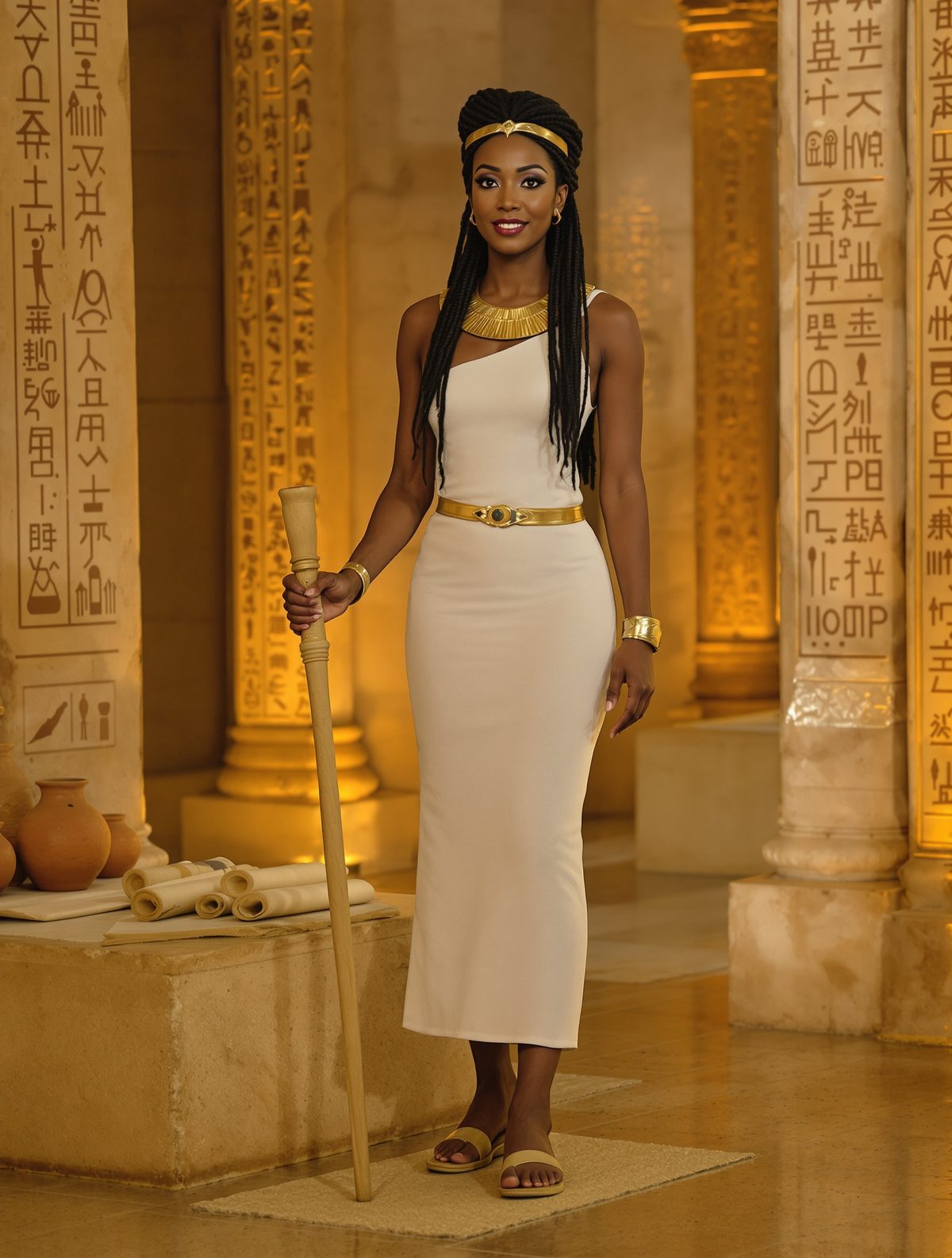
Imagine the sands of the Egyptian desert shifting silently around the ruins of a medical facility. Within its ancient walls once echoed the footsteps of men and women committed to healing. As you venture deeper into history, let us uncover the remarkable story of a trailblazer whose name has been buried for millennia yet now stands as a testament to her groundbreaking role: Peseshet, the Lady Overseer of Female Physicians. In a civilization dominated by pharaohs and patriarchs, she was a beacon of progress and empowerment, training Egypt's doctors some 4,500 years ago.
The Role of Women in Ancient Egyptian Society
The common narrative of ancient societies often places women in domestic roles, prioritizing their duties as wives and mothers. However, Ancient Egypt offers a stark contrast. Women in Egypt, though primarily devoted to household activities, also enjoyed legal rights unheard of in contemporary civilizations, such as the right to own property and engage in legal agreements. Yet, a woman holding a significant state title was still a rarity.
Peseshet lived during the 4th Dynasty of the Old Kingdom, around 2500 BC. It's a testament to the progressive nature of ancient Egyptian society that a woman could rise to such prominence. Her title, Swnwt, which translates to "physician," marks her as a key figure in the realm of Egyptian medicine, a field otherwise dominated by men.
The Medical Advancements of Ancient Egypt
Millennia before the Hippocratic Oath, Egypt was at the forefront of medical knowledge. The Ebers Papyrus, one of the oldest medical documents in history, dates back to around 1550 BC. Although this was written long after Peseshet’s time, it gives a window into the advanced medical practices of even earlier periods. Ancient Egyptians specialized in fields such as dentistry, surgery, and gynecology. Doctors were known as swnw, mirroring the title held by Peseshet herself.
Hospitals, or per-ankh ("Houses of Life"), were establishments not just for treatment but also centers for learning and research. These were the places that Peseshet would have influenced, directing healers and shaping apprentices into future physicians who would bear the wisdom taught under her guidance.
Peseshet's Trailblazing Path
Our knowledge of Peseshet comes from her tomb, most notably a mastaba in the necropolis at Giza, where an inscription immortalized her esteemed role. The artifact that bears her name has defied time, surviving longer than entire empires, keeping the memory of a pioneering figure alive.
While her personal life remains shrouded in mystery, the accomplishments tied to her title speak volumes. Peseshet did not merely practice medicine; she oversaw the training of those who did, wielding significant influence over medical practices of her time. She is credited as the first recorded female physician in history, a title that would have demanded both respect and recognition.
Why Peseshet's Story Matters Today
In the modern era of championing gender equality and women's rights across various professional fields, Peseshet's story resonates as a powerful reminder. It challenges preconceived notions of historical gender roles and highlights the richness of women's contributions, often overlooked or forgotten by history.
The narrative of Peseshet’s life epitomizes the timeless struggle and triumph of women in male-dominated professions. By acknowledging and celebrating such historical figures, we draw strength and inspiration, honoring those who paved uncharted paths.
Conclusion: The Legacy of the Undelivered Story
Peseshet, Lady Overseer of Female Physicians, remains a figure of intrigue and inspiration. Her story, though obscured for centuries, informs us of an era when women too could aspire and achieve, challenging societal norms that marginalized their potential contributions.
Today's society benefits from reflecting on the stories hidden beneath the sands of time. Peseshet exemplifies how ancient accomplishments continue to inspire modern movements towards equality, reminding us that history is not just the story of great men but also the enduring legacy of great women.
In sharing Peseshet’s story, we recognize a past where the seeds of progress for gender equality were sown far longer ago than many might realize. And in doing so, perhaps we pave the way for a future where stories like hers are no longer relegated to "the stories they never taught you in school."