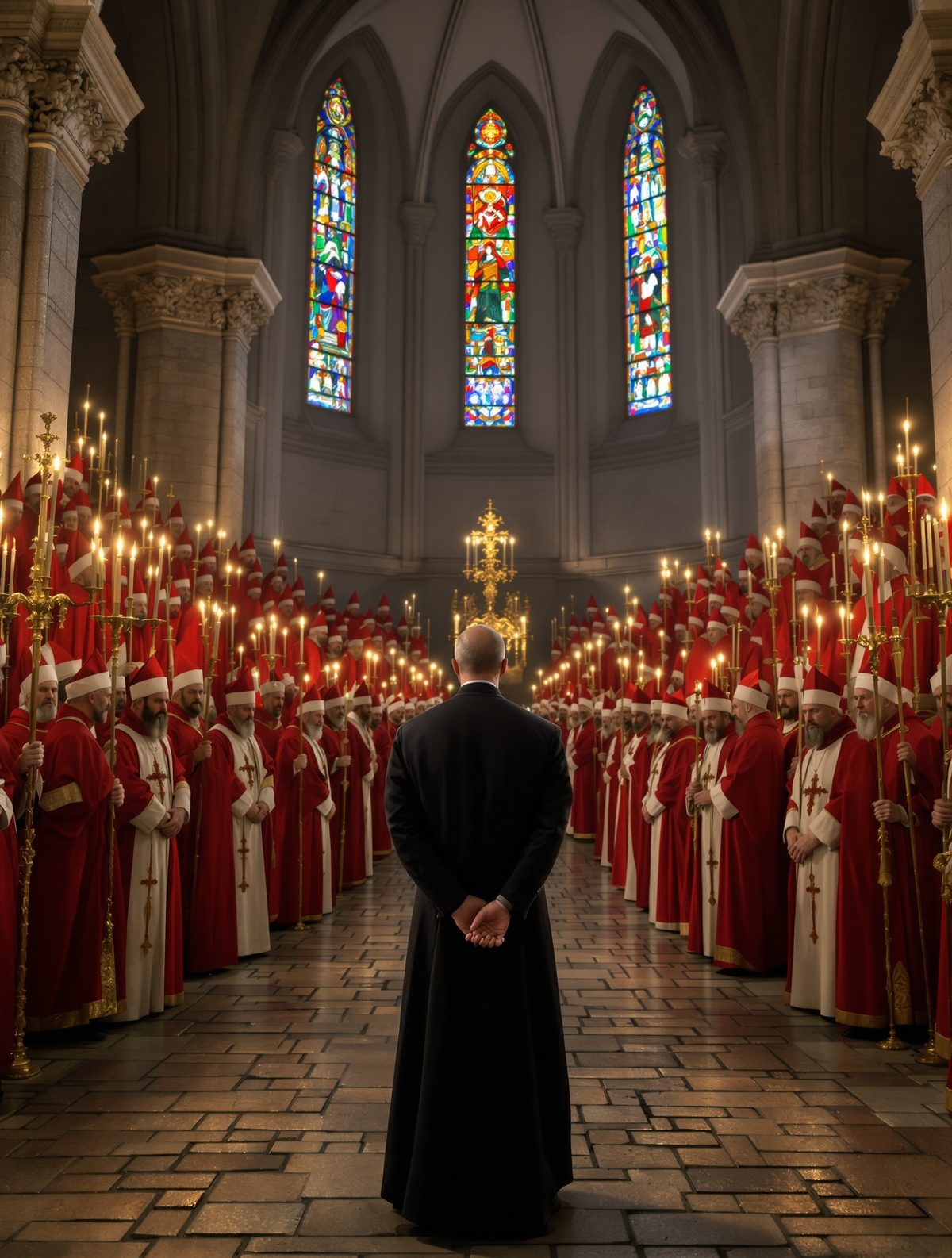
Imagine walking into a council chamber, its hallways echoing with religious power and political intrigue. You bear a letter ensuring your safety, signed by the most influential ruler of the time. Yet, as you stand before the assembly, the promise disintegrates, and you realize not one part of this institution plans to let you leave. This was the grim reality Jan Hus faced in 1415 at the Council of Constance — a moment when faith, politics, and betrayal collided in the heart of medieval Europe.
The Man Who Spoke for the Dead
Jan Hus, a scholar and preacher from Bohemia, journeyed to Constance in Germany under the protective assurance of Sigismund, the Holy Roman Emperor. It was an audacious move. Only a few years earlier, Hus had been excommunicated for his heretical teachings that challenged the Catholic Church's authority. These teachings echoed those of another reformer, John Wycliffe, who died peacefully in 1384 but whose ideas had been gaining traction.
Consider this: Hus was not a man who advocated rebellion lightly. He believed in reform through words and conviction, inspired by his deep Christian faith. His sermons at the Bethlehem Chapel in Prague were fiery, condemning the wealth and corruption of the church and pushing for the Bible to be accessible to all, in their own language. The seeds of dissent he sowed found fertile ground amid the fed-up populace, making him both a hero and a heretic.
A Pilgrimage of Conviction
The Council of Constance, deliberately summoned between 1414 and 1418, was intended to resolve the papal schism and address issues like church reform and heresy. It was a gathering unlike any seen in a century, drawing theologians, bishops, and secular rulers. Hus attended willingly, trusting his safe-conduct pass signed by the emperor. To him, this was an opportunity to defend his faith and possibly ignite true reform.
His journey to the council is worth noting. Traveling over 350 miles from Bohemia to Constance, Hus knew he was walking into the lion’s den. He arrived in November 1414, meeting with bishops and scholars for months. His presence in the chambers was like that of a candle flickering amid the expansive darkness of a church scandal.
Betrayal in Constance
June 5, 1415. Despite Emperor Sigismund’s guarantee of safety, Hus was arrested and thrown into the dungeons on the grounds of defying church authority. For months, he languished in chains, suffering harsh conditions that weakened his body but not his spirit. The Holy Roman See, fearing the spread of heretical ideas, wielded its power with uncompromising severity.
Imagine the council’s denunciation: a pivotal moment dripping with drama. Hus stood, pale and resolute, before the assembly on July 6, 1415. He declined to recant, asserting that conscience held him against the very corruption he sought to cleanse. But his words fell on deaf ears. The verdict was sealed, quite literally, by blood — Hus was condemned as a heretic and delivered to the secular arm for execution.
The Pyre's Consequence
On the shores of Lake Constance, July 6, 1415, fire consumed Jan Hus. Bound to a stake, the flames licked at his garments, turning him from reformer to martyr as his last whispered prayers dissolved into the smoke. For the onlookers, it was both judicial and theatrical — the church reasserting its unrelenting dominance in the most public of spectacles.
Unknowingly, Hus’s death kindled a far greater inferno. His execution not only cemented his ideas but also set the stage for the Hussite Wars — a conflict that raged for 13 years, fueled by religious fervor and nationalist sentiment within Bohemian borders. Thousands took up arms in a struggle that challenged both imperial authority and papal tyranny.
Resonance Through Time
The death of Jan Hus was not just a historical anecdote. It was a clarion call for reformation that echoed across Europe long after the flames were doused. Martin Luther, a century later, would cite Hus as a precursor to his own revolutionary theses. Indeed, the council’s attempt to extinguish heresy only fanned the flames of religious change, eventually culminating in the Protestant Reformation.
Why does Hus's trial and execution matter in our modern world? More than a narrative of betrayal and martyrdom, it serves as both a cautionary tale and a beacon of the enduring power of conviction. It reminds us that even in the face of overwhelming authority, the pursuit of truth and justice can light the way for future generations.