He was a teenager at the time. The ruins of his inheritance lay around him, a ragged tapestry of defeat strewn across Cuzco. Pachacuti, then a young prince, found himself standing alone amidst a city abandoned by its ruler, his own father, who had fled in the face of encroaching enemies. But while others might have wept over what was lost, the young prince saw opportunity nestled in stones.
This audacious vision would knit a sagging city back to life and birth an empire that stretched its sinew across the world’s highest mountains. The tale of Pachacuti is as dramatic as the Andean landscape itself—a saga rarely taught, yet undeniably remarkable. The contrast between destruction and resilience is potent here in Cuzco, the undulating topography surrounding Pachacuti was as familiar as the challenges he encountered. Born into royalty, his roots ran deep into the fabric of a civilization already threatened by division and external pressure.
Cuzco was more than a city; it represented the beating heart of Inca culture, known as the 'Navel of the World'. This was no mere stone settlement. Each terrace and tambo, or way station, was a stroke in a grander design. Yet, by the time Pachacuti arrived on its scene, the city was scarred. Political strife and invasions had nearly reduced its splendid mosaics to dust.
The transformation from prince to emperor was not immediate. Pachacuti stood in a juncture where action was demanded, action that required both daring and intelligence. Legend holds that as he stood, contemplating ruins and possibility, he experienced a vision—an awakening into his imperial destiny. Yet he lacked experience, never having held the instruments of war. Still, like the woven fibers of the Incan textiles, Pachacuti intertwined strategy with the careful precision that would soon reframe his world and its workforce.
As his father's forces left, Pachacuti capitalized on local alliances, understanding that even the fractured pieces of Cuzco’s past could be realigned for future glory. He facilitated a people's resurgence where others foresaw defeat, leading through inspiration as much as decree. His consolidation of power wasn’t built on walls alone; it relied on human capital and the shared vision of restored magnificence. The young prince understood the need to build solidarity among disparate polities, and in doing so, he secured the city not just against physical threats, but ideological ones.
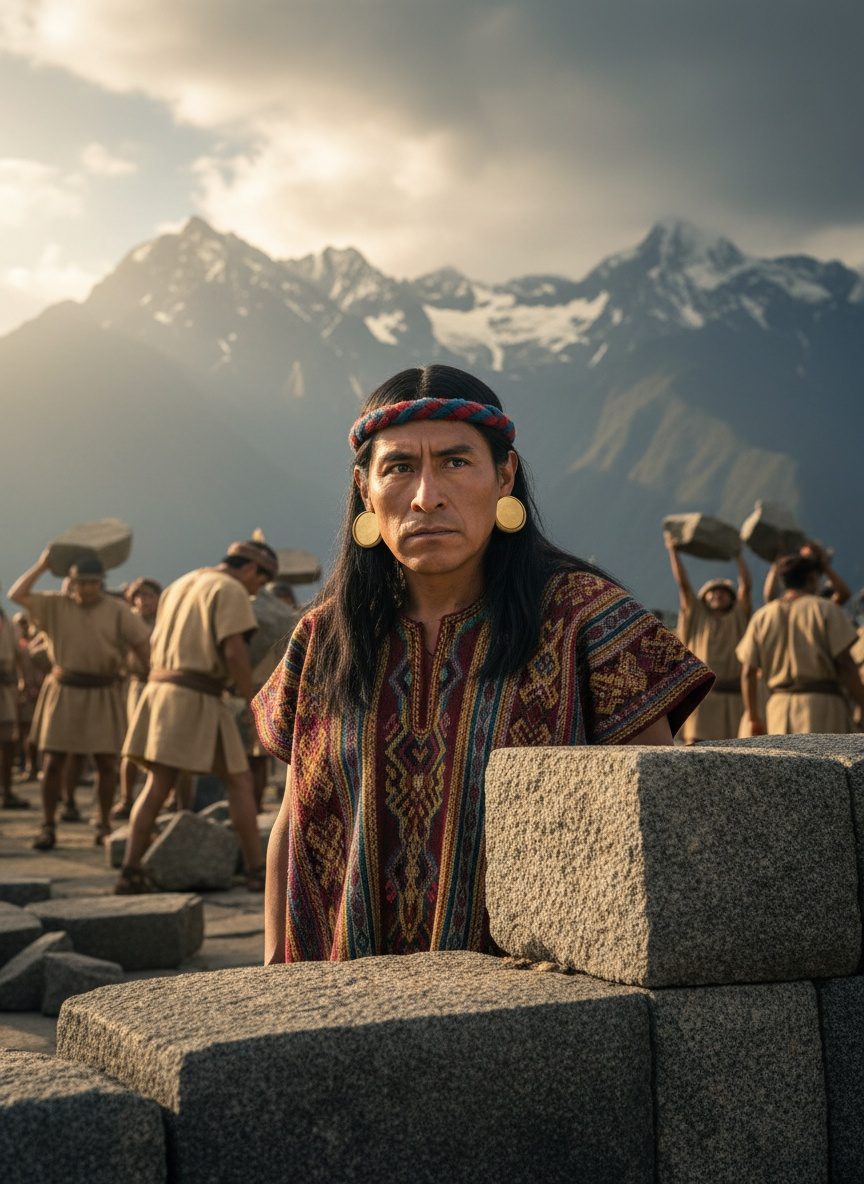
Once the oppressors were expelled, Pachacuti embarked on a bold architectural project that lay at the nexus of his ambition—transforming Cuzco into an imperial capital worthy of its place at the center of his envisioned universe. Each stone carried a narrative, each wall a chapter written by ancestral hands but freshly interpreted under his guidance. Under Pachacuti, Incan masonry reached heights monumental even by modern standards, stones so perfectly joined without mortar that they famously seem to deny passage even to a blade of grass.
Yet stones tell but part of this extraordinary tale. Pachacuti's reforms went beyond mere aesthetics, as he codified changes that struck at the core of the Incan socioeconomic realities. Agriculture was revolutionized not just through more terraces but via meticulous water management systems that ensured productivity where famine once loomed. The Quechua language was entrenched as a unifying thread throughout the expanding lands, fostering a singular identity among the diverse communities within the Incan sphere.
While his empire expanded to stretch thousands of miles, from the arid coasts of modern-day Chile to the lush rainforests of Ecuador, Pachacuti’s ambition was manifest in more than conquest. The royal road system, known as the Qhapaq Ñan, grew under his reign—a marvel, meticulously crafted to bind his vast realm as arteries disseminate life through a body. Commanding such highways, goods and ideas circulated rapidly, weaving their way into the collective civic fabric with the seamless intricacy of an Andean tapestry.
Ironically, history's murmurings nearly left Pachacuti's name in whispers, like so much wind rustling through the stalks of maize fields native to his empire. Yet here lies the brilliance of what Pachacuti and his Inca accomplished. Hers was a world where every single village, no matter how remote, found its place; each craftsman, farmer, and soldier contributed to something larger than themselves. His legacy, etched into the rugged geology he so skillfully manipulated, suggests not only an architect of physical grandeur but a steward of culture and prosperity.
The Emperor did not achieve this alone; it was his remarkable capacity to inspire, collaborate, and implement a vision that ensured his empire would not only withstand but flourish. It stands among those rare epochs in human history, a time when one individual truly bent the arc of history to his will. The legacy of Pachacuti is a resonant reminder that the potential to transform not only landscapes but lives resides within each vision—whether it gazes upon ruins or stars.
As empires rise and fall, what remains is the narrative of what people do amidst their ruins. Pachacuti's story underscores the power of resilience and ambition in the heart of humankind's greatest endeavors. The Inca Empire, under his stewardship, became a seamless stonework that echoes through history, a testament to what lies at the human spirit's core when stirred by the passion to create and sustain. His skyward reach offers both history and humanity a pinnacle of possibility to gaze upon and perhaps, in emulation, to strive beyond.