October 4, 1777. The autumn sun crept over the battlefield at Germantown, Pennsylvania, casting long shadows across the dew-laden grass. The stillness and quiet was a stark contrast to the chaos and clamor that had filled these fields just a day before.
A Silent Witness on the Battlefield
As the mist began to lift, a small dog appeared, meandering through the remnants of the recent clash. The Battle of Germantown had seen American and British forces collide with fierce determination and great losses. Yet amidst the wreckage of war, it was not the clashing of swords or the thunder of musket fire that filled the air. Instead, it was the soft padding of paws brushing against the weight-trodden earth. The dog, unaware of the human discord that had torn through these lands, seemed to be on a solitary quest. Its fine coat gleamed in the morning light, revealing a well-kept appearance despite the turmoil that surrounded it.
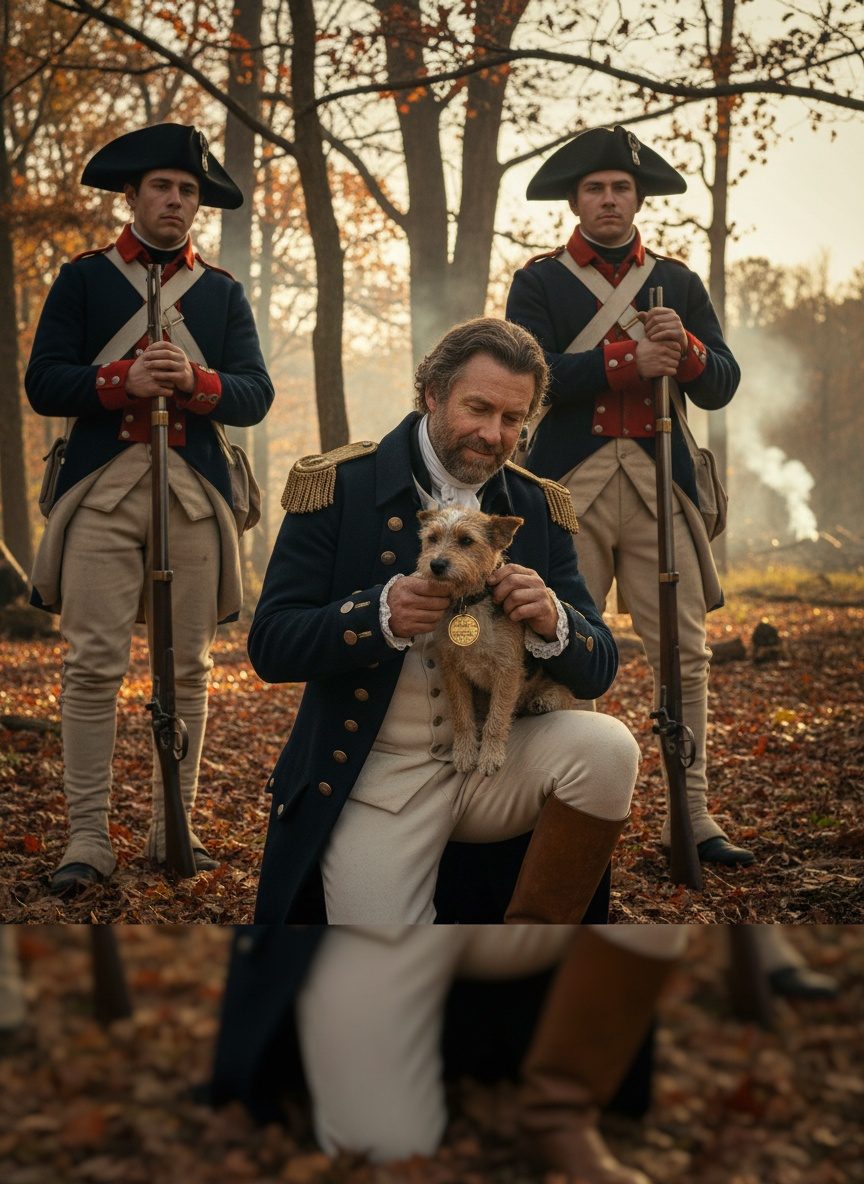
Upon closer inspection, the collar around its neck bore a name. It was not just any name, but that of General William Howe, the commander of the British forces and the American revolutionaries' chief adversary at this time. This unexpected discovery came as a curiosity to the American soldiers who found the canine wanderer—one might even say it was a peculiar conundrum in the middle of a larger conflict.
Washington’s Unconventional Command
The dog's sudden arrival within the American lines, as well as its aristocratic provenance, quickly reached General George Washington. Despite having every possible reason to disregard the creature or even use it as a living testament to American ingenuity and quick thinking, Washington welcomed the opportunity for a different kind of engagement. The American leader had earned deep respect among his men not only for his military acumen but also for his honor and respect for codes of conduct. Here was a chance to reaffirm those values before both ally and adversary.
Washington ordered the dog to be cleaned and fed, treating it with care and respect as if it were an ambassador of its own kind. Then, with the help of his aides, he drafted a letter to General Howe. The contents of the missive remain lost to history, but it was undoubtedly a formal yet cordial note acknowledging the rightful owner of the dog and indicating its safe return, under assurance of truce—an olive branch delicately offered at a moment when every gesture was weighed in gold.
A Journey Across Enemy Lines
Guided by a flag of truce, the dog was escorted back across the eerie, smoldering landscape that had so recently been a crucible of fire and iron. Waves of tension rippled through the men on both sides of the conflict as they watched this strange procession take place. This small, personal act of compassion and respect commanded attention and piqued interest in a way that no battle maneuver could.
The very image of a dog reclaiming its place by the side of its owner, amidst the great unfolding drama of revolution and war, presents a compelling paradox—the vulnerability of the individual against the backdrop of monumental human enterprise. The animal, blissfully ignorant of the human passions and stratagems that divided man from man, merely sought the comfort of familiarity, a sentiment not so foreign even to those absorbed in the conflict of ideals.
The Ripple Effect of a Kindly Act
Though simple in gesture, the act of returning General Howe’s dog did not remain unnoticed. To both the American and British forces, it served as a reminder that beyond the harsh realities of war, personal connections still held meaning. In a period defined by sharp ideological divides and continual bloodshed, moments of shared humanity shone with a brilliance that could not be dimmed by musket fire or strategic fortifications.
Allies and adversaries alike took note. Word of Washington’s magnanimous gesture resonated through the ranks, fostering an air of mutual respect, if not just temporary, between the two opposing forces. It spoke to the hope that honor and civility could endure even amidst the visceral toil of revolution.
Echoes Through Time
The story of Howe’s dog and its return, while small and almost impractical in the broad sweep of the American Revolutionary War, lingers in history as a testament to the power of small, principled acts carrying weight disproportionate to their size. It is a story rarely recounted in textbooks or grand narratives—compelling in its simplicity yet profound in its implications.
Indeed, amidst the thundering march of progress and the collision of mighty forces, it becomes what was meant to be an expression of moral high ground, reminding us that history is not solely written by victories in battles, but also by gestures that acknowledge shared humanity. As we navigate our complex world, this act of returning a dog across enemy lines endures as a reflection on what it means to remain human and humane, even in times of division and strife.