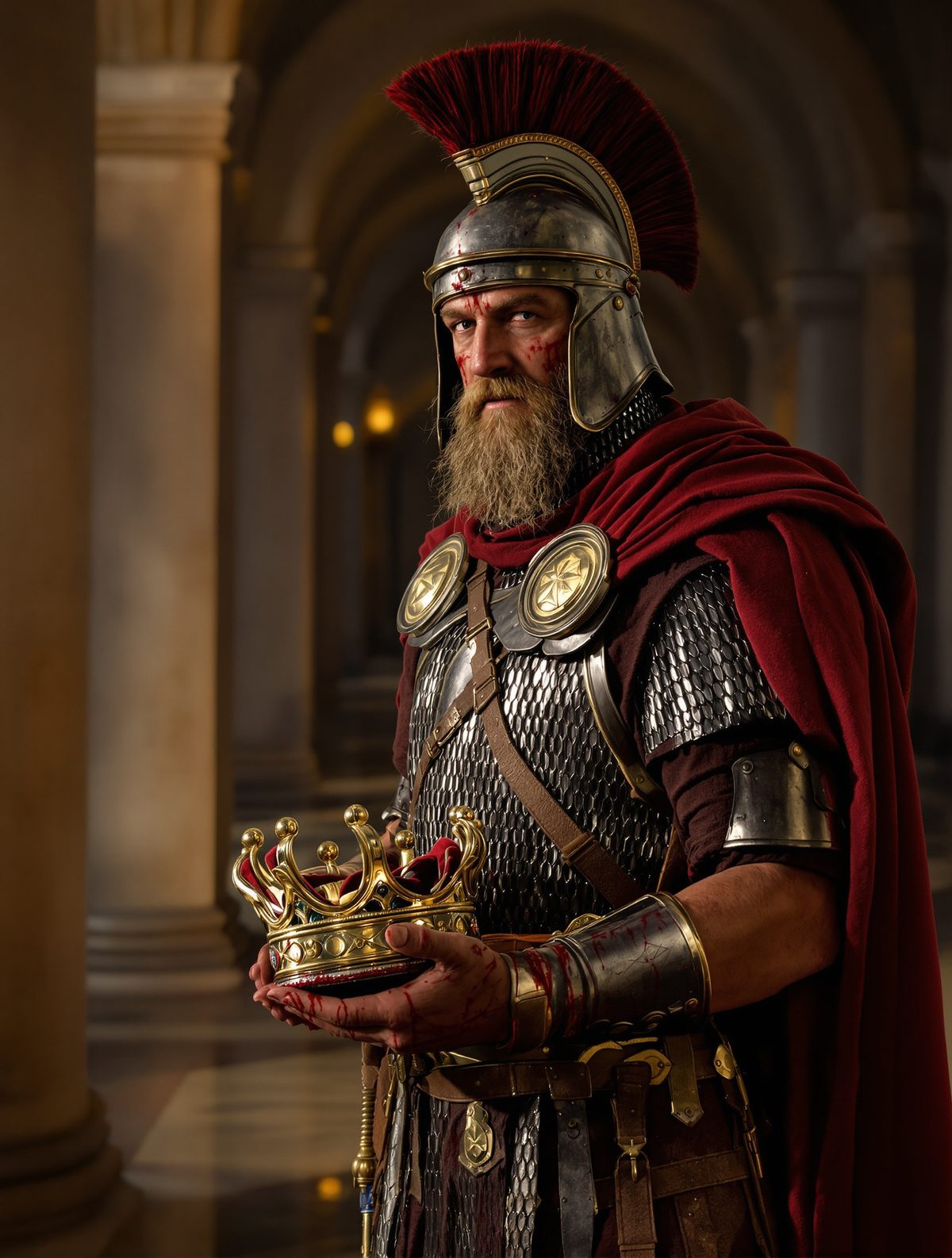
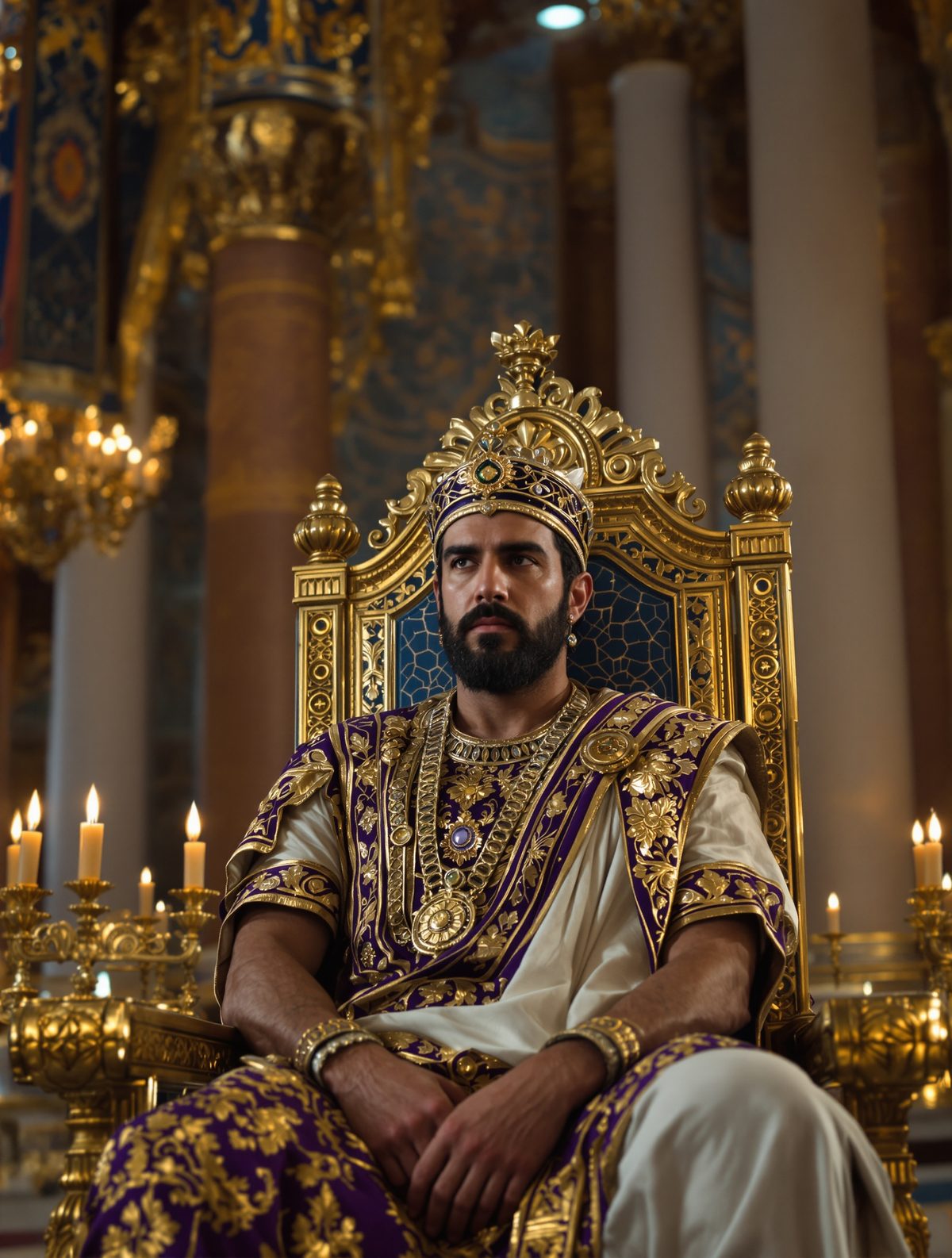
Picture this: you're a Persian nobleman in 522 BC, sitting at a royal banquet in the magnificent halls of Persepolis. Golden goblets gleam in the torchlight, the air thick with incense and whispered court gossip. The king sits before you, supposedly your rightful ruler, yet something feels terribly wrong. Your daughter sleeps beside this man every night as his wife, but she's never seen his face in daylight. He issues decrees from behind closed doors. And most disturbing of all—he refuses to eat with the Persian nobility, breaking centuries of tradition.
Now imagine you're brave enough—or desperate enough—to discover the truth. What would you risk to expose the greatest deception in ancient history?
This was the impossible situation facing Otanes, a Persian noble whose name has been largely forgotten by history, despite his role in one of antiquity's most audacious detective stories. Armed with nothing but suspicion and a daughter's courage, he would expose a fraud that had fooled an entire empire.
The Prince Who Vanished
To understand Otanes' predicament, we must first meet the real Bardiya, son of the great Cyrus the Great and brother to King Cambyses II. In 525 BC, as Cambyses prepared for his ambitious conquest of Egypt, he made a decision that would haunt the Persian Empire: he secretly ordered the assassination of his own brother.
The motive was classic royal paranoia. Bardiya was popular among the people and the army—perhaps too popular for Cambyses' comfort. Ancient sources suggest that Cambyses feared his brother might stage a coup while he was campaigning thousands of miles away in the Egyptian desert. So he arranged for Bardiya's quiet murder, telling no one except the assassin he'd hired to carry out the deed.
But here's where the story takes a sinister twist that even Shakespeare couldn't have imagined: while Cambyses was still in Egypt, news arrived that would make his blood run cold. A man claiming to be Bardiya had seized the throne in Persia, declaring himself the rightful king and winning over the provinces with promises of tax relief and military exemptions.
Cambyses knew this was impossible—he'd had his brother killed. But who would believe him? He'd kept the assassination so secret that nobody else knew Bardiya was dead. As he raced back from Egypt to reclaim his throne, Cambyses died under mysterious circumstances, leaving the empire in the hands of this mysterious pretender.
The Magus Who Would Be King
The man wearing Bardiya's crown was actually Gaumata, a Zoroastrian priest known as a magus. What made his deception so perfect wasn't just his ambition—it was an accident of genetics. Gaumata bore an uncanny physical resemblance to the dead prince, so striking that he could fool courtiers who had known Bardiya personally.
But Gaumata had one crucial advantage that made his impersonation bulletproof, quite literally. Years earlier, the real Bardiya had been punished for some offense against his father Cyrus—his ears had been cut off. This brutal punishment, while devastating for the prince, had occurred relatively early in his life, meaning that many in the empire had never seen Bardiya after his mutilation.
Gaumata, of course, still had his ears. But rather than see this as a liability, the clever magus turned it into the foundation of his entire deception strategy. He established new court protocols that kept him isolated from close inspection. He ruled from private chambers, issued decrees through intermediaries, and most tellingly, never appeared at the traditional royal banquets where Persian nobility had historically dined alongside their kings.
For months, this strategy worked flawlessly. The empire accepted their new king, provinces pledged loyalty, and tax revenues flowed into the royal treasury. Gaumata had pulled off what might be history's most successful case of identity theft, ruling over territories stretching from India to the Aegean Sea.
A Father's Desperate Gambit
But Otanes wasn't buying it. As one of the seven most powerful nobles in the Persian Empire, he had known the real Bardiya personally. More crucially, he remembered the prince's missing ears. The new king's behavior—his isolation, his break with tradition, his refusal to show his face in public—struck Otanes as the desperate measures of a man hiding something.
The problem was proof. In a world without photographs or fingerprints, how do you expose an impostor who looks identical to the person he's impersonating? Otanes needed to get close enough to examine the king's ears, but the false Bardiya's security protocols made this nearly impossible.
That's when Otanes realized he had an ace up his sleeve—his daughter Phaidyme, who had been married to the real Bardiya and was now, by necessity, wife to the pretender. If anyone could get close enough to check for the telltale missing ears, it would be her.
According to Herodotus, our primary source for this incredible tale, Otanes approached his daughter with a proposition that must have terrified her. He asked her to risk her life by examining her husband's head while he slept, feeling for the ears that should have been cut off years before.
Think about the courage this required. If caught, Phaidyme wouldn't just face execution—she'd likely face torture first. Persian kings weren't known for their mercy toward those who betrayed their trust, and a wife secretly investigating her husband's identity would certainly qualify as treasonous behavior.
The Touch That Toppled an Empire
On a moonless night in late 522 BC, Phaidyme made her move. As the false king slept beside her in the royal chambers of the palace, she carefully reached over and ran her hands along the sides of his head, feeling for the stumps where Bardiya's ears should have been.
What she found instead were perfectly intact ears, whole and uncut.
This simple touch—lasting perhaps only seconds—confirmed what Otanes had suspected. The man ruling the Persian Empire wasn't Bardiya at all, but an impostor who had somehow managed to fool an entire civilization.
When Phaidyme reported her findings to her father, Otanes knew he had to act quickly. He reached out to other influential nobles who had also harbored suspicions about their new king. Chief among these was Darius, a young nobleman from a cadet branch of the royal family who would soon become one of history's greatest rulers.
The conspiracy moved with lightning speed. Within days, Otanes had assembled a group of seven Persian nobles who were ready to risk everything to expose the false king. They stormed the palace, cornered the impostor, and in the bloody confrontation that followed, killed both Gaumata and several of his supporters.
The Rise of Darius and the Power of Truth
In the aftermath of the coup, the seven conspirators faced a new problem: who should become king? After extensive debate—and according to some sources, a rather creative horse-based selection method—Darius emerged as the new ruler of Persia.
Darius proved to be one of the ancient world's most capable administrators, expanding the empire to its greatest extent and creating governmental systems that would influence civilizations for centuries. But he never forgot the lesson of Gaumata's deception. Throughout his reign, Darius emphasized the importance of truth, making it a cornerstone of Zoroastrian-influenced Persian ideology.
The famous Behistun Inscription, carved into a cliff face in western Iran, tells Darius's version of these events in three languages, ensuring that future generations would know how the false Bardiya had been exposed. Notably, the inscription gives credit to Ahura Mazda, the Zoroastrian god of truth, for revealing the deception.
Lessons from Ancient Persia's Fact-Checkers
The story of Otanes and the false Bardiya feels remarkably contemporary in our age of deepfakes, misinformation, and identity theft. Here was a man who refused to accept official narratives without evidence, who used careful investigation to uncover fraud, and who risked everything to expose the truth.
But perhaps most striking is how a simple physical examination—a touch in the darkness—could determine the fate of millions. In 522 BC, the difference between authentic and fake came down to the presence or absence of two small pieces of flesh. Gaumata's entire elaborate deception, months of careful planning and performance, was undone in seconds by a daughter's brave fingers in the dark.
Today, when we debate how to distinguish truth from lies in an information-saturated world, we might remember Otanes and Phaidyme. Sometimes the most sophisticated deceptions can be exposed by the simplest tests—if we have the courage to apply them, and the wisdom to trust what we discover, even when the truth proves more disturbing than the lie.
The Persian Empire survived Gaumata's deception and thrived under Darius, but it came dangerously close to being permanently altered by one man's audacious lie. In our own time, as we grapple with questions of authenticity and truth, the story of the missing ears serves as both warning and inspiration: deception may be powerful, but it rarely survives contact with determined fact-checkers willing to risk everything for truth.